Barbera d’Alba DOC
Have you ever heard the expression: “This Barbera is Barolo-like?” If you have, it is very likely that they were referring to Barbera d’Alba.
A younger sibling (in quantity and diffusion) of Barbera d’Asti, Barbera d’Alba retains its best characteristics while pushing the accelerator on longevity, structure and that complexity typical of Barolo wines born on hills that are geologically quite different and more stratified than those of the Asti area.
That’s right, because the best expressions of Barbera d’Alba have the good fortune to share the soils destined for great nebbiolo wines, those bluish-gray marls that emerged from the sea floor of the Cenozoic, rich in limestone, constitute the habitat of the best reds in the world.
The nebbiolo grapes, on the other hand, can contribute up to 15% of the total mass of the wine, and there are many producers who use them to give this type a coat of arms of nobility, while smoothing out the vibrant acidity of the variety.
So Barbera d’Alba – which also has a Superiore version aged for at least 12 months, four of them in wood – is a wine that manages to impress.
It rises in poise and finesse, managing to achieve important ageing and balsamic notes typical of the great Langa reds.
A Barbera that on the table can accompany, without disfiguring, the most sumptuous courses and serve, when necessary, as an excellent meditation wine.
Vines
Appellation
Color
Type
Min. alcohol
Variants
Established on

The history of Barbera d’Alba DOC
A noble supporting actor to nebbiolo
The adventure of Barbera d'Alba shares its origins with that of Barbera d'Asti. The grape variety had a high medieval diffusion, especially in Monferrato, where, in short, it became the most cultivated variety.
The common history, however, diverged at the end of the 19th century when Barbera reached the hills of the Alba area.
The destruction caused by phylloxera helped new plantings that conquered especially the positions on the left of the Tanaro, namely in Roero.
In the Langhe, on the contrary, the best exposures are destined for nebbiolo, so that it can express itself in Barolo and Barbaresco, thus making Barbera a noble supporting actor to its more regal "cousin."
The abundant production, high yields and production consistency made it preferred whenever the winemaker's goal was a substantial quantity.
However, in this part of Piedmont the “Barbera problem” (meaning its diffusion in dance halls and taverns as a low-end wine, often blended with wines from Southern Italy) was not so felt, also because, from its beginnings, Barbera d’Alba was held in higher regard.
The soils of the Langhe give it a complex and deep structure, which makes it a splendid wine for roasts.
The history of Barbera d’Alba is therefore relatively recent, but the oenological quality is very high, exquisitely territorial.
If, in the Langhe, Barbera d’Alba competes in elegance with nebbiolo (despite having far fewer vineyards available), in the nearby Roero – especially in the area around Govone – it becomes a very fine wine, with particular ethereal notes, delicate fruity aromas and an intense, delicate flavor.
Barbera d’Alba DOC: Terroir
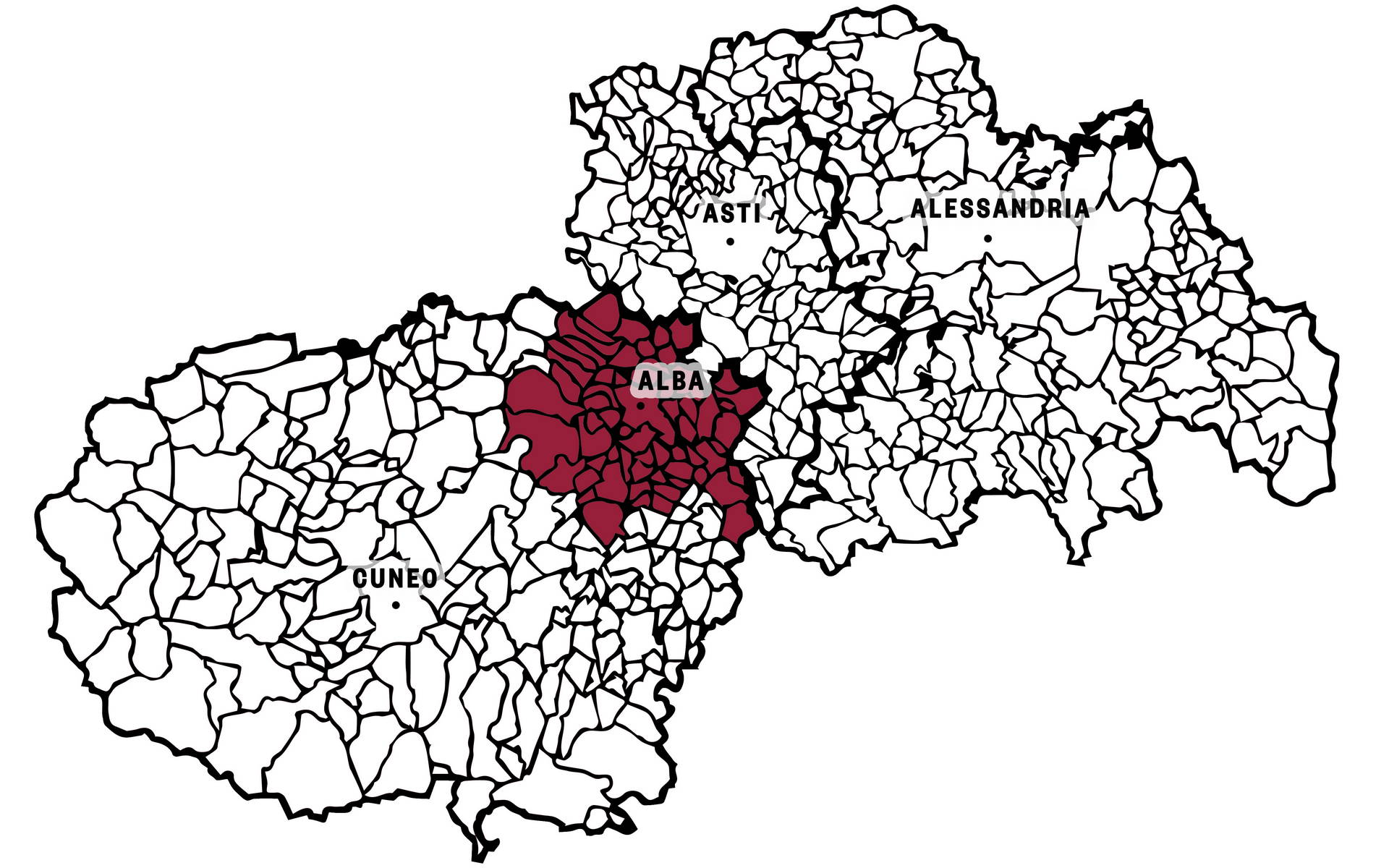
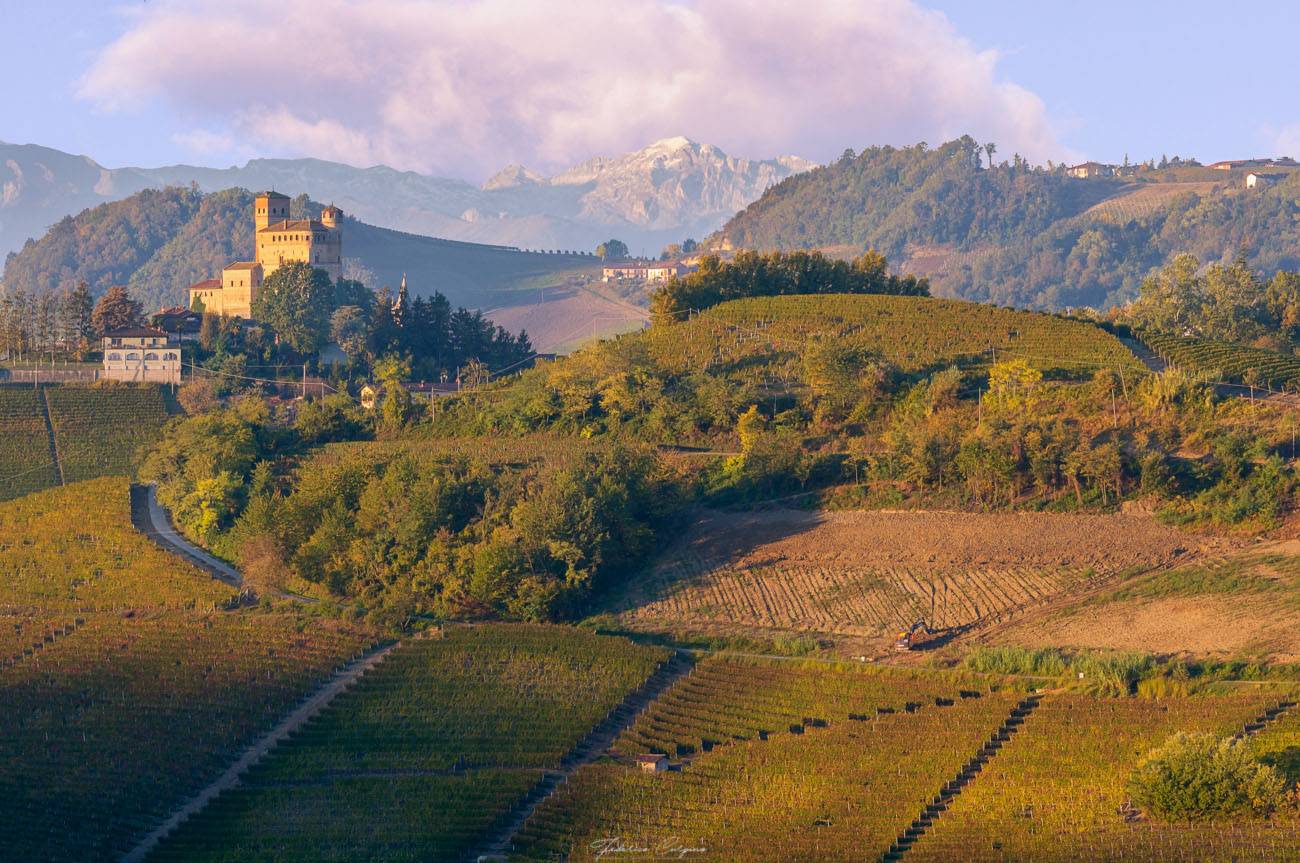
Barbera d'Alba is born on a wide hilly area that extends between the right and left banks of the Tanaro river around the city of Alba.
It includes the Langhe and Roero from Montà d’Alba to Roddino on the North-South axis; from Bra to Santo Stefano Belbo on the West-East axis. The production code includes some municipalities of the Alta Langa, along the Belbo Valley as far as Cortemilia.
From a geological point of view, the Langhe have a Cenozoic origin, which began almost 70 million years ago, while the Roero is of Pliocene age, i.e., 5 million years.
The former feature a composition of clays, sands and limestone that gives rise to the famous bluish-gray marls, with low, rounded hills that are very favorable for viticulture.
The Barbera d’Alba from this area are “Barolo-like,” meaning they are charged with scents typical of nebbiolo: great structure, velvety acidity and a deep and articulated sensory spectrum, excellent longevity.
The Roero is instead more sandy, with mineral and gypsum veins. The result is Barbera d’Alba that are perhaps less long-lived, but much more fine and fragrant, in deep balance between freshness and body.
Whether it is grown in the Langhe or in the Roero, Barbera d’Alba exemplarily attests to the skill of local winemakers in creating a pleasant wine, both in its young and lively versions and in those for aging.
Preferred Altitude
Preferred Soil
Crus / MGA
Towns where it's produced


Barbera d’Alba DOC: Vines
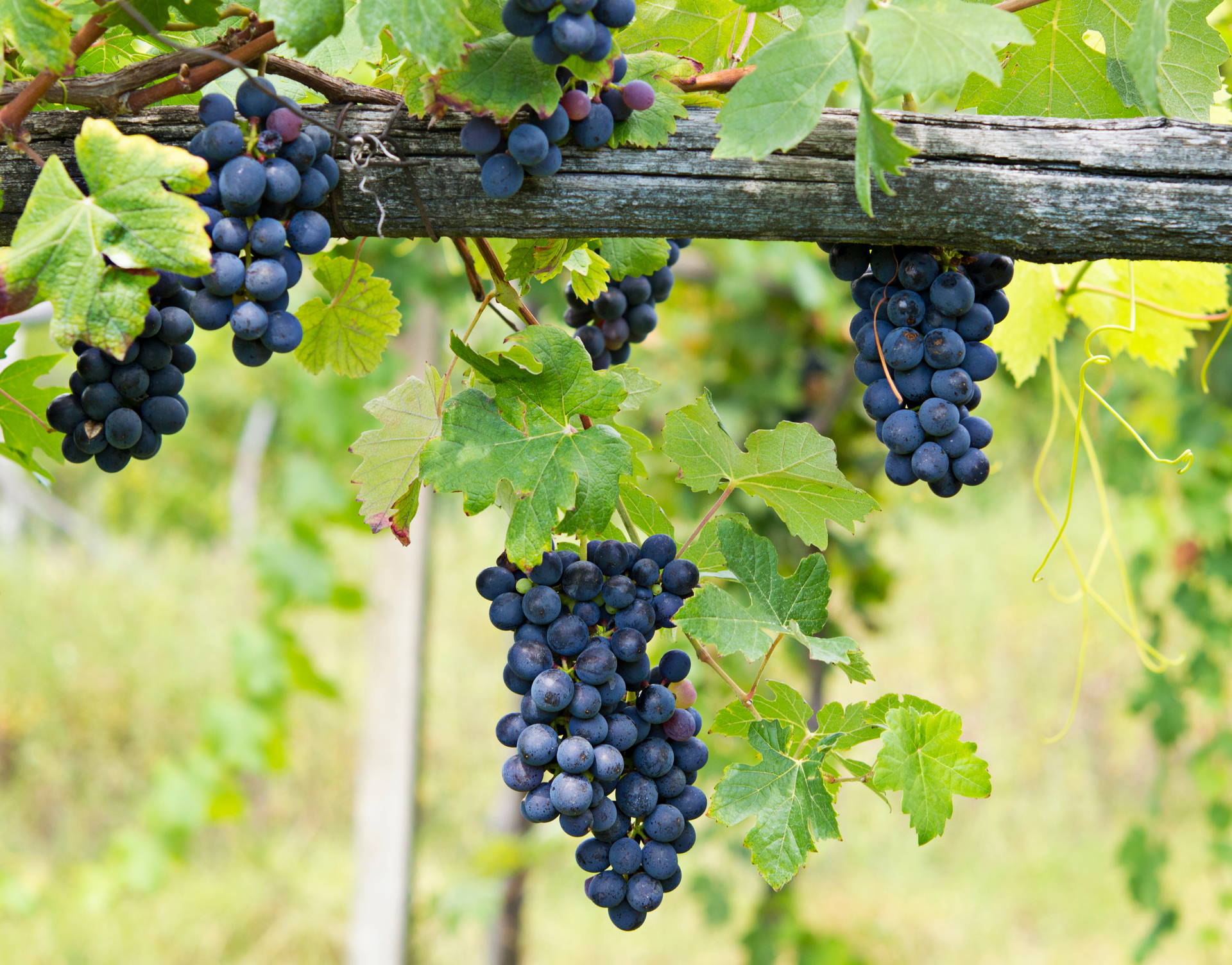
The Barbera d’Alba DOC is a single varietal wine, and therefore can be made exclusively by Barbera grapes
Its sturdiness, and constant, abundant output is one reason for its popularity all over Piedmont, but it was used to replace the vines ravaged in the early years of the century by an outbreak of phylloxera. The grapes ripen in late September and early October. The bunch is pyramid shaped, and more or less compact depending on growing and environmental... you can read more about Barbera here.

Barbera d’Alba DOC: Features
Barbera d’Alba is a wine very rich in color and aromas, with a characteristic acidic backbone supported by a velvety body, very pleasant to drink.
The full and full-bodied flavor makes it particularly suitable to accompany meats, braised meats and roasts, but nothing prevents pairing it with fresh stuffed pasta, spaghetti with meat sauce, grilled meats and (why not?) pizza.
The natural acidity of the grape variety and the presence of delicate tannins make Barbera d’Alba a rather fresh wine, very easy to drink and pair.
Sight
Barbera d’Alba has an intense ruby red color, impenetrable to light, with some purple nuances.
With aging, the red tends to take on less intense shades, turning towards garnet tints.
Nose
The aroma is broad and composite, with fruity notes reminiscent of blackberry, cherry, strawberry and red fruit jam.
The Superiore version deepens its bouquet with spicy hints that recall cinnamon, vanilla, and green pepper.
Taste
Barbera d’Alba offers an intense and full taste spectrum, all played on red and dark-skinned fruit: plums, blackberries and cherries.
The main characteristic is the acidity, which in the mouth means freshness, the almost total absence of tannins, and the warm envelopment.
The Superiore version is charged with vanilla, spicy and balsamic notes based on the length of the period spent in wood.
Official regulation
Color
Perfume
Taste
Foam
Get a bottle directly from the producer
LoveLanghe Shop is a niche of great wines from the Langhe area: some unknown to most, some already quite recognized but perhaps hard to find in the big distribution, others in which we see potential but that have yet to grow.
Bottles are shipped directly from the winery to your home, with no intermediary.


Service
Barbera d’Alba is served in large balloon glasses at a temperature of 18° - 20° C.
Barbera d’Alba DOC: what to pair it with
The soft envelopment, the fruity scents, the freshness and the absence of astringency make Barbera d’Alba an easily pairable wine.
It prefers first courses of stuffed pasta, red meats, grilled meats and medium and long-aged cheeses.
The Superiore version and those with long aging can easily replace Barolo with roasts, braised meat and boiled meat.
But a young Barbera d’Alba can easily be paired with pizza, preferably red.
Recipes to pair with Barbera d’Alba DOC


Barbera d’Alba DOC: Production
Barbera grapes are harvested around mid-September.
After crushing and fermentation, Barbera d’Alba can take two paths.
The first is that of the basic version, which is aged in steel tanks for a few months and, after bottling, is released on the market starting from the spring following the harvest.
Many producers, however, choose to wait longer, letting the Barbera d’Alba age for one or more years, becoming more complex.
The second path is that of wood: the Barbera d’Alba then becomes «Superiore» after an aging of at least 12 months, 4 of which are spent in barriques or large barrels.
Time in wood
Time in bottle
Time to market
Grapes Yield
Meet the producers





Curiosities
Barbera has enjoyed, over the centuries, even famous literary citations, especially in the contemporary age.
Giosuè Carducci wrote with his usual tragic transport: «Generous Barbera! Drinking it, we feel like we are alone at sea defying a storm».
Pascoli, on the contrary, suggests a more intimate and moving approach to Barbera, a wine to be sipped as a libation in honor of the hero Giuseppe Galliano, who died in Ethiopia during the first colonial war.
The poet from San Mauro thus recites in his A Ciapin: «Keep your purple Barbera for when, one day that is not far away, all wrapped in his flag Galliano returns».
Of another opinion and another style is Francesco Pastonchi, a poet from Riva Ligure who died in Turin in 1953. Barbera is for him «male wine that suits male people,» reminding us of the popular past of Barbera, which was truly a wine of the deep tavern.
One of the most ironic definitions, however, is to be attributed to the journalist Paolo Monelli, who died in Rome in 1984. His Barbera is the «pistapauta» (meaning «mud-treader,» «trailblazer» ed.) of Piedmontese wines, «with a long breath and a vinous scent that you can already guess from the stains it leaves on the tablecloths.»
News about Barbera d’Alba DOC


