Tasty reads
Summer at the restaurant The best dehor in Langhe and Roero
August 10, 2026

With the arrival of the warm season, dining in Langa takes on a new look: indoor rooms with fireplaces give way to panoramic terraces, shaded courtyards, and dehor among the vineyards.
We have reviewed the restaurants and osterias of Langa and Roero to discover which ones offer outdoor spaces and which seasonal dishes they propose in summer.
Here is the complete map, place by place!
We start from Roero, a land of sandstone and rocche forests, where summer is felt above all in the courtyards of old farmhouses.
Upon entering, the first thing that catches your eye is the wooden counter with its selection of spirits. But it is with the warm season that Alla Rosa Bianca osteria e vineria shows another side.
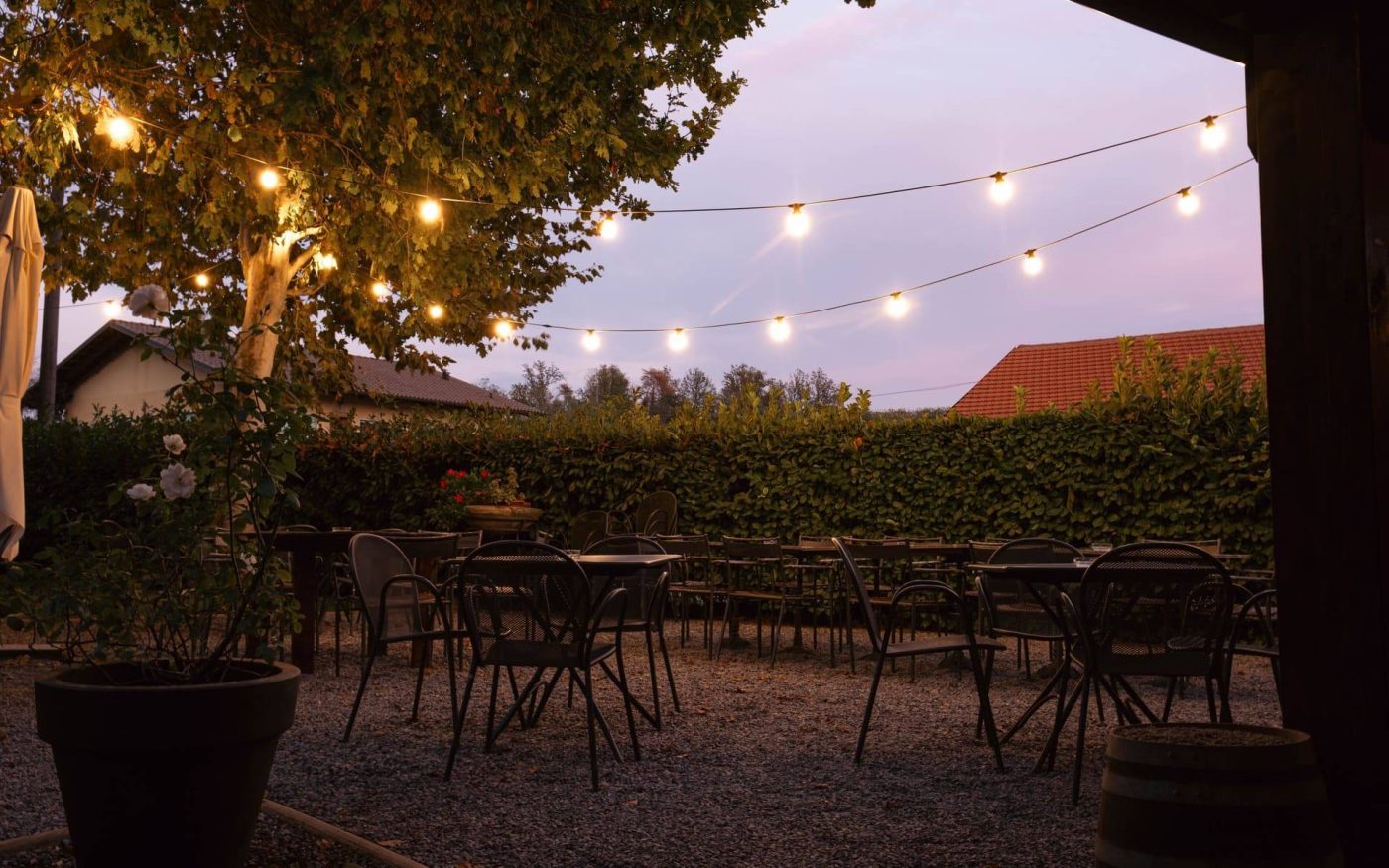
A large dehors opens up in the courtyard, where you can stop for an aperitif or an informal dinner, often accompanied by live music.
On the table, the great Piedmontese classics remain, such as carpione, prepared here with sautéed vegetables and tomato purée.
Halfway between Verduno and La Morra, La Cantina has been an icon of the Langhe for more than fifty years, born as a simple bar-trattoria and grown along with the village.
Outside you will find a sheltered terrace, cool even on the hottest days and overlooking the vineyards.
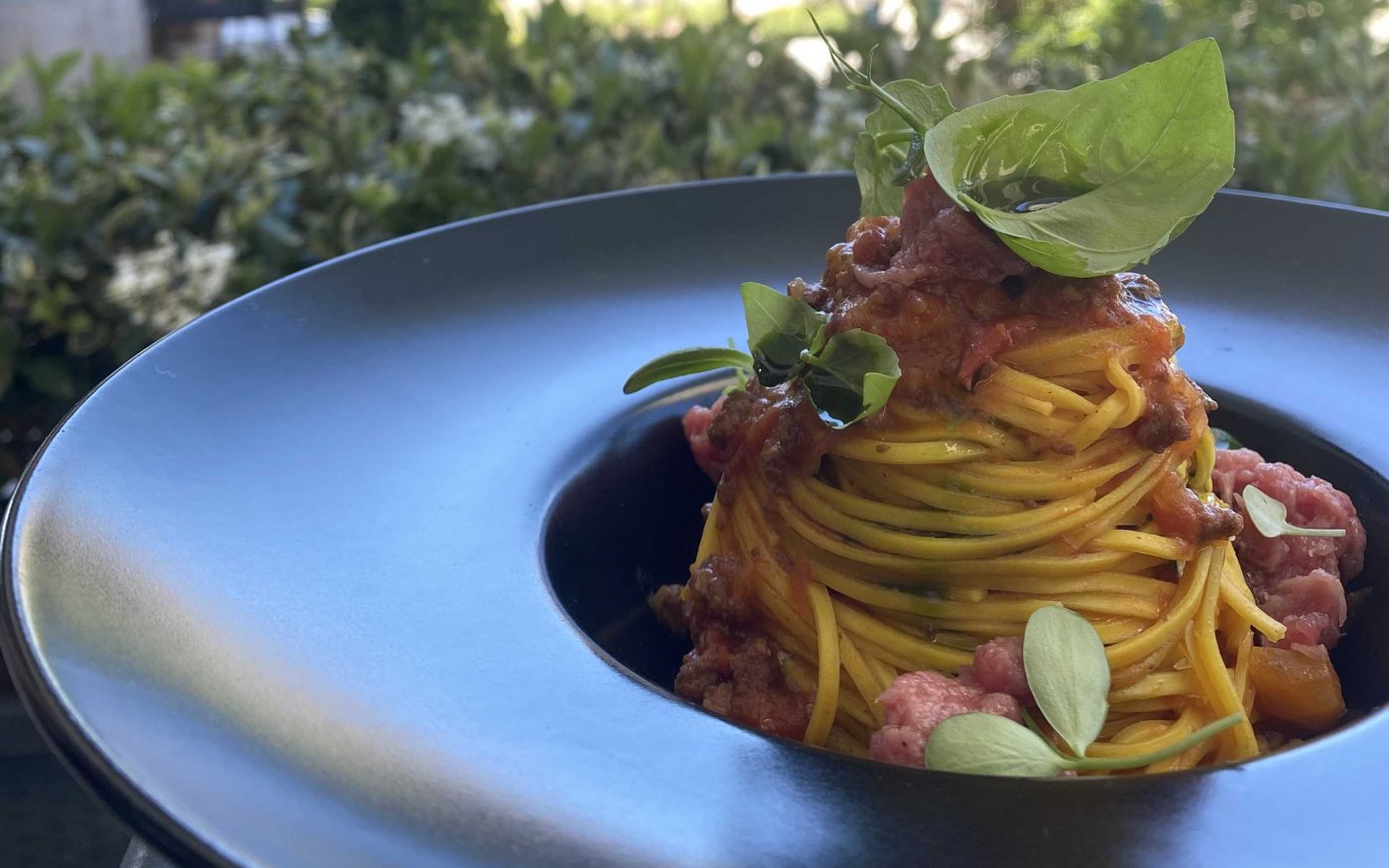
On the table, one of the signature dishes is the Piedmontese tajarin with Barolo ragù, to be ordered without a second thought.
The name does not lie: from the highest hill of Monteu Roero, Trattoria Belvedere Roero looks down upon hazelnut groves and woods, stretching on the clearest days as far as the Alps and Monviso.
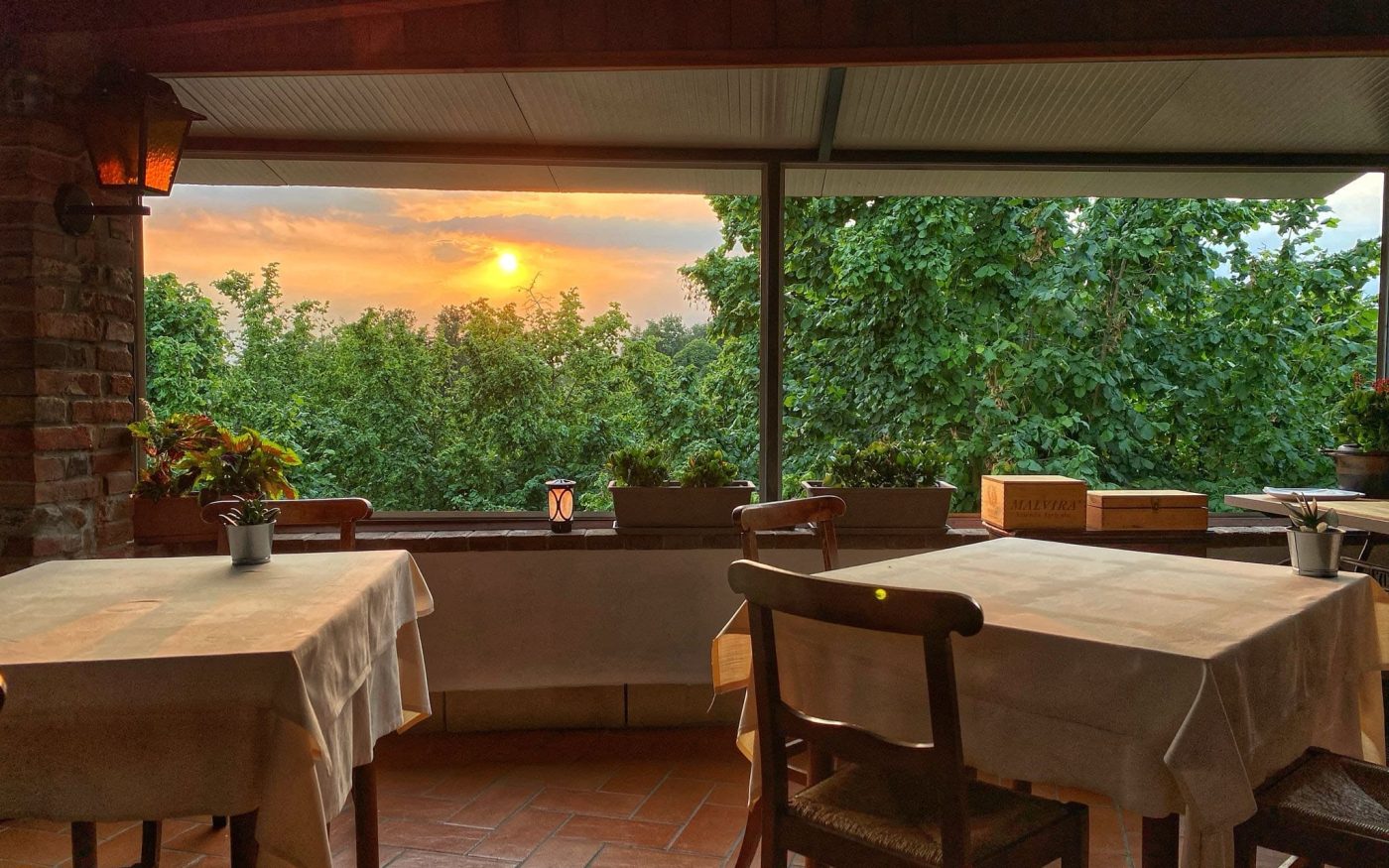
The veranda closes during the winter and, with the warm season, returns to being one of the most pleasant spaces of the trattoria.
From June to November, the menu dedicated to fried mushrooms returns, a signature dish of the house that is worth the detour up here all on its own.
Born from the restoration of an old trattoria outside the village, among chestnut trees and tuff outcrops, Cantina dei Cacciatori still preserves the hand-painted sign that tells its century-old story.
Outside, a rustic and colorful gazebo immersed in the garden welcomes lunches and dinners during the warm season.
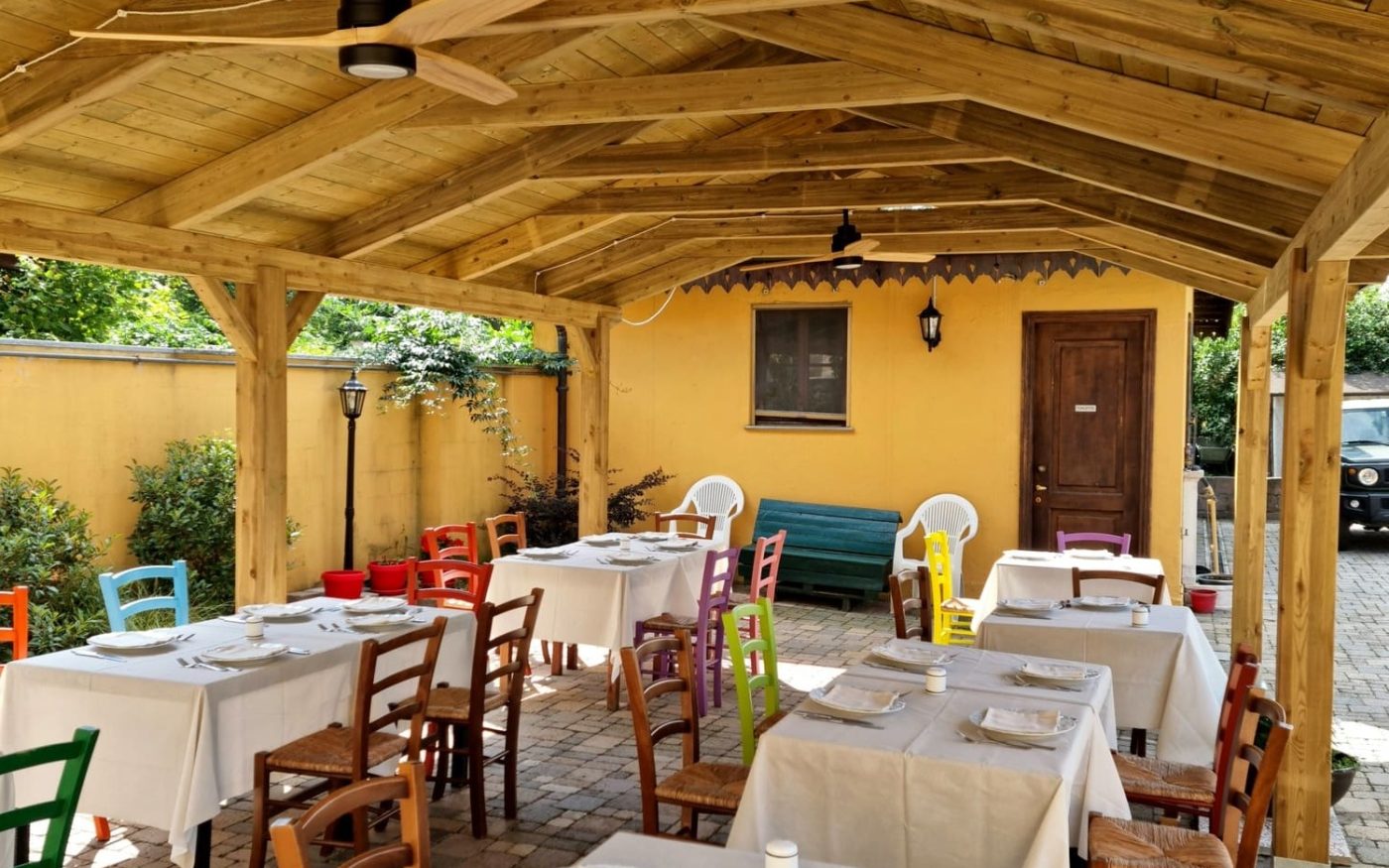
On the table, the summer carpione with Moscato stands out, a fresh dish that is now hard to find. Also try the four peppers, offered with bagnetto verde, anchovy, baked, and in a roll version with tuna sauce.
Under the historic porticos of via Roma, in the heart of Canale, Osteria dai Babi has brought a breath of fresh air to the Roero gastronomic scene, with vintage details and a curious wine list.
The dehors is there, even if the place seems to express itself best in the indoor room, overlooking the porticos.
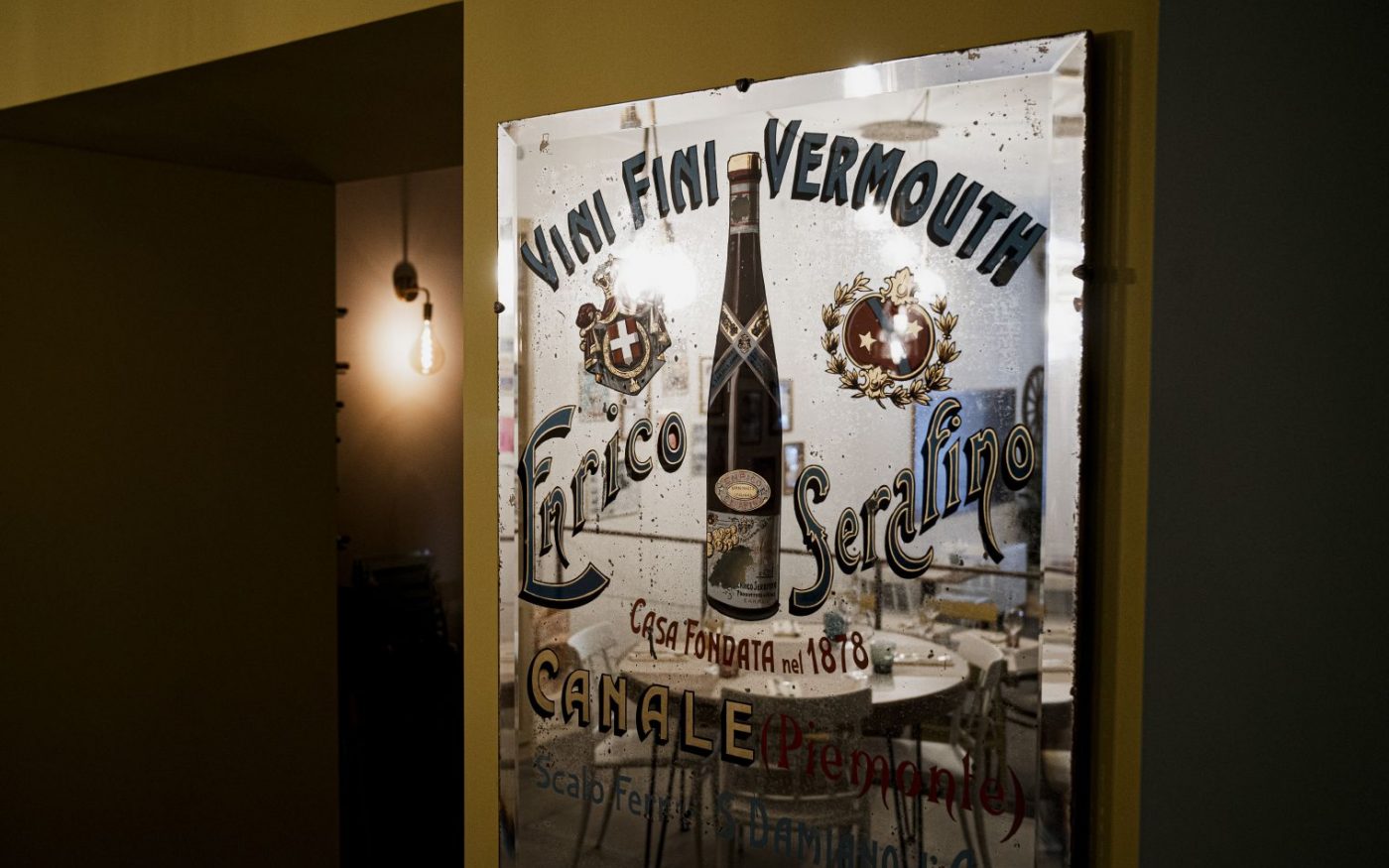
Not to be missed, when it appears on the menu, is the fried zucchini flower stuffed with ricotta and lemon, served on a Roero saffron cream: a dish worth the stop even without necessarily looking for an outdoor table.
In the medieval ricetto of Neive, in a seventeenth-century house with exposed brick and wooden beams, the Barbero brothers have opened this small sanctuary of family wine.
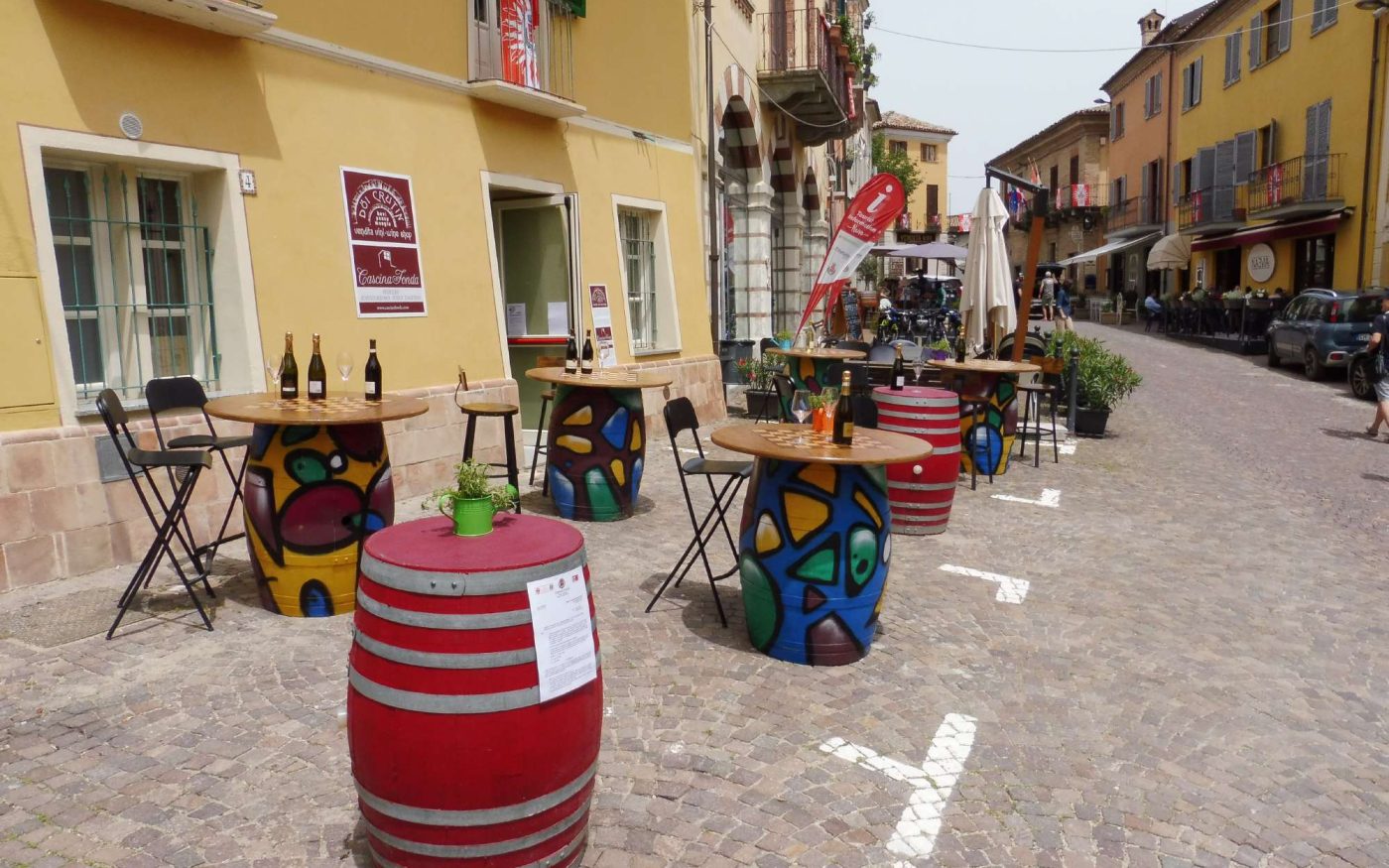
The dehors occupies a space in piazza Italia and is decidedly original: among barriques painted by a local writer and transformed into handcrafted tables and chairs, you can drink a glass of Barbaresco or stop for an aperitif accompanied by excellent platters.
A pleasant address to close a day of winery visits.
Moving from Roero to the Langhe, the landscape changes and with it the points of view change too: here the dehor often becomes a terrace overlooking vineyards, castles, and UNESCO heritage hills.
At thirty meters high above the roofs of Alba, the large panoramic terrace of Hotel Ristorante I Castelli offers a truly suggestive 360-degree view of Langhe, Roero, and the historic center.
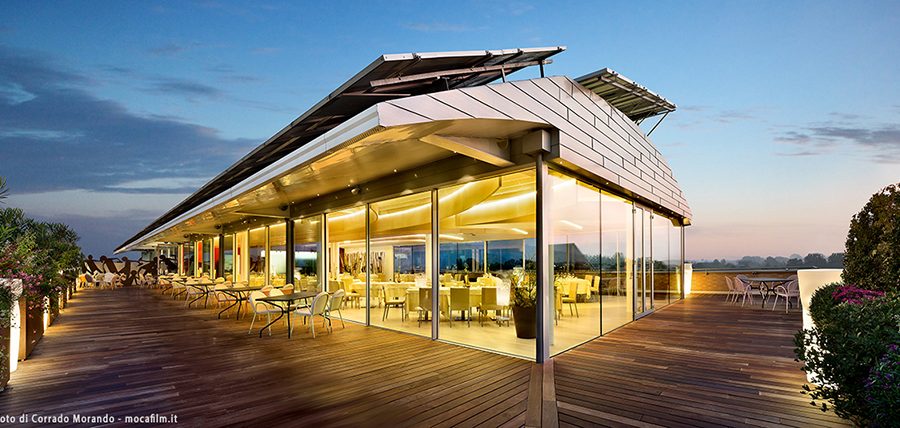
It is the right place for an elegant dinner, with Piedmontese dishes revisited in a modern key.
In the San Giovanni district, among workshops and small shops, LaLibera carries the name and style of Flavia Boffa, who here has been able to blend the elegance of the restaurant with the convivial spirit of the osteria.
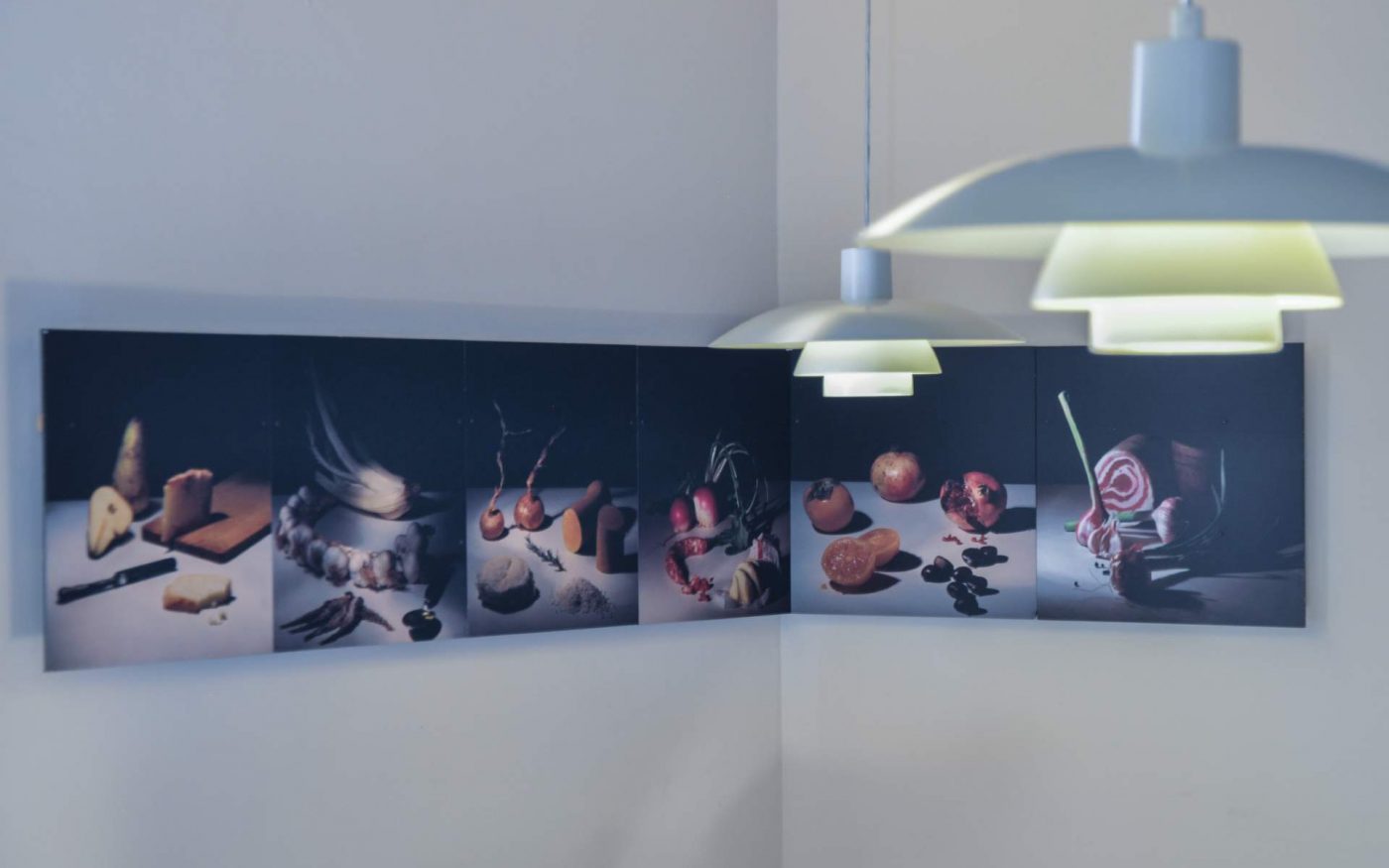
The small square adjacent to the restaurant makes summer evenings even more beautiful. To order this summer: rabbit salad, summer vegetables, and foie gras shavings.
Two rooms, a hundred seats, and a view that ranges from the Langhe vineyards to the Alpine arc: Il Banchetto was born in 2009 from the experience of a fresh pasta laboratory and gastronomy.
The panoramic veranda allows you to eat with the feeling of being almost outdoors, enjoying the view even on the hottest days.
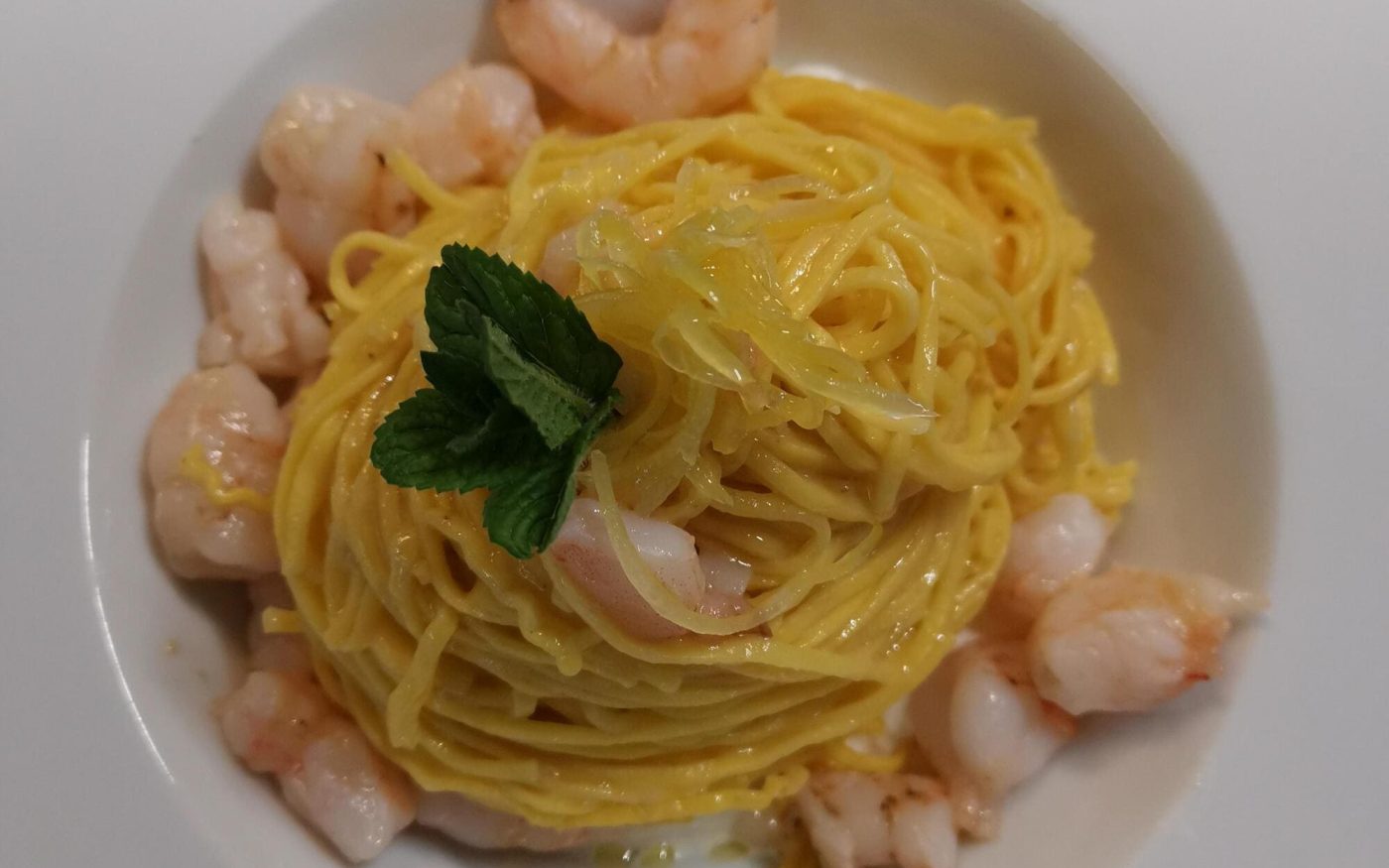
In the summer menu, the tajarin with burrata, shrimp, and lime stand out, a fresh and light dish, particularly suitable for the season.
A symbol of Carrù cuisine and closely linked to the historic Fiera del Bue Grasso in December, Al Bue Grasso has also thought of families.
Outside, a veranda overlooking the playground allows you to eat outdoors while giving children their own space.
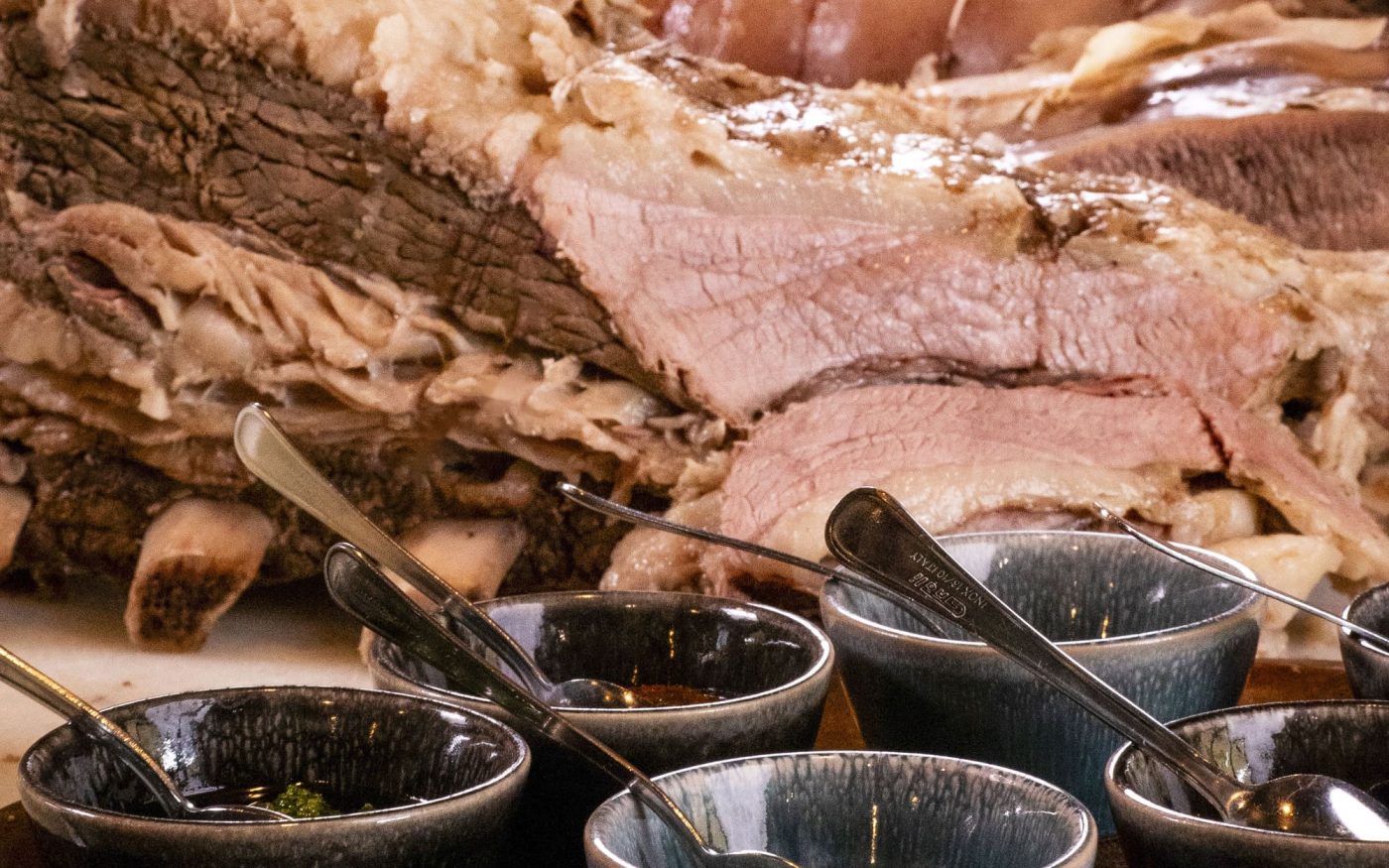
Bollito remains the house specialty throughout the year, while with spring and summer, grills also arrive.
On the Ravinali hill, among vineyards and hazelnut groves, the Allochis brothers manage Il Vigneto di Roddi, a restaurant with rooms that seems made specifically for admiring the sunset.
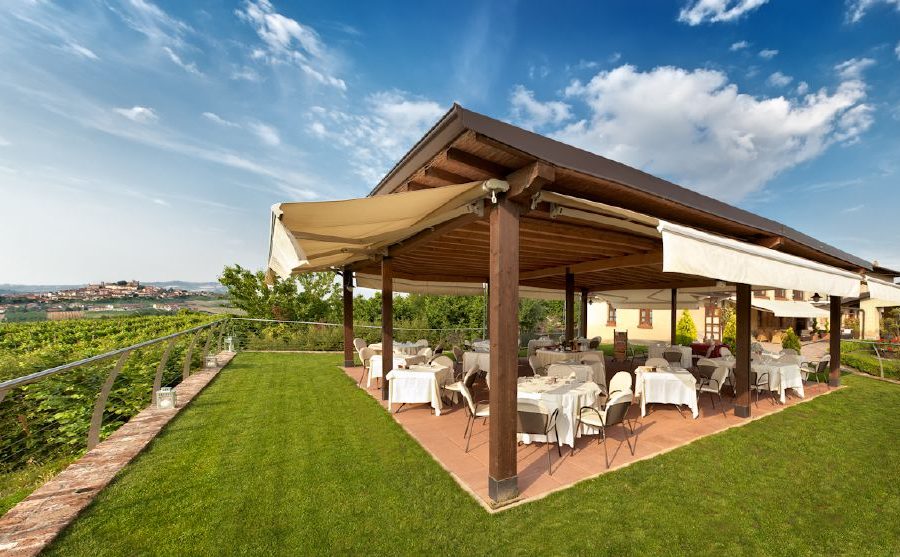
During the warm season, you eat on the summer terrace under a shaded gazebo, with an open view of the hills.
The peculiarity is in the menu: in spring and summer the kitchen also opens up to fish, a choice that is anything but obvious in these parts.
Two hundred meters from Piazza Michele Ferrero, among old cellars and exposed brick barrel vaults, Cortiletto d’Alba was born from a careful restoration work.
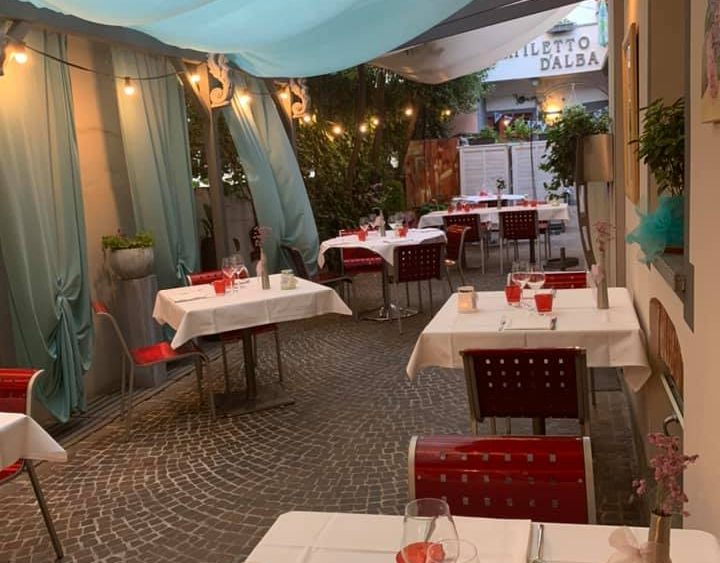
With the warm season, the restaurant opens to the outside, with 32 seats in the dehors, almost as many as those in the indoor room. The space can also be reserved for parties and private events, always accompanied by strictly Piedmontese cuisine.
Born in the tasting room of the historic Cantine Salvano and grown to become a full-fledged food and wine bistrot, Fosco Bistrot develops on several levels, descending to two floors underground among the barrels.
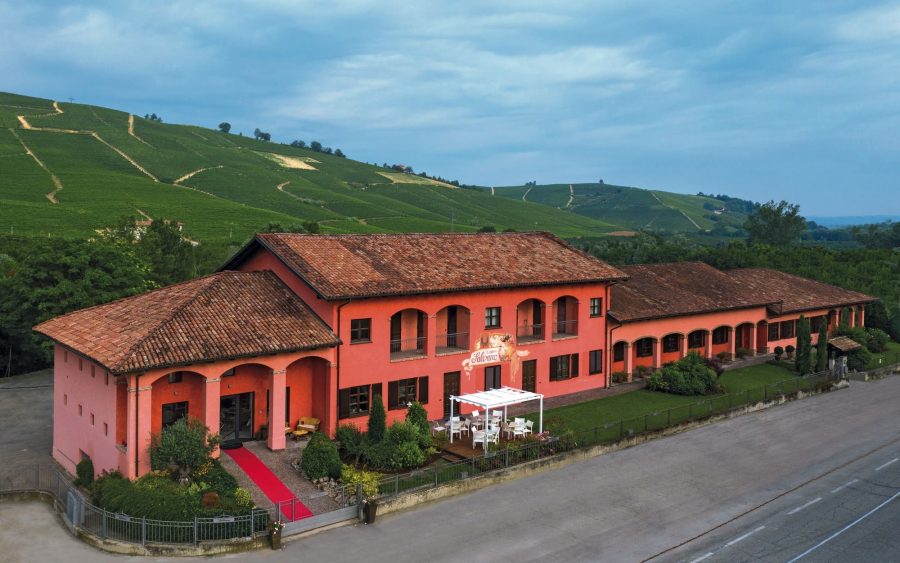
With the warm season, it also opens to the outside, with a well-kept garden and a patio where you can experience the Langa winery atmosphere in the open air.
In summer, among the dishes to try, there are the spaghetti with clams, one of the kitchen’s workhorses.
Albamare tells a family story that starts from Scala, on the Amalfi Coast, and arrives in Alba bringing with it the flavors of the sea.
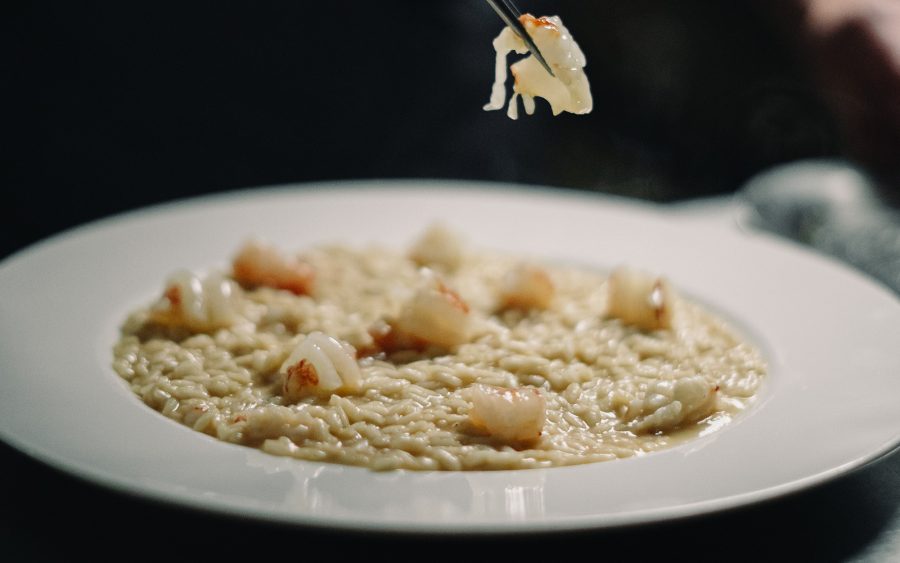
With the warm season you can also eat outdoors. On the table you can find the risotto with cooked and raw shrimp and lemon zest, or a revisit of the classic vitello tonnato.
A cuisine that brings Mediterranean flavors and suggestions to the center of Alba.
In the hamlet of Santa Maria, among vaulted ceilings and exposed brick, this osteria with a rustic yet elegant style offers a cuisine attentive to seasonality.
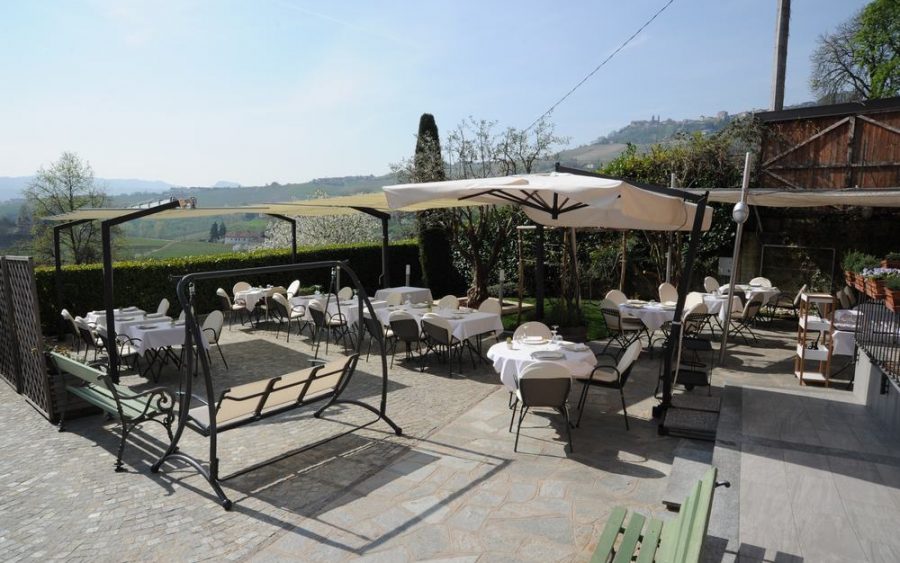
With the warm season you can also eat on the outdoor terrace, accompanying summer days with dishes like the pink vitello tonnato, the zucchini flan, and the rabbit salad.
At seven hundred meters above sea level, in the wildest Alta Langa, this restaurant managed by the same family for three generations offers a cuisine made of mushrooms, fresh pasta, and game.
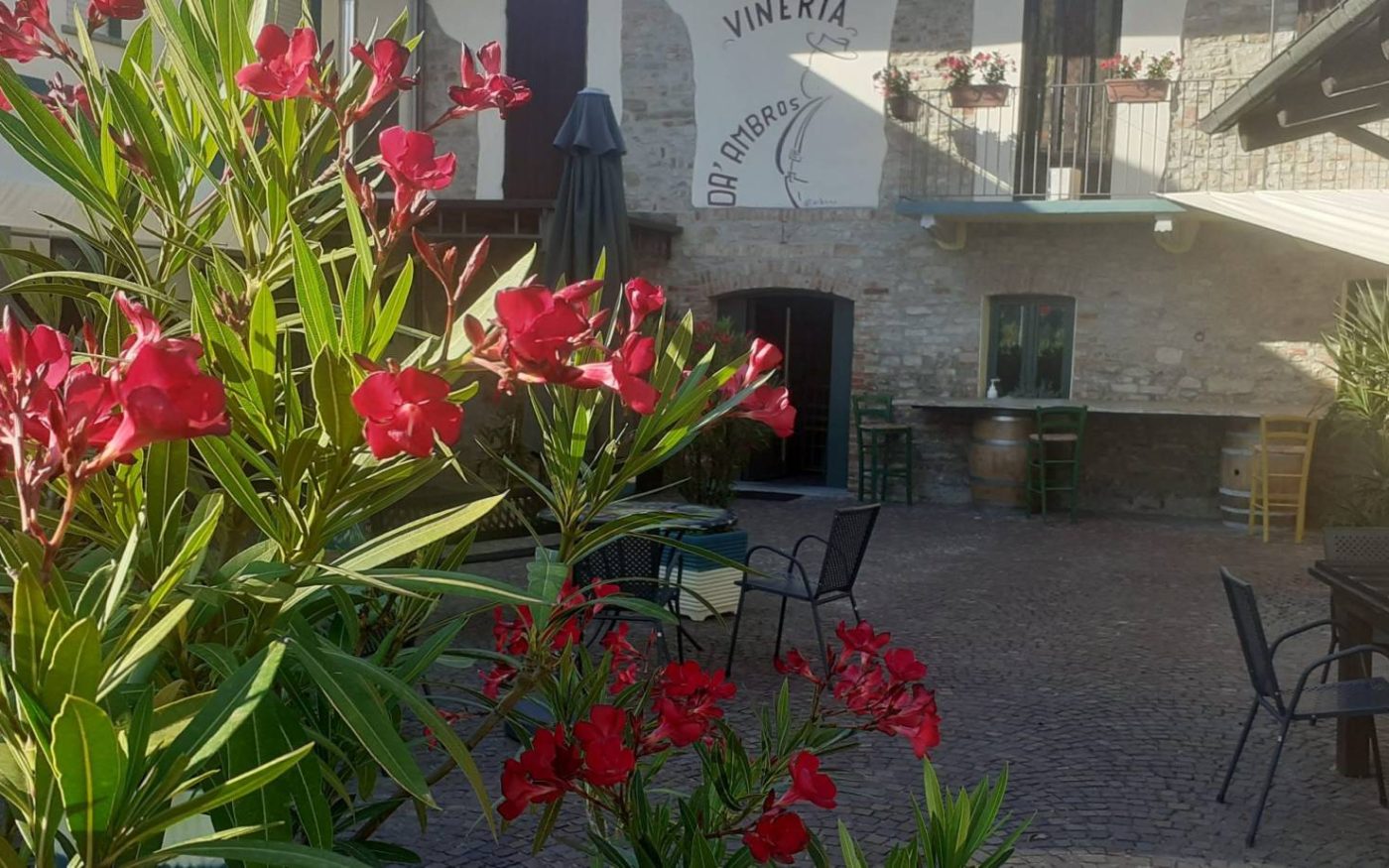
With the warm season you can also eat outdoors, in a beautiful and cozy courtyard, equipped for summer lunches and dinners. In this period, carpioni are the stars: try the one with egg, fresh and perfect for teasing the palate.
A former farmhouse with a view of the castle of Castiglione Falletto, surrounded by vineyards that almost touch the tables.
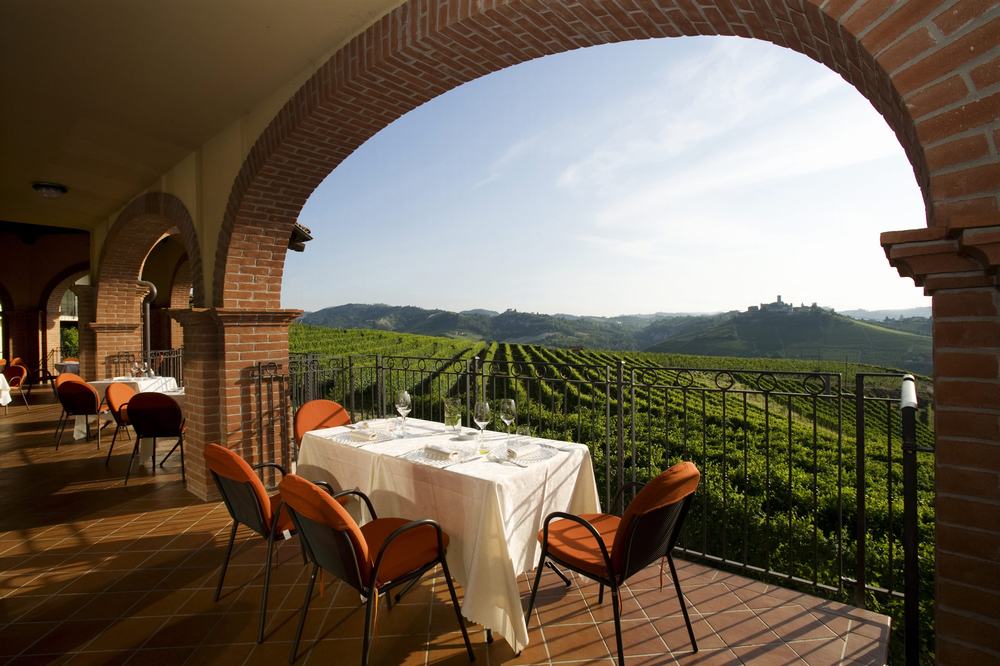
With the warm season you can eat on the terrace and on the panoramic balcony, particularly pleasant during sunset hours.
Alongside the traditional Langa dishes, enriched in autumn by white truffle, the kitchen also offers gourmet preparations based on fish.
The name Argaj, in Piedmontese, means “satisfaction”. Andrea and Valentina have chosen a welcoming and contemporary environment.
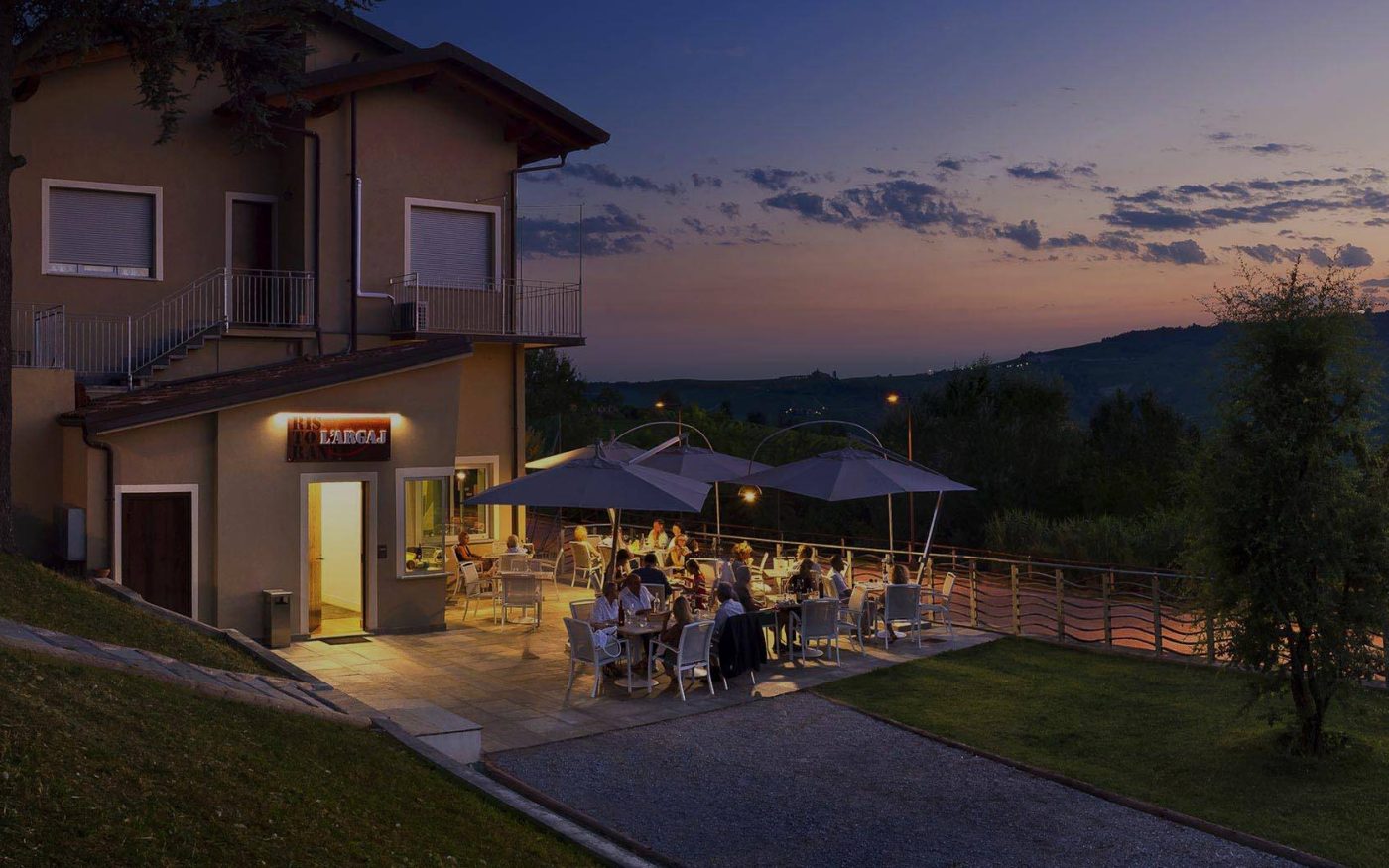
With the warm season you can eat on the panoramic terrace overlooking the hill of La Morra, where tables without tablecloths contribute to creating an informal and relaxed atmosphere.
The cuisine also follows a personal path, mixing Langa tradition and Japanese suggestions in dishes like cold umami spaghetti or pigeon with chanterelles and figs.

by Nicolas Roncea
Special


