Moscato d’Asti DOCG
Sweet, but not cloying. Slightly sparkling. Fresh with a characteristic taste of freshly picked grapes. A low alcohol content and an exceptional drink, velvety and enveloping, good for summer afternoons, aperitifs on the terrace, evenings with friends.
Equally pleasant as an end to a meal, ready to accompany the great traditional desserts, fruit and panettone. Above all, an authentic son of its land, that comes out in the glass through notes of sunshine and nuances of terroir.
Is there anything Moscato d’Asti cannot do?
Without a doubt, it is Piedmont’s most pop wine, the most versatile, a “four season” of pleasantness and territorial identity.
They understood this abroad, where, in recent years, consumption has literally exploded. A “Moscatomania” that has pushed volumes sky-high and has taken hold of the collective imagination, going so far as to colonize the verses of rappers like Kanye West, Drake and Lil’ Kim: a more understandable version of the Dom Pérignons that wash luxury cars, “intimate” Champagne for times of crisis.
At home, unfortunately, nemo propheta in patria. Moscato d’Asti is crushed by occasional rhetoric, which wants it as a handmaiden of table wines, a sugary indulgence for the Christmas holidays, the bottle of the unmarried aunt left on the cellar shelves after she herself has indulged in the good ones.
Yet Moscato is anything but simple
It is perhaps the most serious of Italian sweet wines, a type with an immense spectrum of nuances that the most attentive drinkers are slowly discovering.
Not only are there three sub-zones of Moscato d’Asti (unknown to most and communicated even worse):
- Canelli
- Strevi
- Santa Vittoria d’Alba
and a passito type of Moscato d’Asti called “Late Harvest.” But the interpretations that the most attentive producers are delivering to the market are surprising.
Signature versions that emphasize its vocation for single vineyard, the reading of the soils where it is planted, the personalities it is able to assume according to cellar choices.
Above all, versions that return to the glass the extreme sensitivity of Moscato d’Asti to the quality of work done in the vineyard, the selection of musts and respect for its natural expressiveness, which must remain as far as possible away from industrialization and chemicals.
The fortune of Moscato d’Asti, however, remains its enjoyability. Whatever interpretation happens to come within reach of your glass – barring respect for the grape variety and the healthiness of the beverage – will be a pleasant discovery for you.
The most easy-drinking wine you have ever encountered: fresh, intense, sweet, never banal.
Vines
Appellation
Color
Type
Min. alcohol
Variants
Established on
DOCG 1993

The history of Moscato d’Asti DOCG
Pop for over two thousand years
Very ancient is the origin of the vines from which sweet and aromatic wines, similar to Moscato d'Asti, were obtained. It is believed that they were imported from Greece to Italy, where they were apparently already cultivated from the 3rd century BC.
Ampelographers believe that current grape varieties are direct descendants of apian grapes, so called by Pliny and Columella because they were favored by insects due to their sweetness. It was Lucius Junius Columella himself who distinguished the first sub-varieties of apian grapes, one of which, with smooth leaves, would seem to correspond to our moscato bianco.
In fact, there are many varieties of moscato grapes cultivated in just as many regions of Italy. But moscato bianco is the one that, on the hills of southern Piedmont, has yielded the best results, so much so that it has been recognized with the toponym "di Canelli," the town around which the largest vineyard extensions are still found today.
Loved by the Romans for its sweetness, Moscato is cited several times in medieval treatises. It is in this era that it takes the name muscatellus, from muscum, meaning "musk," a direct reference to the "very sensitive aroma, like musk" that characterizes its delicate fragrance.
The first certain traces of cultivation in Piedmont date back to the 14th century and are located precisely in the territory of Canelli. Here stood a Consortile, a group of feudal families that administered land properties. In the Codex Astensis, some of these families were called Muscati, according to the custom of the time of attributing surnames from the grape varieties they owned.
That Moscato bianco di Canelli was gaining prestige can be understood from Renaissance-era documents.
In 1593, the Magistrate of Casale requested "barbatelle di Moscatello" destined for the Duke of Mantua directly from Santo Stefano Belbo, a town near Canelli still famous today for the production of Moscato d'Asti.
In the 1600s, citations multiplied, and it is not uncommon to find Piedmontese Moscato accompanied by attributes such as "finest" and "most delicate."
However, it is thanks to a jeweler that Moscato d'Asti has taken on the form we know today. Giovanni Battista Croce, in the service of the Duke of Savoy Carlo Emanuele I in the early years of the 17th century, in addition to his profession as a goldsmith was "most excellent in agriculture."
To him we owe the first scientific arrangement and codification of the complex winemaking process of Moscato d'Asti which, highly appreciated at the noble courts of the time, remained unchanged until the advent of contemporary technology.
Moscato d’Asti DOCG: Terroir
"Moscato bianco" or "moscato bianco di Canelli" is the second most cultivated grape variety in Piedmont after barbera and occupies more than 20 percent of the entire vineyard area.
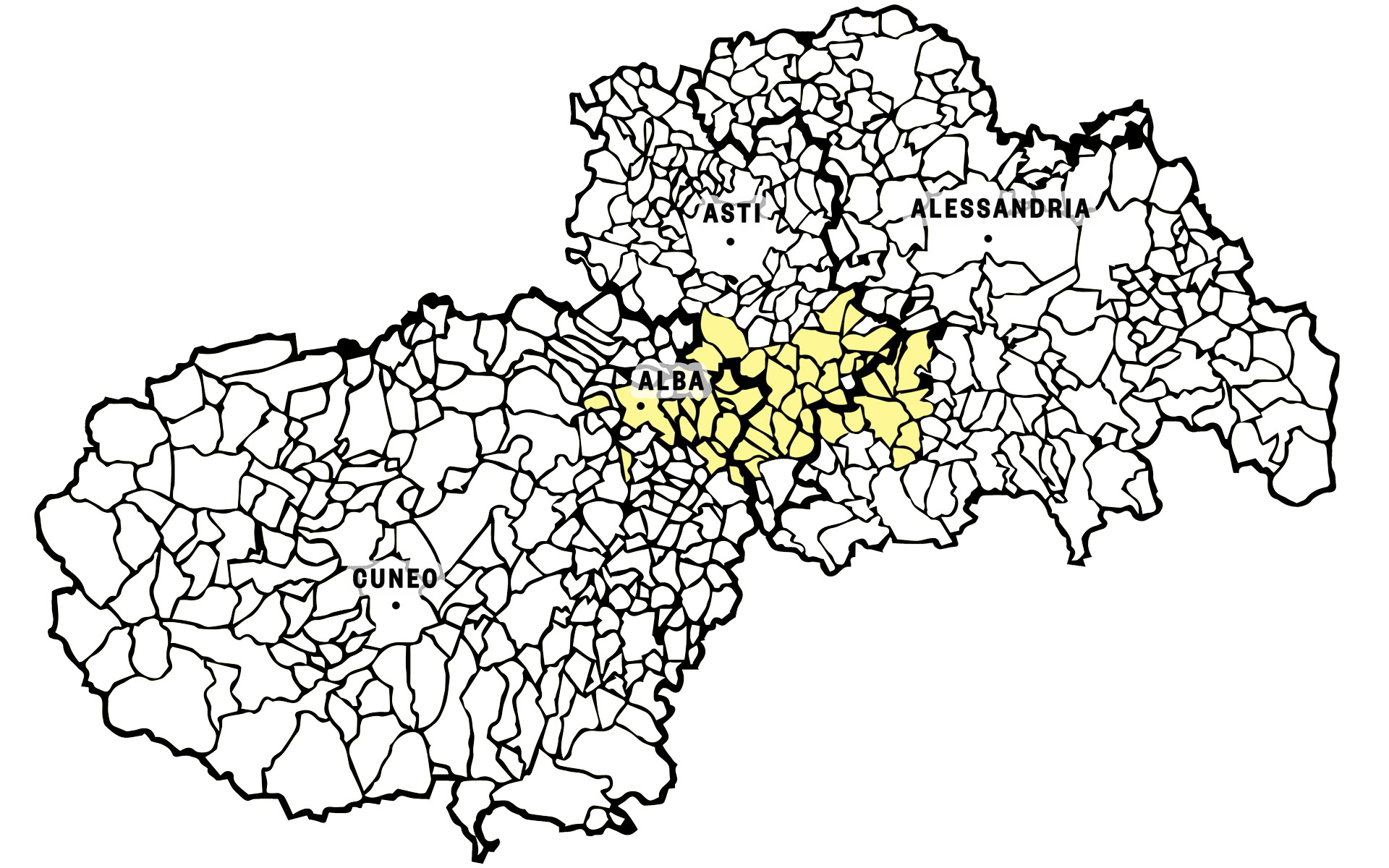
The area with the highest vocation, however, remains that of the hills of southern Piedmont between the provinces of Asti, Cuneo and Alessandria, the only ones where Moscato d’Asti DOCG can be produced.
The regulations allow 51 municipalities for a total of 9,700 hectares which, roughly speaking, can be included between the Tanaro and the valleys carved by the Belbo and Bormida streams. There are more than 4,000 farms dedicated to the production of grapes suitable for the production of Moscato d’Asti for an annual production approaching 40 million bottles.
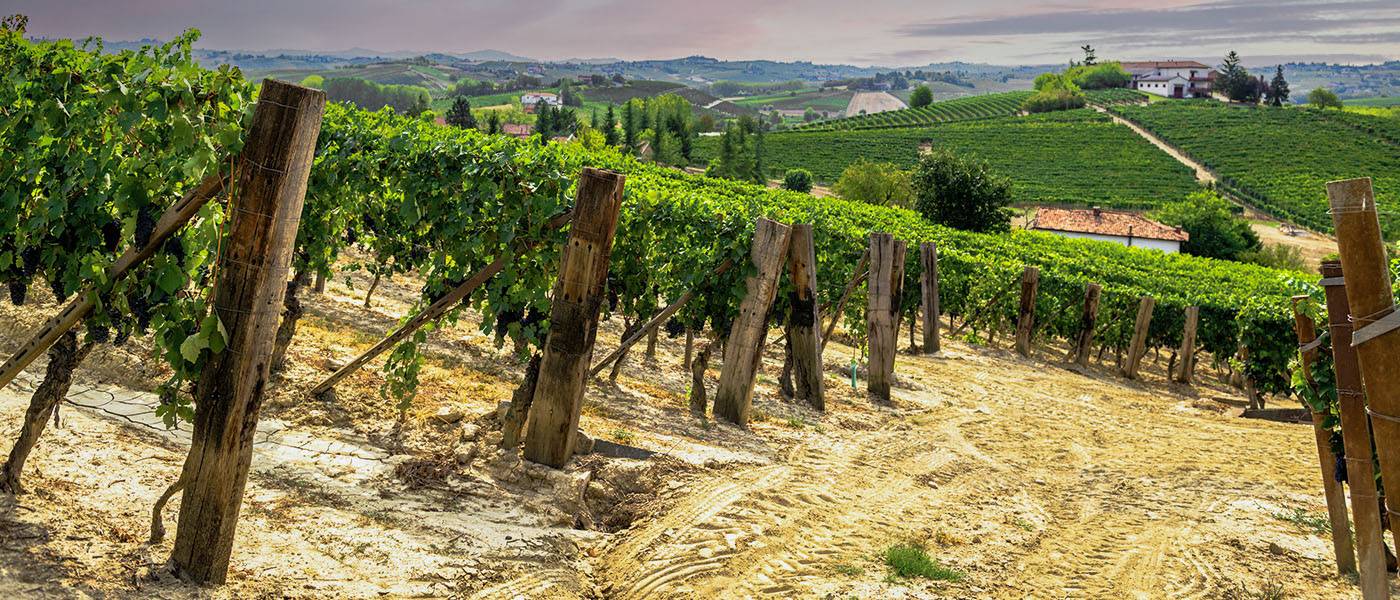
The vast area of Moscato d’Asti is characterized by an enormous variety of landscapes. The hills of the Asti area and Alessandria Monferrato are rounded, soft and sinuous. The ridges of the Langhe, on the contrary, rise steep and rugged, giving rise to spectacular vertical vineyards where viticulture is called “heroic” because of the enormous effort it entails.
Along the Belbo and Bormida valleys, in particular, the vineyards climb up ridges of dizzying beauty, supported by kilometers of dry stone walls, a monumental work of human toil that UNESCO has recognized as intangible heritage of Humanity.
The soils of Moscato d’Asti, despite their differences, represent good uniformity. They are soils of ancient marine origin, characterized by clay marls rich in sand and limestone, a perfect geological base for the aromatic expression of this variety.
While the sandy part is more pronounced in the Asti area, the Belbo Valley, on the border between Langhe and Monferrato, has soils consisting of deposits of calcareous conglomerates and whitish calcareous marls. A characteristic that, on the surface, appears in the aspect of the “calcina” described by the writer Cesare Pavese: a white and very fine powder that during the day becomes red-hot and at night shines under the moon, rising in small clouds at every step.
The geological matrices with different composition (soils predominantly calcareous, clayey or sandy), the microclimate, the slopes and sun exposure give Moscato d’Asti unique characteristics, which enhance aromaticity and finesse, while still maintaining a base of elegance and freshness that is clearly distinguishable.
Preferred Altitude
Preferred Soil
Crus / MGA
Towns where it's produced


Moscato d’Asti DOCG: Vines
The Moscato d’Asti DOCG is a single varietal wine, and therefore can be made exclusively by Moscato grapes
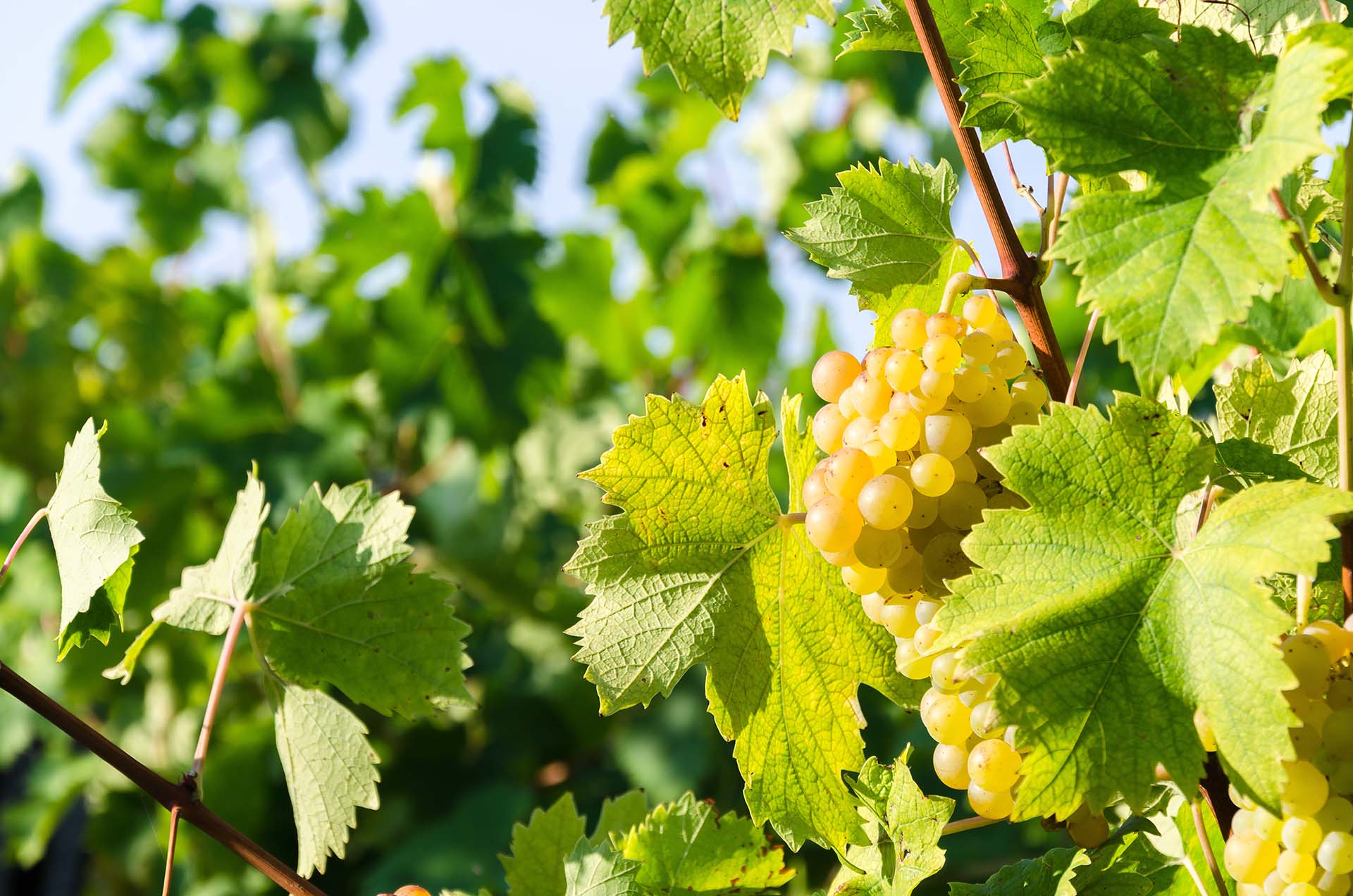
It is a fairly vigorous and prefers marly soil with plenty of limestone, interspersed with banks of sand and sandstone. It is prone to mildew infection and ripens in mid September. The bunch is fairly compact, and cylinder or cone shaped. The grapes are round, with a golden colour that can become amber when they are exposed to the sun. you can read more about Moscato here.

Moscato d’Asti DOCG: Features
All meal, every hour
It may sound like heresy, but Moscato d'Asti, especially abroad, is considered on a par with sparkling wine. They serve it with prosciutto crudo, with oysters, and with aged cheeses. Of course, also with desserts.
Moscato d'Asti is still a wine with good acidity and not too much sweetness, which with the right pairing can give enormous satisfaction. Above all, it can be drunk on its own, meditating on the incredible depth of its aromatic nuances, the spectrum of which ranges from white flowers to honey, from ripe grapes to sage, to delicate citrus notes.
Is it perhaps time to free Moscato d'Asti from the shackles of panettone and hazelnut cake and experiment with more daring and satisfying pairings?
Sight
Moscato d'Asti has a straw yellow color of more or less intensity, with brilliant golden hues. The golden tones can shift toward golden yellow in the Late Harvest version, as the passito Moscato d'Asti is called.
Nose
The great aromaticity of Moscato d'Asti is expressed in a broad and articulated spectrum, all played on freshness and references to fresh grapes.
White flowers such as wisteria and acacia will therefore prevail, the balsamic notes of sage or lemongrass, honey, white-fleshed fruits such as white melon, peach and green apple or pink grapefruit.
Taste
On the palate, Moscato d'Asti is delicate, sweet and fragrant, slightly sparkling. Its extraordinary olfactory notes are reconfirmed with the addition of a proper touch of acidity, which gives freshness and encourages the desire for another sip.
Official regulation
Color
Perfume
Taste
Foam
Get a bottle directly from the producer
LoveLanghe Shop is a niche of great wines from the Langhe area: some unknown to most, some already quite recognized but perhaps hard to find in the big distribution, others in which we see potential but that have yet to grow.
Bottles are shipped directly from the winery to your home, with no intermediary.


Service
Moscato d'Asti should be served chilled. The recommended temperature is 10-12°C.
The best glass for tasting is the coupe, whose wide bowl helps capture the exuberant aromatic expression of the wine without quickly saturating the sense of smell as would happen with a flute or a narrow tulip glass.
Moscato d'Asti is a wine that should be drunk young, within one year of harvest.
Moscato d’Asti DOCG: what to pair it with
Let's say it right away, the best way to taste Moscato d'Asti is in its absolute form, that is, free from pairing. Try it as a meditation wine and it will give enormous satisfaction, especially on hot days, when you need a bit of freshness.
If you want to pair it, tradition recommends desserts. All are fine, but especially small pastries and baked goods. It's perfect with hazelnut cake and zabaione.
That said, it is worth trying Moscato d'Asti with something innovative. It is perfect to accompany aperitifs, cured meats and flavorful cheeses.
Don't be afraid to serve it with oysters, with a nice slice of Jamón Serrano, with toasted hazelnuts and why not? – trust us – truffles and foie gras.
Recipes to pair with Moscato d’Asti DOCG



Moscato d’Asti DOCG: Production
From the very beginning of its winemaking, Moscato d'Asti has been a real challenge.
Technically, Moscato d’Asti is a partially fermented grape must, that is, a wine in which fermentation is stopped before the yeasts consume all the sugars in the must and transform them into alcohol.
Today stopping fermentation is simple thanks to techniques such as centrifugation and temperature control, but in the past it was much more difficult. It was necessary to subject the wine to periodic filtrations that had the purpose of reducing the “load” of yeasts, keeping the sugar level high and, above all, moderating the development of alcohol.
Today the production of Moscato d’Asti uses technologies that make the cellar master’s life a little less hard. However, the process is still very artisanal and relies on continuous human supervision.
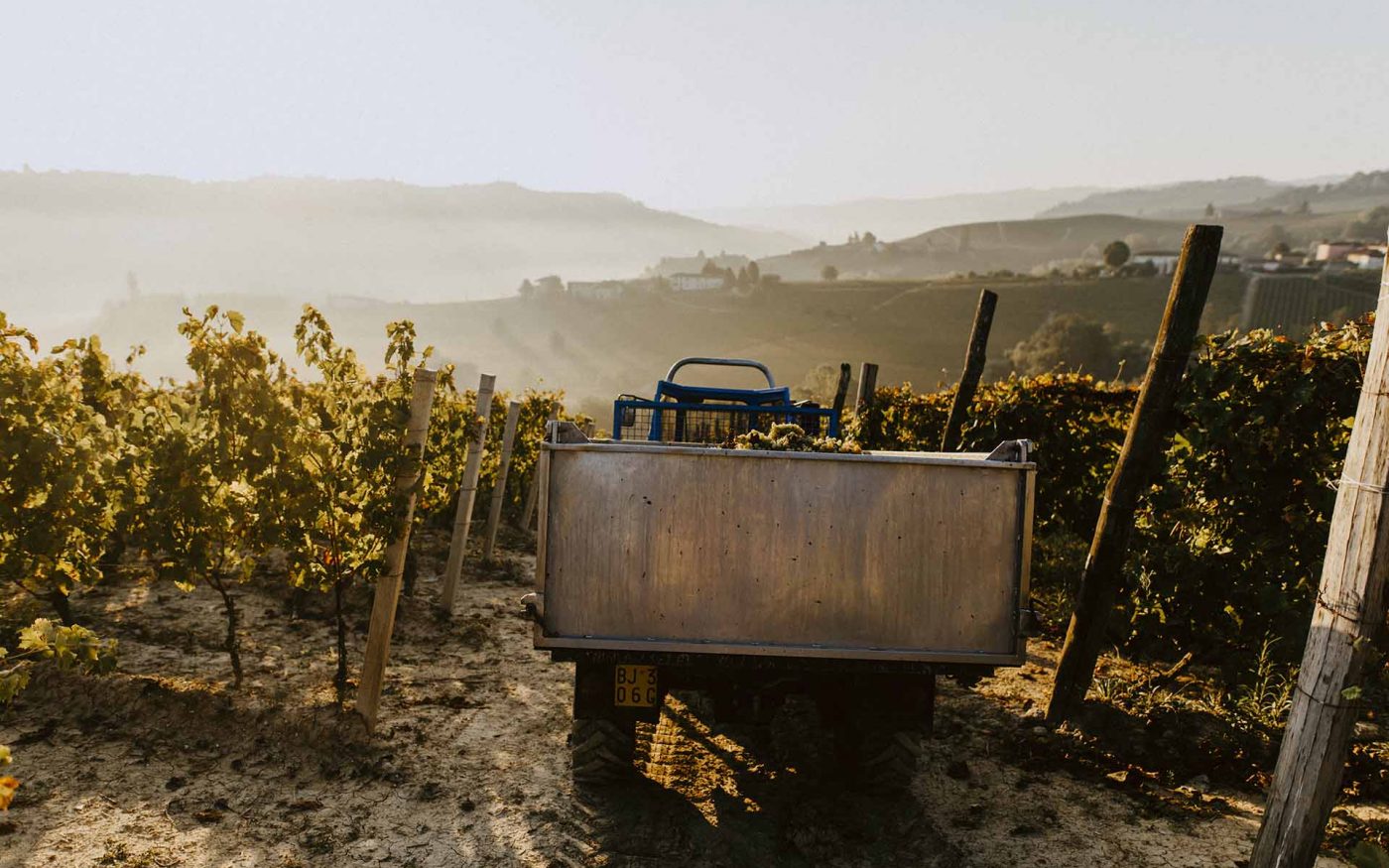
After the moscato bianco grapes are pressed, the must is immediately refrigerated to 0°C. This is followed by static decantation or centrifugation, which have the purpose of separating the lees (skins, seeds and solid residues from pressing) from the wine.
The must is brought to 18°C and fermentation begins, which is stopped when the wine reaches the right alcohol level (between 4.5 and 6.5°) and an adequate residual sugar (usually between 90 and 120 grams per liter).
At this point, the wine can be stored in steel tanks at low temperatures, so as to avoid any restart of fermentation. Finally, clarifications and filtrations are carried out before bottling, conducted in maximum biological sterility so that refermentations do not occur in the bottle that would compromise the taste and stability of the product.
Time in wood
Time in bottle
Time to market
Grapes Yield
Meet the producers





Curiosities
One of the great misunderstandings about Moscato d'Asti is confusing it with its sparkling version, Asti DOCG.
Although born from the same grape variety and belonging to the same denomination, they are two very different wines.
Asti DOCG is a wine refermented in autoclave, where the sparkling process takes place with the addition of sugars and yeasts. Refermentation gives Asti greater effervescence and the classic perlage.
Moscato d’Asti, on the other hand, is a naturally sweet and naturally sparkling wine. Its sweetness comes from the original grape variety and the CO2 present is only that dissolved in the wine during the interruption of fermentation.
The packaging is also different. The Asti bottle is the typical one for sparkling wines, made of heavy glass to withstand higher pressures. The cork is mushroom-shaped, closed by the wire cage. Moscato instead uses normal wine bottles and has a flush cork stopper.
News about Moscato d’Asti DOCG


