Art and culture
Resté in Cerretto Langhe New perspectives on Alta Langa
November 17, 2026
How much time does it take to get to know a village? A walk is enough to get your bearings, find the main square, take in the view. To uncover its stories, you need a bit more than that. A work of art can offer just that: it draws attention to a wall, leads into a garden, raises a question.
In Cerretto Langhe, Resté keeps creating these moments, shining a light on corners worth pausing for and suggesting new ways to experience the area.
Our Resté story began among art, trails and local tales, following a project that invites you to slow down and connect with the Langhe.
Now we’re back to follow its developments in Alta Langa, where works by Egeon, Alberto Ruce and Sara Fratini add a new chapter. The starting point is the rectory of the Parish Church of the Annunziata: here, the landscape tells its story through what grows, changes and leaves a trace.
The presentation on November 7 brought together three artistic paths developed as part of Resté. On the walls of the rectory, you’ll find Rizomorfe by Egeon, Masnà by Alberto Ruce and Da dove nasce tutto by Sara Fratini.
The forest, its inhabitants and the maternal figure are the subjects from which a reflection on dwelling takes shape. Put this way, it might sound like a huge topic; but in front of the works, it becomes something close to home, touching on our memories and our everyday relationship with places.
The choice of space makes this encounter even more interesting. Art enters the architecture of the village, standing alongside its functions and habits.
First-time visitors find a reason to explore; regulars may notice a change and stop to take it in.
It’s one of the ways an artistic intervention can bring new attention to a corner of the village: making you want to come back, maybe bringing someone along.
To step into Rizomorfe, you need to get close, in a sense, to the forest floor, to the bark, to the decomposing wood. The title refers to the dark, thread-like formations produced by the fungus Armillaria mellea. This organism can attack trees and contribute to the decomposition of dead wood, taking part in the recycling of organic matter.
Egeon starts from here: from a process in which decay and regeneration coexist, where the end of one life form creates the conditions for other transformations.
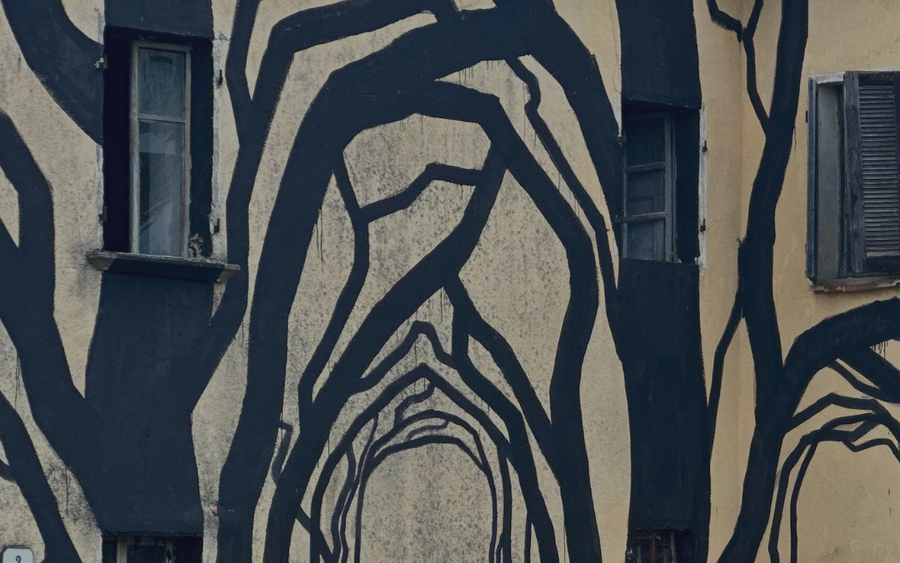
Born in Bolzano in 1990, the artist works with murals and installations, exploring the relationship between places, images and memory. In recent years, the forest has become central to his research, along with the often invisible networks that connect living organisms.
In Cerretto, this interest takes shape in a work that invites you to observe even what usually escapes the eye. After seeing it, even a fallen trunk can suggest a different reading of the forest: something keeps happening, even where everything seems still.
With Masnà, Alberto Ruce continues the work he began in the Langhe during his residency in autumn 2025. At its center are people, their faces and the stories that tie them to their surroundings.
Born in Sicily in 1988 and now living between Paris and Marseille, Ruce comes from a background in mural painting and has developed a technique built on glazes, transparencies and light layers. The surface remains part of the image: the texture of the wall comes through and interacts with what’s painted on it.
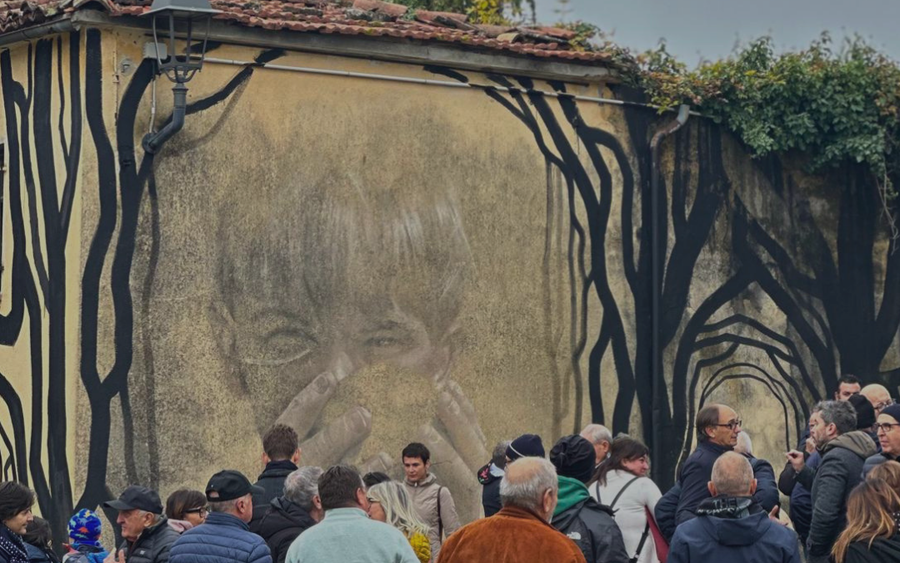
This way of working had already found space in the project Il Popolo del Bosco. Ruce had portrayed residents of the “La Residenza” care home in Rodello and “La Pineta” in Cerretto Langhe, weaving their faces together with leaves and light.
In Cerretto, the images created on shade cloths interact with the trees and the seasons; in Rodello, the portraits live on the facade of the rectory. Masnà carries forward this attention to the human landscape: looking at a place also means recognizing who brings it to life.
Da dove nasce tutto by Sara Fratini explores the relationship between women, motherhood and nature. The maternal figure is both origin and refuge, a symbolic place where life takes shape.
In the work, bodies and landscapes intertwine: the woman takes on natural traits and nature takes on feminine features. It’s a work that connects personal experience with a sense of belonging, bringing an intimate theme onto the wall and opening it up to anyone passing by.
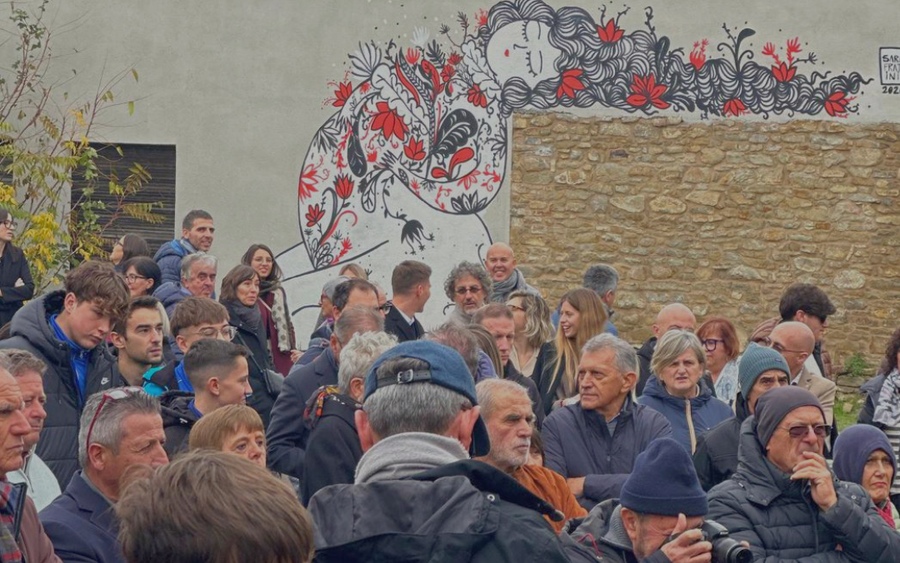
Behind the work lie conversations and gathered memories, bringing together a multitude of stories within the piece. This detail helps explain Resté’s method: encounters with local residents feed into the creative process and help shape it.
For visitors, the mural can become a starting point to reflect on their own origins, on the people who offered protection, on the places tied to care. These are different experiences for everyone, yet able to spark a shared conversation.
A walk through Cerretto also offers the chance to encounter Alta Langa, the sculpture by Job Smeets dedicated to the memory of Maria Franca Fissolo, wife of Michele Ferrero.
The artist, who has lived in Bossolasco for years, donated a polished bronze hazelnut to the municipality. Handmade in his studio in the Netherlands using the lost-wax casting technique, the piece was treated to withstand the weather and be touched by visitors.
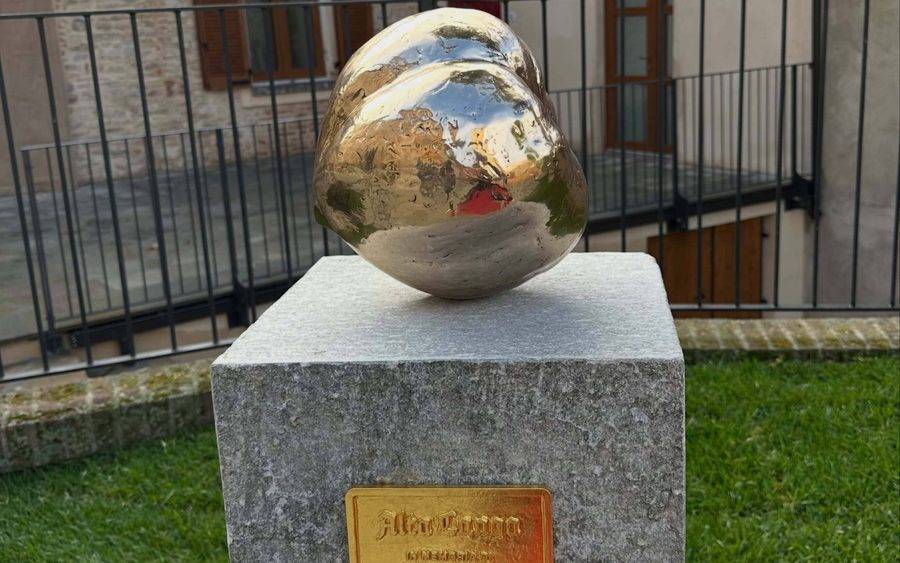
Smeets describes the fascination he feels for the hills, the Alps in the background and the fruits of this land. The hazelnut concentrates that richness into a familiar shape, tied to agricultural work and local history.
Now in its fourth year, Resté continues its journey through artist residencies and opportunities for dialogue between artists, residents and the local area.
Its growth comes from these encounters: each new body of work adds a perspective and leaves something to observe, discuss and share.
The project is also part of the cultural promotion initiative ORMA. Tracce d’artista in Langhe Monferrato Roero. In Cerretto, all of this takes a concrete, visible form: a wall, a face, an image of the forest.
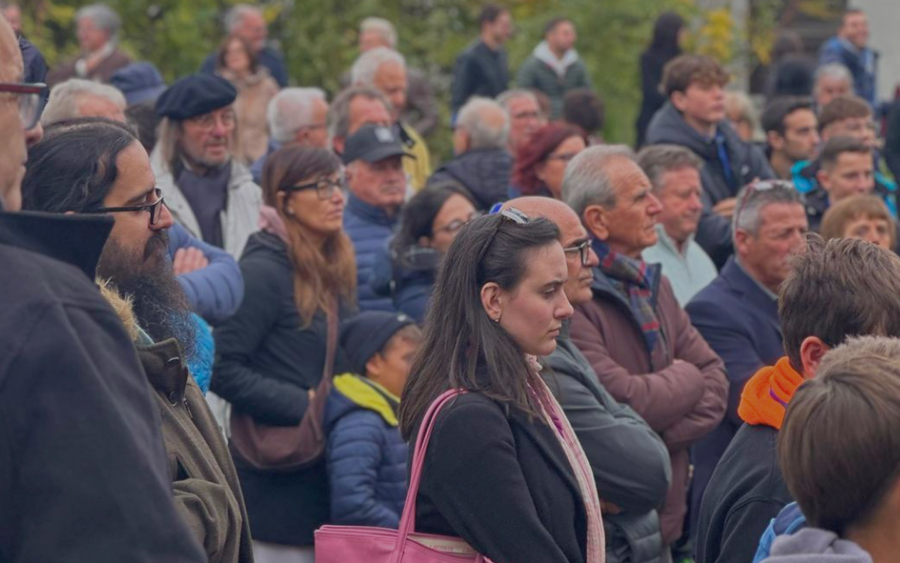
To start exploring, all you need to do is follow your curiosity and spend a few extra minutes in front of the works. Then continue your walk, paying attention to what’s around you. That’s where the story continues, between the art and the village that hosts it.

by Franco Binello
by Nicolas Roncea


