Art and culture
Ca’ Balun in Niella Belbo. The pallapugno museum opens.
October 17, 2026

Balls, jerseys, photographs, and game equipment tell a part of the history of the Langhe: that of the matches in the squares, of the champions, and of the communities gathered around the balòn.
In Niella Belbo, in the Alta Langa, this memory has found its place in Ca’ Balun, the museum of pallapugno and spherical sports, inaugurated on October 9, 2026.
The opening was attended by Prince Albert II of Monaco, visiting the Municipalities of the Langhe linked to the history of the Grimaldi family.
For the village, the inauguration marks the beginning of a project that invites you to discover the sport and the territory, even if you have never attended a match.
The path stems from the work of the journalist from Mondovì Luca Giaccone, who has collected and cataloged hundreds of pieces. Alongside the materials linked to pallapugno, there are objects coming also from Belgium, Ecuador, and Colombia: testimonies that broaden the gaze to the different traditions of ball games.
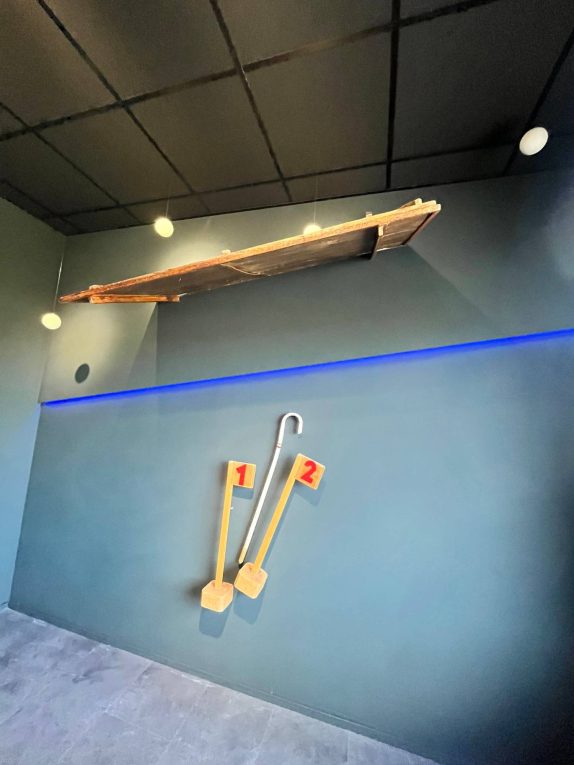
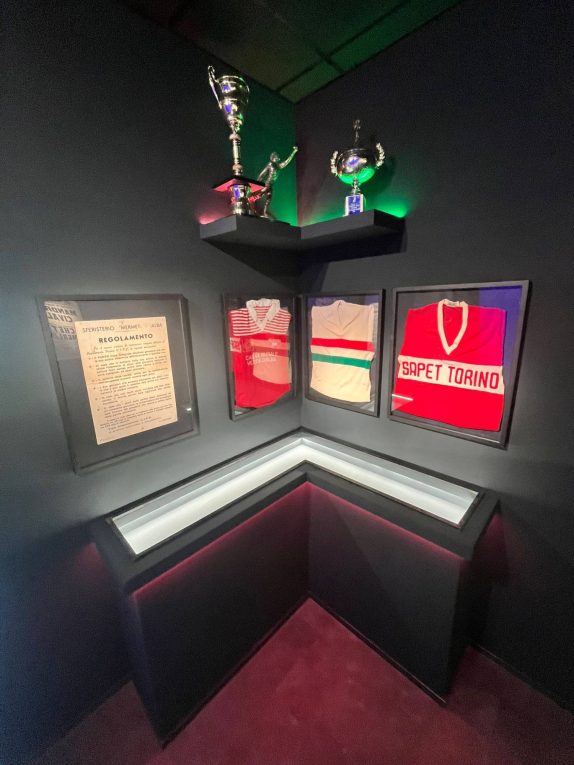
The rooms allow you to approach the history of the balòn through the tools, the images, and its protagonists. The balls and the players’ protections help to understand the sporting practice; the photographs and memorabilia tell of the people who made it part of village life.
We will never be grateful enough to Luca Giaccone for what he has done.
Emanuele Sottimanosindaco di Niella Belbo
The collection is accompanied by digital content that you can consult through QR codes, with stories to listen to in multiple languages. Admission is free: an invitation to enter out of curiosity and become familiar with a sport that, between Piedmont and Liguria, continues to involve players and enthusiasts.
Even the building that houses the museum deserves a stop. It is the former Maria Vada kindergarten, transformed into a cultural hub after having hosted the village children for years.
On the facade develops Linescape, the intervention by David Tremlett created with Ferruccio Dotta. The geometric shapes and the tones of green and brown recall the meadows, trees, and earth of the Alta Langa.
Contemporary art thus accompanies the recovery of a place of collective memory, today open to new opportunities for meeting and visiting.
The visit can become the starting point for getting to know the village and its surroundings. In the square, you find a mural dedicated to Beppe Fenoglio, who used to frequent the historic Thursday market: a reference to the writer’s relationship with these lands and with the people who inhabited them.
If you want to continue on foot, the Sentiero Girasole crosses the landscape of the Alta Langa with various loop trails. The Le Nigelle di Langa route instead intertwines the walk with the telling of a fairy tale, with characters and installations that accompany the discovery of the territory.
It is this possibility of uniting sport, culture, and village life that Mayor Emanuele Sottimano puts at the center of the project:
This museum is the opportunity to approach a timeless game, the balun, but also to know better and more deeply what we have that is most natural and ancient: the sense of hospitality, of being well together, of welcome

by Nicolas Roncea
Special


