Barbera d’Asti DOCG
The history of Barbera d’Asti (masculine or feminine matters little) is one of redemption and evolution.
From “people’s” wine to “popular” wine, sought after and desired by connoisseurs from all over the world; from tavern beverage to pure expression of wine-producing Piedmont, capable of challenging the most prestigious reds of the region.
The barbera grape variety deserves this rediscovery because it is the most cultivated variety on the Piedmontese hills and Barbera d’Asti is its most complete expression, produced in a restricted area that includes the Asti area and some municipalities of the Alessandria area.
The quality achieved is the result of selections in the vineyard and rigorous practices in the cellar. If once every slope was good for planting a row, today barbera grapes have earned the best exposures. If vinification privileged acidity over finesse, blending with other wines over purity, quantity rather than quality, today these canons must be literally inverted.
Producers know the potential of the “Lady in Red” and consumers appreciate its soft power, the balance between fruit and elegance.
Above all, Barbera d’Asti has revealed that there is a Piedmont beyond the Langhe of Barolo and Barbaresco. Beyond Nebbiolo. It has opened the mental boundaries of consumers and has demonstrated that there are no “inferior” grape varieties, at most, inattentive vinifications.
The dichotomy between “Barbera and Champagne” sung by Gaber, between what is low and what is high, between trivial and sophisticated, between simple and complex seems to have definitively set. It has been replaced by an incredible desire for qualitative rediscovery that today makes Barbera d’Asti an essential wine for understanding what wine-producing Piedmont is capable of expressing.
Vines
Appellation
Color
Type
Min. alcohol
Variants
Established on

The history of Barbera d’Asti DOCG
The wine of redemption
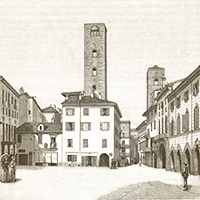
The Ampelography of the Province of Alessandria, published by Carlo Leardi and Pier Paolo Demaria in 1873, describes barbera as follows: "A very well-known grape variety and one of the main bases of the wines of the Asti area and lower Monferrato, where it is indigenous and has been cultivated for a very long time."
An ancient and native vine of the Asti region then: but just how ancient and since when has it been cultivated? To answer this question we must go back to the 13th century, recovering a lease document from Casale Monferrato: it is here that, for the first time, "vitibus berbexinis" is mentioned. Traces of the name "barbera" are found in the 1514 cadastre of Chieri, but the first ampelographic description is that of 1798, when it officially enters the list of Piedmontese grape varieties compiled for the Agricultural Society of Turin.
Barbera, then, would seem to be a grape variety of early medieval spread. A thesis confirmed by its very etymon, which - though uncertain - would refer to the term barbarus. Piedmont, on the other hand, has always been a borderland where "Barb" root place names abound: Barbaresco, Barbania, Barbantana, Barbassa, Barbe, Barberis, Barbero... and so on.
However, the history of Barbera as we know it today is linked to the 19th century. After the destruction of Italian vineyards by phylloxera, Piedmontese farmers largely chose to replant barbera because of its undoubted qualities: exceptional vigor, good adaptability, and productive constancy. It was in the early 1900s that barbera grapes conquered Piedmont and became the most widely planted grape variety in the region.
So much abundance had to find its market. And so Barbera became the first widely popular wine. Taverns and dance halls in northern Italy were flooded with Barbera, often of the lowest quality, "cut" with wines from southern Italy to balance its natural acidity.
It was in the first half of the 1980s that Barbera's destiny changed course. In the Asti and Canelli area, producers eager to restore the "Lady in Red" to her dignity began to vinify it in purity. They chose the sunniest plots, introduced thinning in the vineyard, definitively abandoned blending and decided to enrich the vinification with some passages in wood.
Barbera d'Asti was reborn in its perfect version. The same one that today sets the standard and, thanks to the quality efforts of the entire sector, in 2008 conquered the summit of DOCG status, rightfully becoming part of the great wines of Piedmont.
Barbera d’Asti DOCG: Terroir
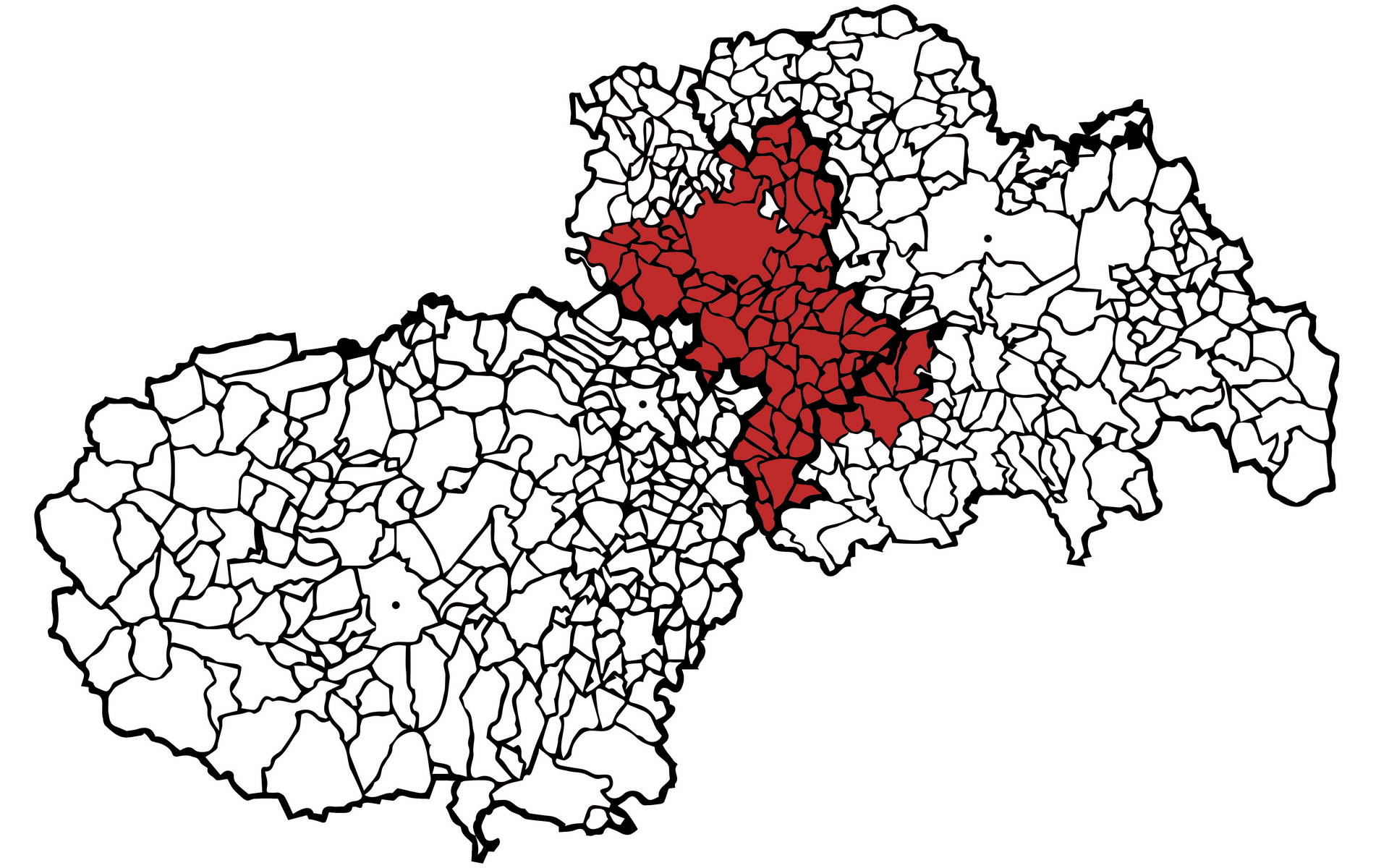
The production area of Barbera d'Asti includes the province of Asti and part of the province of Alessandria over a total area of approximately 5,500 hectares.
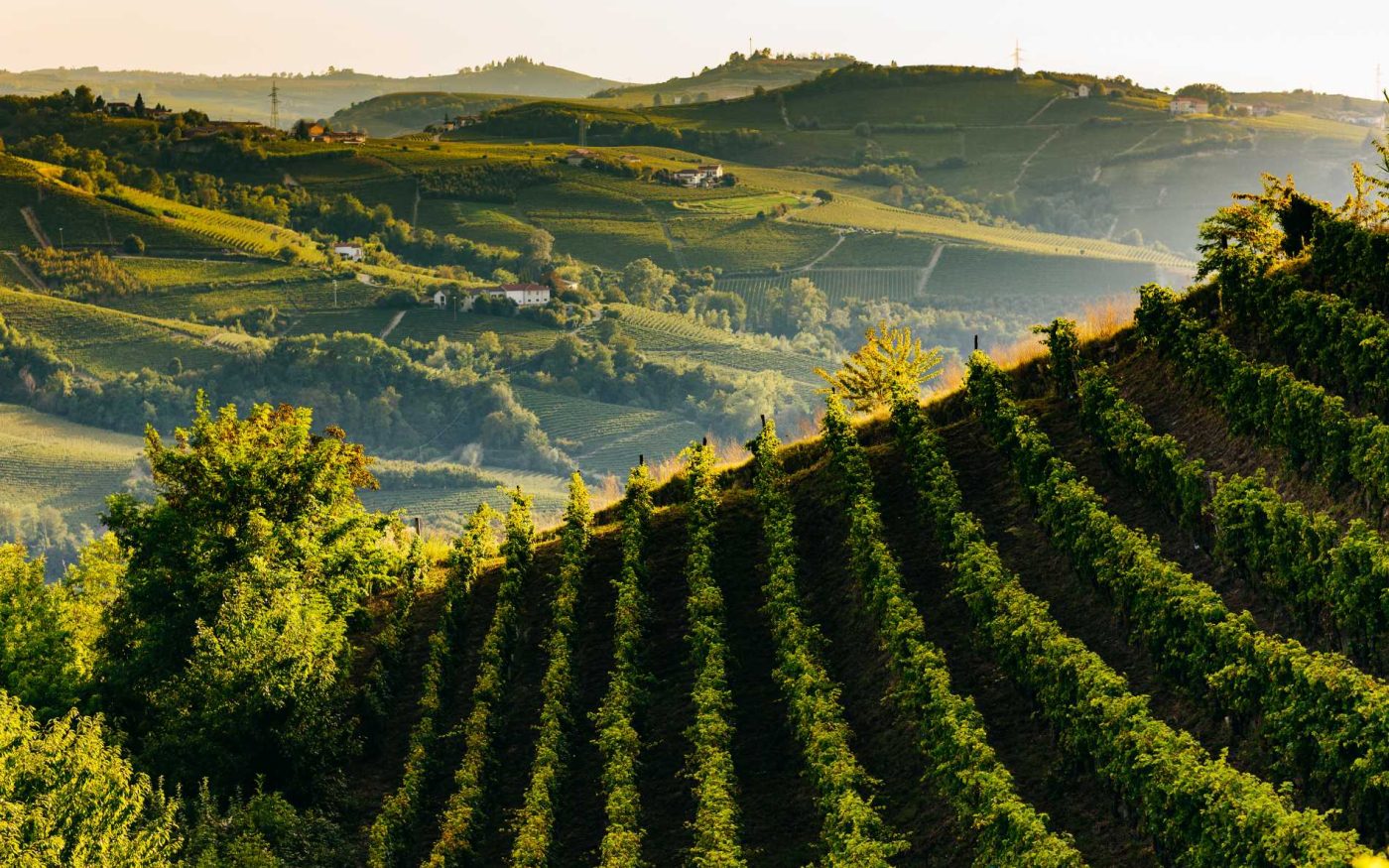
It is a hilly system characterized by gentle, rolling slopes, which do not exceed 400 meters in altitude and, in some areas, feature extensive wooded surfaces.
The lands of Barbera d’Asti date back over 2 million years, when the sea began to retreat from the Po Valley.
Broadly speaking, the soils can be divided into two main areas. The western and southern hills of the denomination feature geology characterized by White Marls, namely banks of clay mixed with sandstone and limestone originating in the Miocene.
Younger is the central part (crossed by the Tanaro river), where the so-called Asti Sands dominate, formed in the Pliocene and more similar to the composition of Roero. The Asti Sands are sedimentary deposits in a coastal environment, rich in fine sandstones, calcium carbonate and poor in organic matter. They are loose soils, which retain less water, thus more arid during the summer season.
On these hills, the barbera grape variety occupies the best exposed slopes and the hilltops because it requires excellent solar radiation to reach full maturity.
The characteristics of Barbera d’Asti wine are closely linked to the soil. Those from the white marls are generally more full-bodied and structured, rich in color, long-lived. The Asti Sands, on the other hand, yield wines characterized by intense aromas and fine low acidity and earlier maturation.
Preferred Altitude
Preferred Soil
Crus / MGA
Towns where it's produced


Barbera d’Asti DOCG: Vines
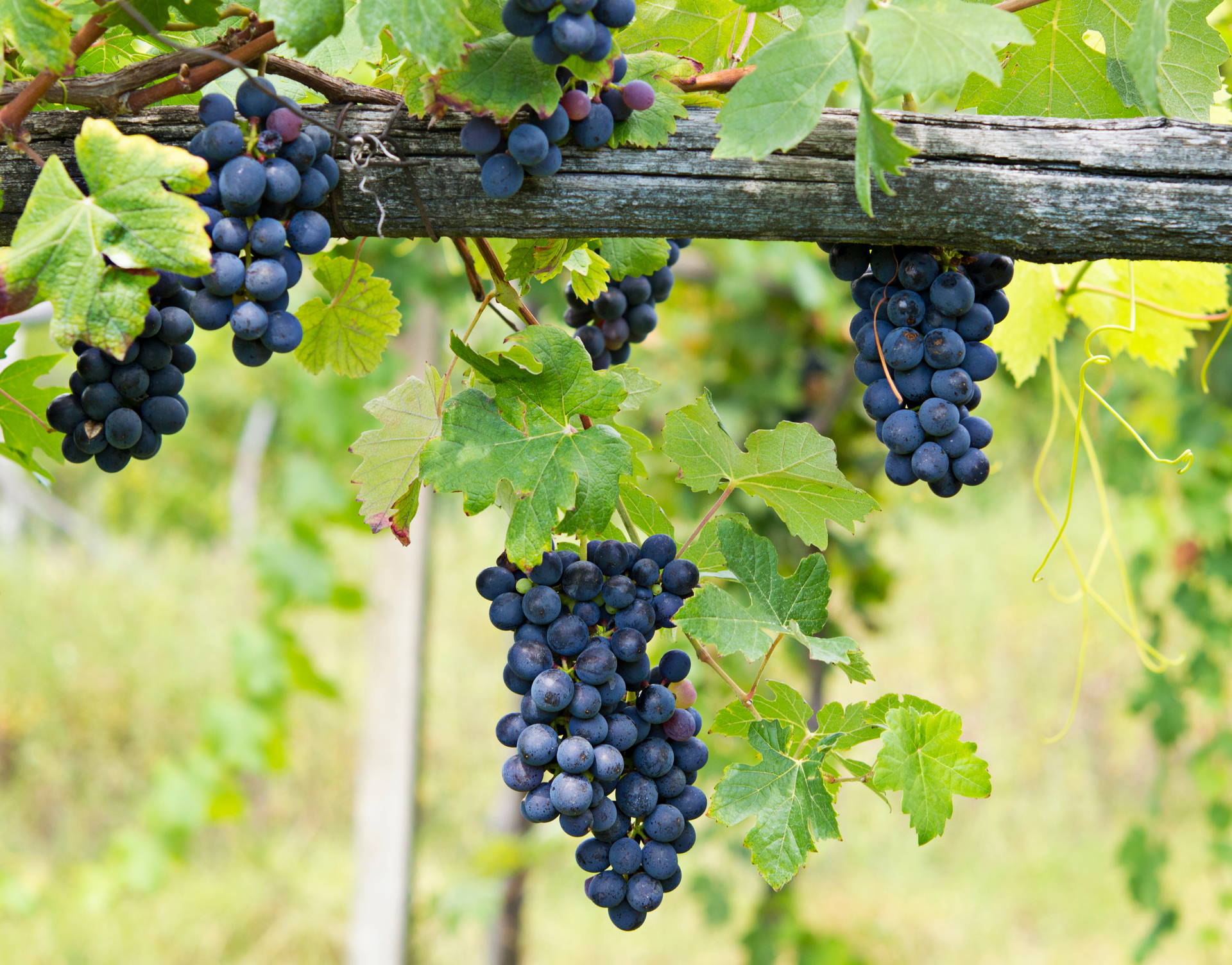
The Barbera d’Asti DOCG is a single varietal wine, and therefore can be made exclusively by Barbera grapes
Its sturdiness, and constant, abundant output is one reason for its popularity all over Piedmont, but it was used to replace the vines ravaged in the early years of the century by an outbreak of phylloxera. The grapes ripen in late September and early October. The bunch is pyramid shaped, and more or less compact depending on growing and environmental... you can read more about Barbera here.

Barbera d’Asti DOCG: Features
What strikes about Barbera d'Asti are the color, acidity and absence of astringency given by a low tannic concentration.
The result is a characteristically fresh wine, with impenetrable violet hues, with a richness of fruit that amazes with every sip.
The Superiore version, aged in wood, deepens and ennobles all these characteristics, managing to bring Barbera d'Asti to a new taste level, rich in nuances, capable of competing with the most prestigious reds on the international scene.
Sight
Barbera d'Asti presents an intense ruby red color, impenetrable to light, at times violet.
With aging, the red tends to take on less intense shades, until reaching a garnet hue.
Nose
In the more immediate and young versions, vinous nuances and hints of red fruit prevail - cherry, blackberry, raspberry, plum - which evolve, with aging, into hints of jam, candied fruit and fruit in spirits.
Aging in wood grants balsamic and spicy nuances, which can also reveal toasted aromas like cocoa and licorice.
Taste
Barbera d'Asti offers an intense and full taste spectrum, of great warmth, focused on dark-skinned fruit.
It is an immediate wine, with a pleasant acidic backbone, which sharpens its freshness.
Aging adds austerity, a touch of tannin (always sweet and velvety) with hints of woody essences, which open to spices and vanilla.
Official regulation
Color
Perfume
Taste
Foam
Service
Barbera d'Asti is served in balloon glasses at a temperature of 18° - 20° C. The Riserva version deserves a "Burgundy" type glass.
Barbera d’Asti DOCG: what to pair it with
Barbera d'Asti is the essence of a wine for the entire meal.
It favors filled pasta dishes, red meats, grilled foods and medium-aged cheeses.
In its aged version, it can easily accompany game, long-aged cured meats and blue cheeses.
It is perfect with risottos and traditional Piedmontese dishes such as braised meat, boiled meat and bagna cauda.
Recipes to pair with Barbera d’Asti DOCG


Barbera d’Asti DOCG: Production
Two production methods
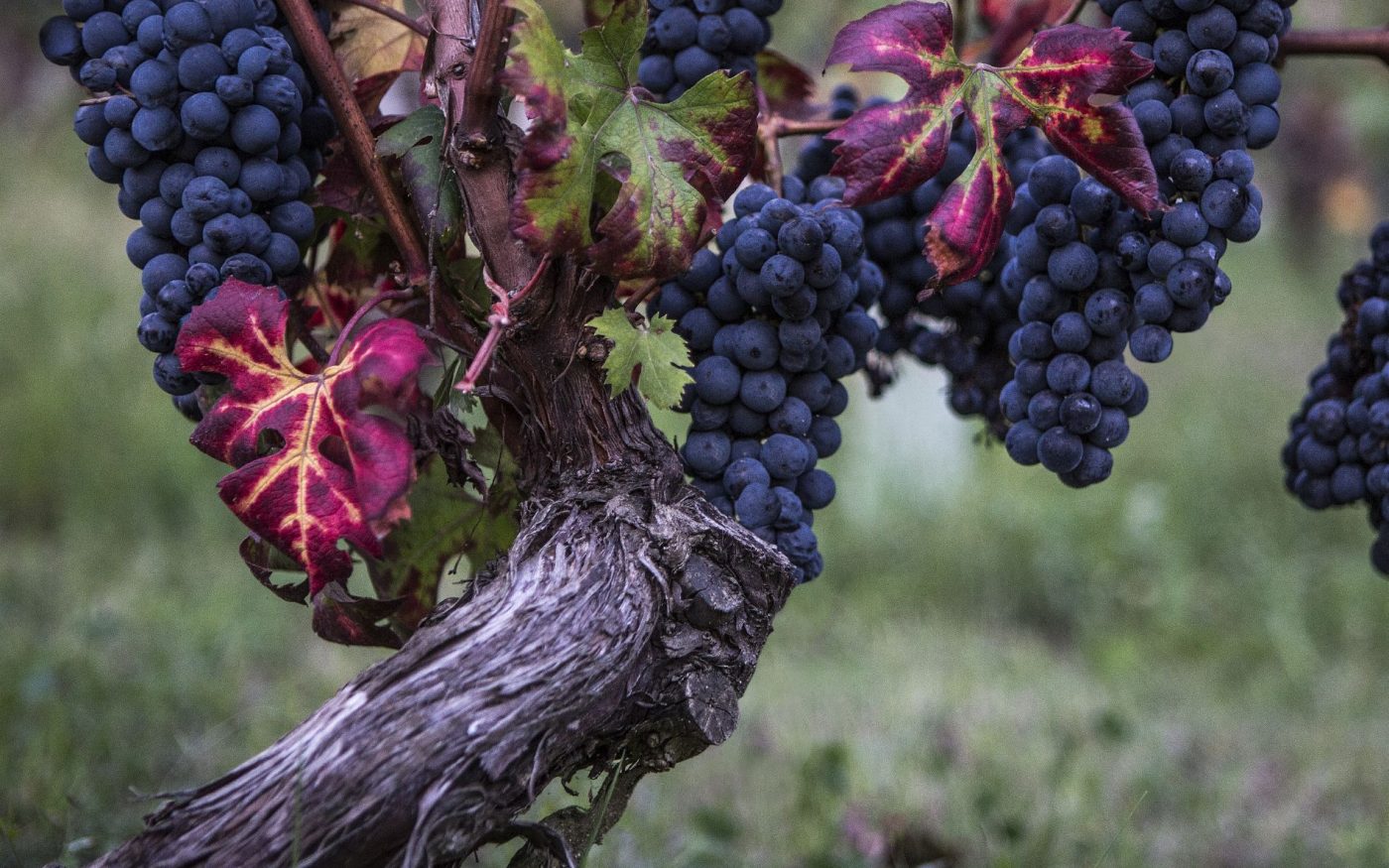
Grown on the best exposed hills of the Asti area and Monferrato, barbera grapes are usually harvested around mid-September.
After crushing and fermentation, there are two main versions that have established themselves in the current production method.
On one hand, aging in steel, of at least 4 months, which has the merit of offering ready, eager and immediate Barbera d’Asti, in which hints of fresh fruit prevail and the natural acidity of the grape variety stands out.
On the other hand, aging in barrels and barriques (at least 6 months out of a total of 14) aimed at producing the “Superiore” type.
From the encounter with wood emerge much more long-lived, complex and rounded Barbera d’Asti which, while maintaining a good acidic backbone, demonstrate a more docile and profound character, enriched with balsamic and spicy notes.
Time in wood
Time in bottle
Time to market
Grapes Yield
Meet the producers


Curiosities
An exceptional wine that offers unique characteristics, especially if the grape variety is cultivated in prestigious areas.
Starting from 2000, the Barbera d’Asti regulations provided for the possibility of indicating on the label three sub-zones:
- Tinella
- Colli Astiani
- Nizza
Sub-zones are created to promote and enhance certain prestigious areas within the denomination boundaries, with the aim of offering consumers the possibility to distinguish with greater awareness the various expressions of the grape variety.
Sub-zones usually have more stringent vinification and production characteristics, in order to push quality upward.
The Tinella sub-zone, for example, can be attributed to all those Barbera d’Asti produced in the territory of the municipalities of Costigliole d’Asti, Calosso, Castagnole Lanze, Coazzolo and Isola d’Asti. It has a minimum alcohol content of 13% and must be aged at least 12 months, of which 6 in wood.
The same applies to the Colli Astiani sub-zone, which however can only be produced in the municipalities of Azzano, Mongardino, Montaldo Scarampi, Montegrosso d’Asti, Rocca d’Arazzo, Vigliano, Asti (hamlets of Montemarzo and San Marzanotto Valle Tanaro) and Isola d’Asti.
A separate discussion would be deserved by the Nizza sub-zone, the one that, since its creation, has come the furthest.
Limited to the territory of the municipalities around Nizza Monferrato, the historic heart of Barbera d’Asti, Nizza managed to emancipate itself from its own regulations, succeeding in obtaining, in 2014, its own denomination: Nizza DOCG.
Credit to the producers of the area who, after a long bureaucratic process, were able to propose a qualitatively impeccable wine, with its own characteristics.
A pure Barbera with very low yields, destined for longevity. Nizza in fact must age a minimum of 18 months, of which 6 strictly in wood.
News about Barbera d’Asti DOCG


