Madernassa Pear
Product Type
Production Area
First mention
Quality mark
Obtained on
The Madernassa pear is a variety native to Roero, always considered a source of pride for the local traditional cuisine.
Like many native species it remained long unknown to most, with use limited to local farmers who appreciated it for its crunchiness and for the aromatic enhancement given by cooking, both in wine and baked.
The first steps towards its official recognition took place in 2015 in Guarene, when a group of young local producers and entrepreneurs decided to found the “Consortium for the enhancement and protection of the Madernassa Pear of Guarene and Roero”.
The Consortium, consisting of 28 members from Alba and 22 municipalities of Roero, has as its purpose the promotion of the product and the facilitation of internal and export trade.
It is formed mainly by young agricultural entrepreneurs who are committed to monitoring production, conservation and trade, through a regulation that prohibits the use of chemical herbicides and reduces the number of treatments for some active ingredients.
Today the many uses of this variety are well known, particularly appreciated for the production of cider, but also for the many traditional desserts.
Every year, in the month of October, the town of Guarene hosts the “Madernassa Pear Festival“, three days dedicated to the enhancement of this unique fruit.
Name origin
The variety takes its name from the homonymous hamlet of Vezza d'Alba, a town very close to Alba, the capital of the Langhe and at the gates of the Roero. In fact, it is in this land that the mother plant grows, which originated around the end of 1700 on the property of Cascina Gavello.
Initially called the "Gavello" pear, it later became the "Madernassa", to pay homage to the hills where the variety grows best.
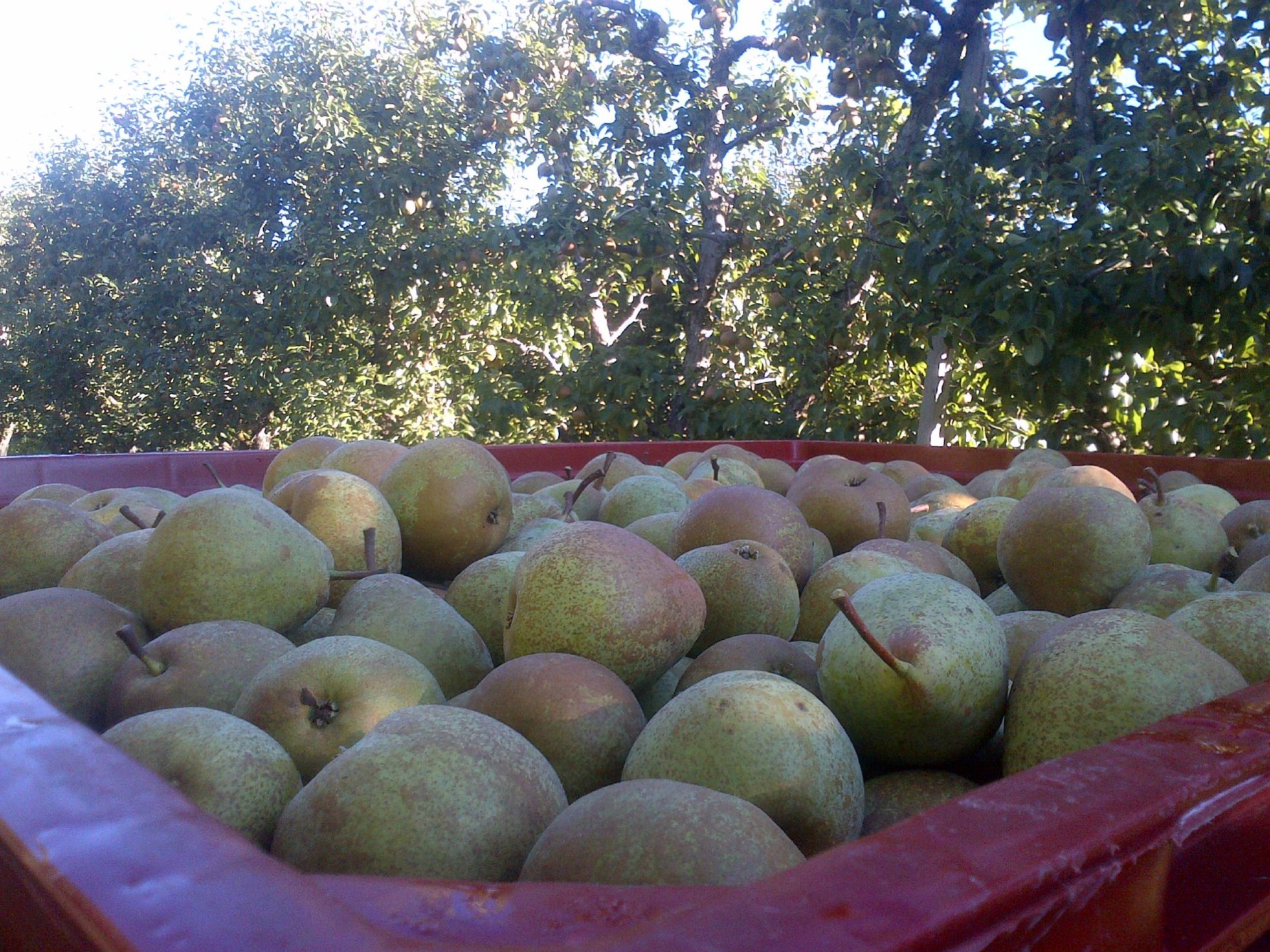
A full production plant can reach a yield of 480 quintals per hectare!
Madernassa Pear In the kitchen
From desserts, risottos and pear ciders... a versatile fruit with profound aromatic complexity!
The Madernassa appears to be a cross between a wild variety and the better-known Martin Sec, of which it retains the crunchiness and tannicity.
Although it is possible to consume it raw once ripe, the farmers of these lands soon discovered how suitable it was for cooking, particularly in the excellent local red wine. The flesh releases all its aromas once cooked, preserving crunchiness and compactness, its distinctive traits.
So among the traditional desserts of Roero, Madernassa in wine is never missing, which is nothing more than the pear in its entirety, cooked for about 30 minutes in a syrup of one or more varieties of wine combined with sugar and spices (usually cinnamon and cloves).
Also thanks to its crunchiness, this pear lends itself to many other recipes, including jam, the traditional mostarda and “cognà“, the many versions of cake, liqueurs and in particular the delicious Madernassa risottos with cheese… let your imagination run wild!
Madernassa Pear: nutrition facts
These pears are low in calories (30-35 kcal per 100 g), rich in insoluble fiber and contain a fair amount of potassium.
They have a rather high satiety index and are therefore indicated as an afternoon snack or at the end of a light meal.
Energy for 100 g
Proteins for 100 g
Carbs for 100 g
Sugar for 100 g
Fats
Fiber
Average weight
Related recipes


Organoleptic characteristics
The average weight of a fruit is about 150 g, and its shelf life is fair.
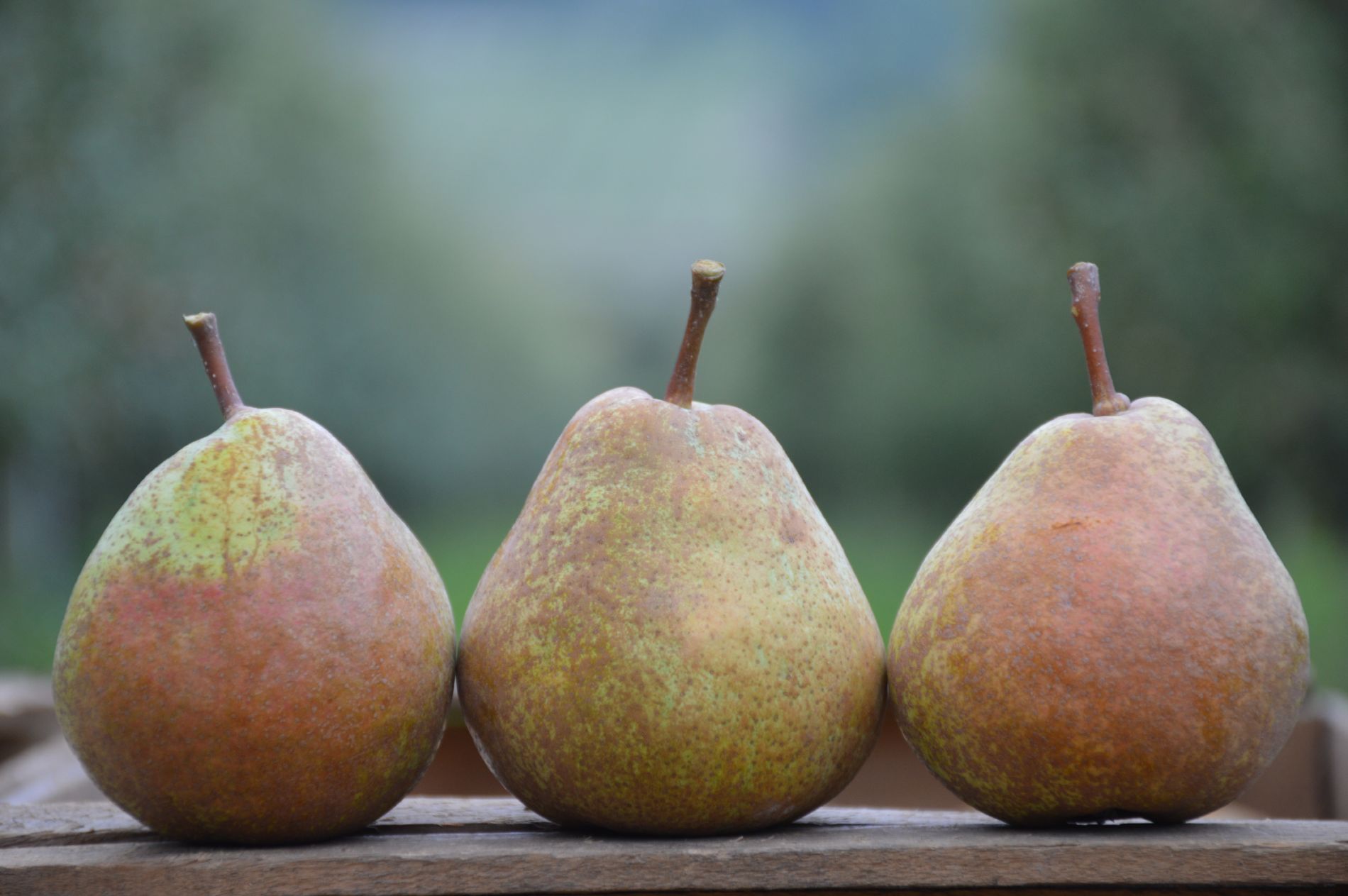
The fruit is of medium size, with a "Turbinate-conical" shape, that is, resembling a spinning top. At full ripeness the skin, fine and resistant, appears smooth, greenish-yellow in color, sometimes with red/orange spots. On it are typically present dots, which give it the typical appearance of autumn fruits.
The flesh is semi-fine, but with accentuated compactness and consistency. The flavor is sweet, but balanced by good acidity, which increases in the inner part of the flesh.
It is a slightly aromatic fruit, which with cooking sees a clear organoleptic improvement with the formation of new aromas. These make the Madernassa a unique and delicious dessert, suitable to be consumed alone, but also with creative pairings.
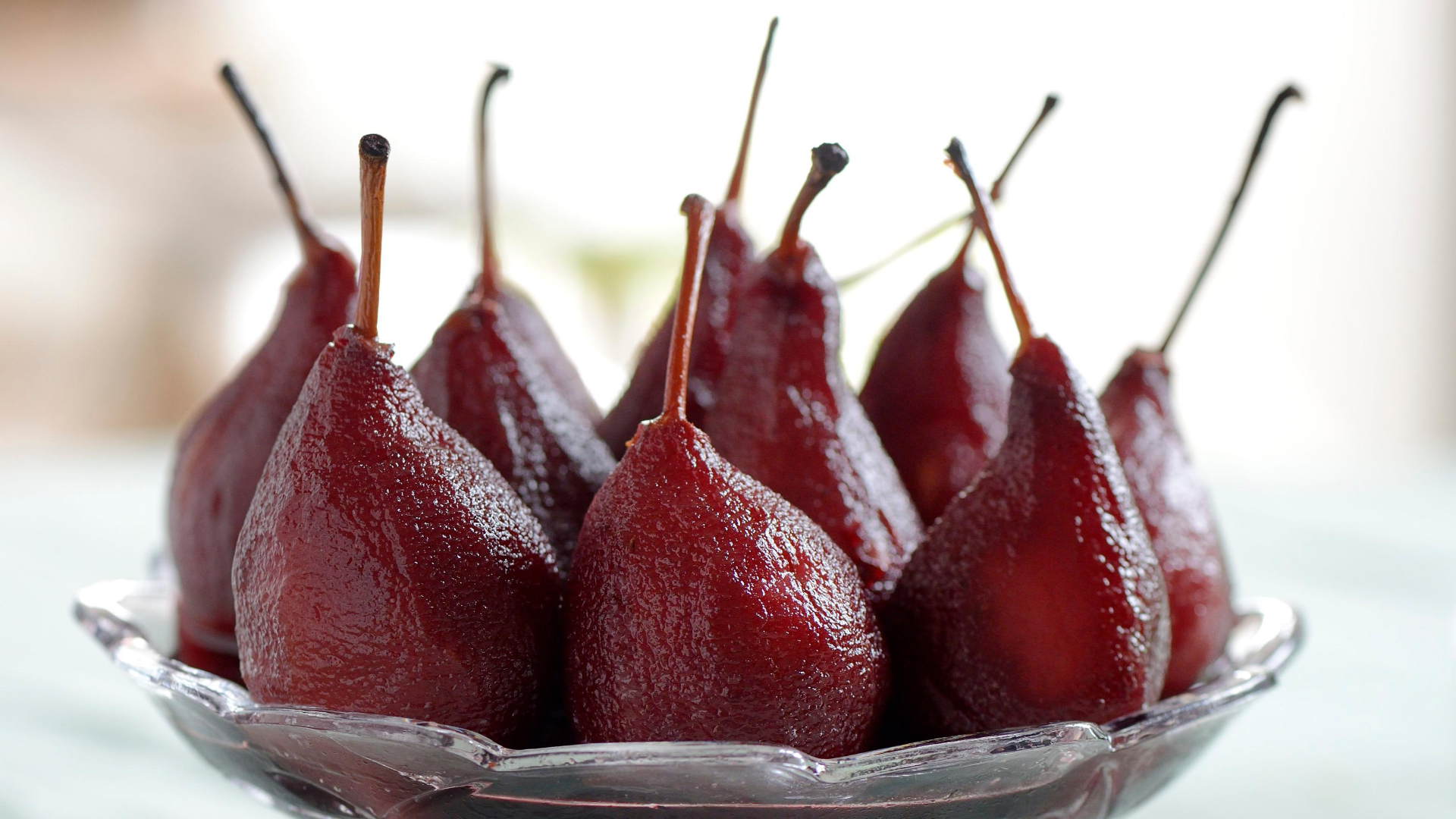
Traditionally the preferred way to consume this pear

Madernassa Pear
A story that
begins in 1784
The Madernassa pear was born by chance, from a seed that fell to the ground: it is believed to be a cross between the Martin Sec and a wild species.
The origin of the Madernassa variety is traced back to the late 1700s. In these years a farmer from the homonymous locality, more precisely from the Gavello farm, discovers a pear plant with an unknown appearance, probably born from a discarded seed.
This plant grows and produces a large amount of fruit, which are later recognized as a cross between Martin Sec and some wild variety. The inhabitants of the place appreciate it so much for its properties that they decide to multiply it on their farms, leading to its spread throughout the Alba area.
The mother plant was cut down in 1914 at the age of 130 years, with a trunk with a circumference of 2.60 m and a productivity even higher than 25 quintals.
In 1999, the process for the recognition of the Protected Geographical Indication began, still in progress.
Below is a text written by Professor Raffaele Carlone in the periodical "L'Italia Agricola", which summarizes the history of the variety:
"La Madernassa was first described by Cavazza (1908) who magnified its rusticity, productivity and long life. It was then mentioned in the "Pomology" of Pomon (1916) which pointed out the spread of the variety not only in Piedmont but also outside the region.
Only in 1927, however, was the variety brought to the attention of fruit growers at the Fruit Growing Congress of Lugo where its adoption was also recommended in other areas of northern Italy.
The mother plant was born from a seed that fell by chance in a plot of the Gavello farm in the Madernassa hamlet on a hill located between the towns of Guarene and Castagnito.
When it began to bear its first fruits, the owner immediately appreciated their goodness and, when the tree proved to be rustic and vigorous, he propagated it by grafting it onto some pear trees that were present on the farm.
Soon the cultivation and commercial merits of the variety were known to neighbors who multiplied it on their farms and from here the cultivar spread throughout the Alba area.
At first the variety was known by the name of Gavello and only later was it indicated by the name of Madernassa: its date of birth can also be established with relative approximation if one thinks that the mother plant was cut down in 1914 and was about 130 years old.
It is a widespread opinion that it derives from a natural cross of the Martin Sec cultivar with the wild."
Farming
Once cultivated in many areas of Cuneo, today the production area is limited to the most suitable area of Roero and Valle Grana.
The soil of the Alba area – sandy and tending to clayey – the hills and the warm climate, give the variety a particularly attractive appearance and a unique flavor, also suitable for fresh consumption.
In the mountain and foothill areas of Roero and Valle Grana, the soil is instead of medium texture, giving rise to a product more suitable for cooking.
The tree is vigorous, rustic, particularly fertile. Flowering occurs in medium-early season. It is a parthenocarpic variety (i.e. it also produces seedless fruits).
The irrigation system varies according to the conformation of the land on which it is cultivated, and can be either surface or drip, while phytosanitary protection is the same as provided by good agricultural practice.
The plant density is a maximum of 600 per hectare for the trellis or spindel cultivation system. In the case of plants grafted on “free-standing” rootstock, considering the size of the tree which can reach a height of over 4.5 meters, there is a maximum plant density of 100 per hectare for existing plantations and 200 per hectare for new plantations.
The production of Madernassa Pear in plantations in full production, cultivated both on free-standing and on rootstocks, can reach 480 quintals per hectare.
The harvest begins approximately in the month of September and ends in November.
Harvest time
Preferred Soil
Plants per hectare
200 (free-standing)