Exploring Langa
The most famous wineries in the Langhe Find out which ones to visit in 2025
May 19, 2025

The nobility of wine is precisely this: that it is never a detached, abstract object that can be judged by drinking a glass, or two or three, of a bottle that comes from a place where we have never been.
Mario Soldati
Le Langhe sono una terra di colline dorate e vigneti che raccontano secoli di storia vinicola. Un tour in cantina è il modo ideale per comprendere a fondo questo territorio: non si tratta soltanto di assaggiare un calice di Barolo o Barbaresco, ma di immergersi nelle tradizioni, nei segreti e nelle storie di chi lavora la vite con passione.
In questa guida scoprirai le cantine più celebri da visitare nelle Langhe, perfette per un itinerario enoturistico indimenticabile, tra degustazioni di eccellenza e panorami unici.
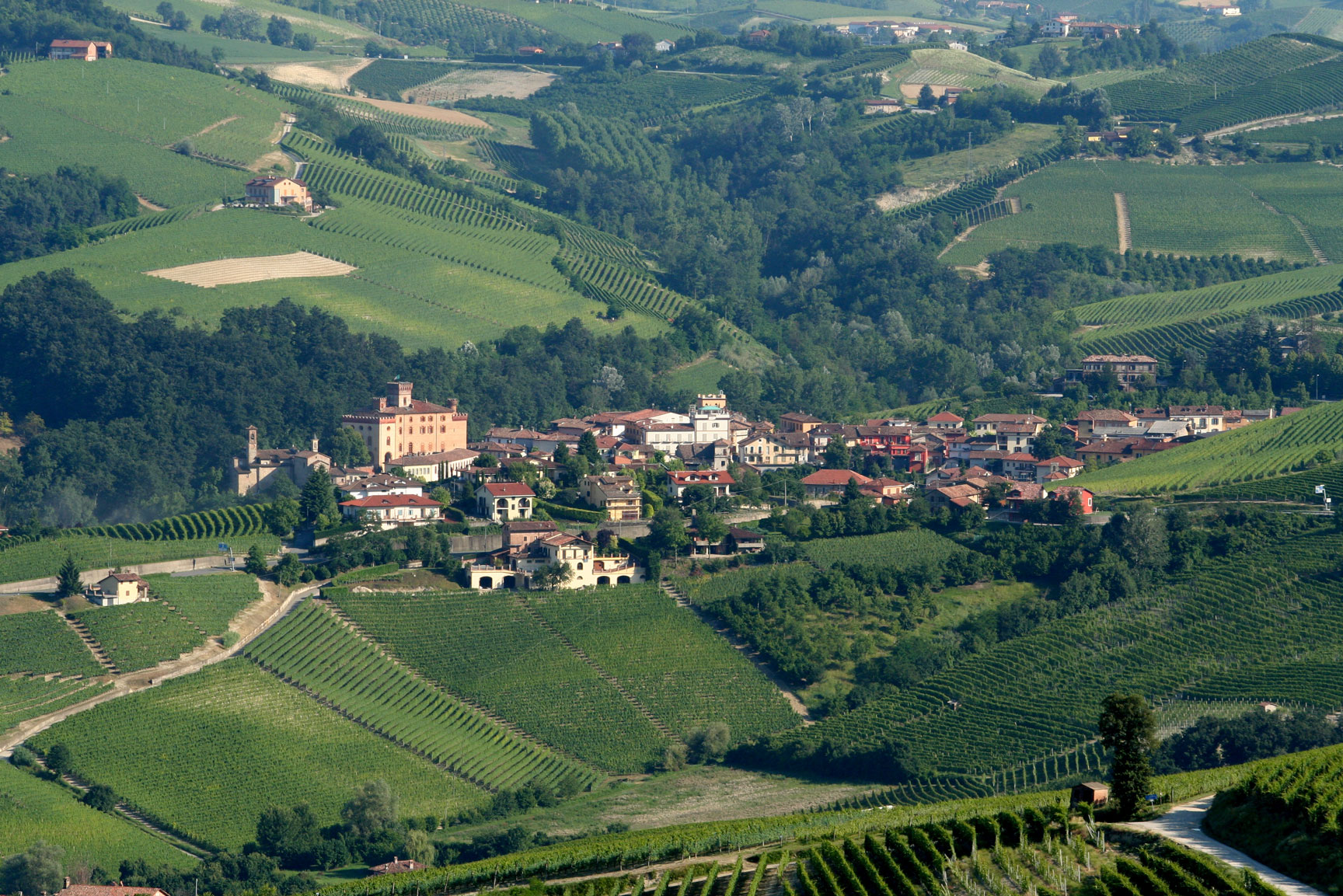
If you’re looking for the best wineries in the Langhe to visit, you’ve come to the right place. From large, historic wineries to family-owned properties, each stop will offer you a personalized experience: tastings of fine wines, visits to the most renowned crus and breathtaking views of the Langhe, Roero and Monferrato landscape.
Whether you are a wine connoisseur or an enthusiast looking for a first taste, you will find valuable insights to enrich your wine tour.
The Ceretto winery, one of the most famous in the Langhe, was founded in 1936 by Riccardo Ceretto. The famous grape “Acino,” an architectural masterpiece with a futuristic aftertaste, stands out over their estates and already offers a first taste of their philosophy.
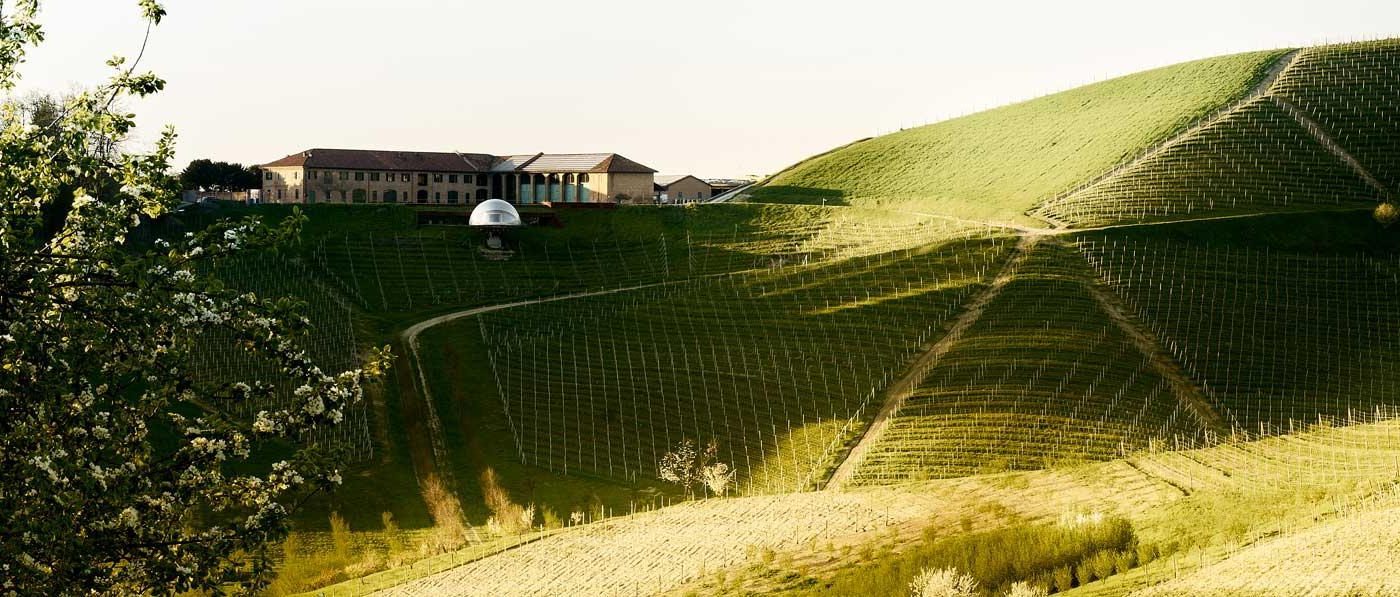
The winery has pioneered the use of sustainable and organic viticulture techniques and produces some of the best wines in the region. A visit to the winery includes a tasting of their fine wines, including Barolo, Barbaresco, Dolcetto and Moscato d’Asti. The winery also offers a culinary experience, with traditional Piedmontese dishes accompanied by a selection of wines.
For those who love contamination.
The winery tour includes:
Cantine Coppo is a world-renowned winery located in the town of Canelli, in the Asti area, and was one of the first in Italy to bottle wine under its own brand name.
Founded in 1892, the winery covers 27 hectares of vineyards and its main core is in Monferrato.
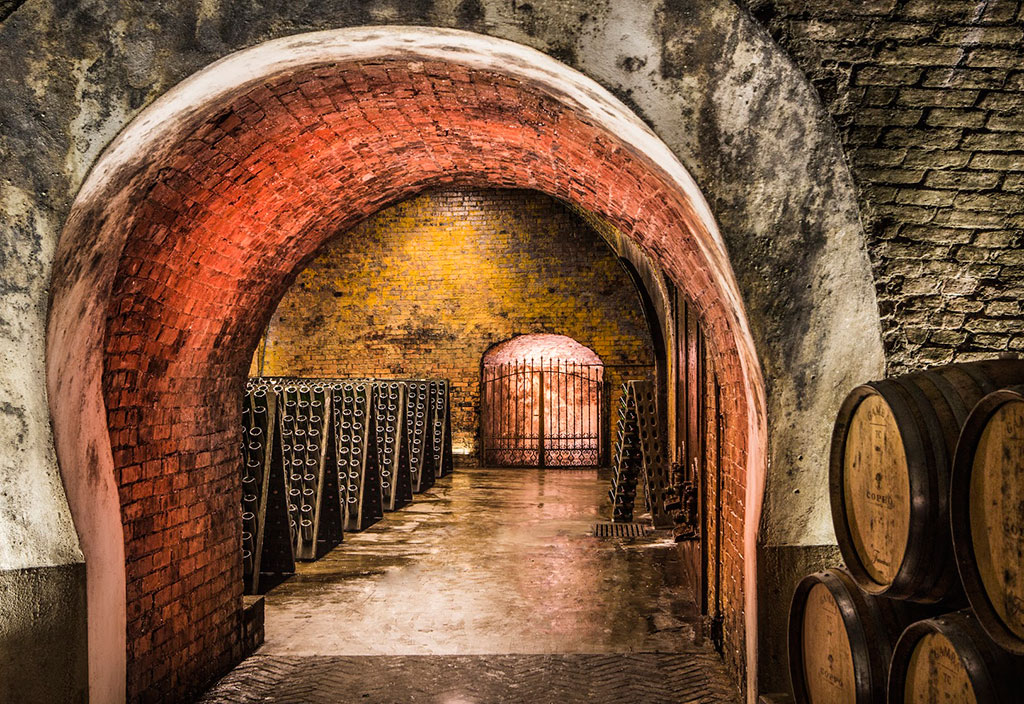
Its uniqueness, however, is hidden inside: in its basement there are, in fact, a series of ancient tunnels dug by hand into the tuff, called“infernot,” which are so striking that they became a UNESCO World Heritage Site in 2014 and have allowed the wine to be perfectly preserved.
For those who never cease to wonder
Here you will be able to:
The Marchesi di Barolo winery is one of the oldest and most prestigious in the region, founded in 1807 by the Marchesi Falletti family. Located in the heart of the area’s iconic wine, for six generations the winery has produced some of the Langhe’s most celebrated wines, including Barolo, Barbaresco, Barbera d’Alba and Dolcetto.
The visit includes a tasting of their wines and a tour to the historic underground cellars, where the wines are aged in oak barrels.
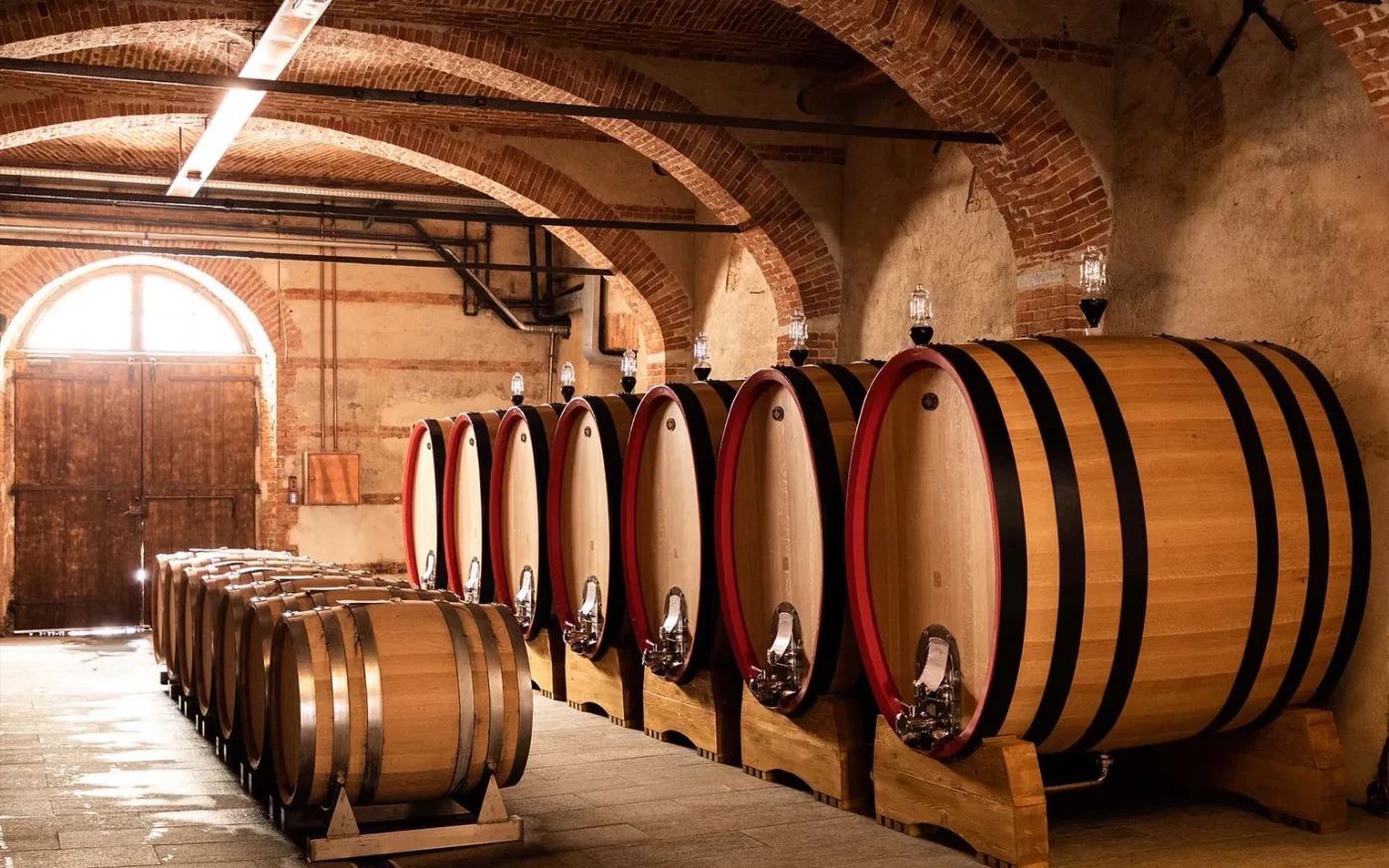
Here you can still admire the five barrels of Marchesa Giulia Falletti Colbert and the collection of rare bottles of Barolo Riserva from the late 19th century.
For those who love tradition.
Highlights of the visit:
Poderi Luigi Einaudi is a farm founded in 1897 by the President of the Italian Republic, Luigi Einaudi, in the heart of the Langhe, in Dogliani.
The farm began as a wine estate, but in later years it expanded to become a full-fledged farm, also growing grains, hazelnuts and other crops counting 13 farms of about 70 hectares.
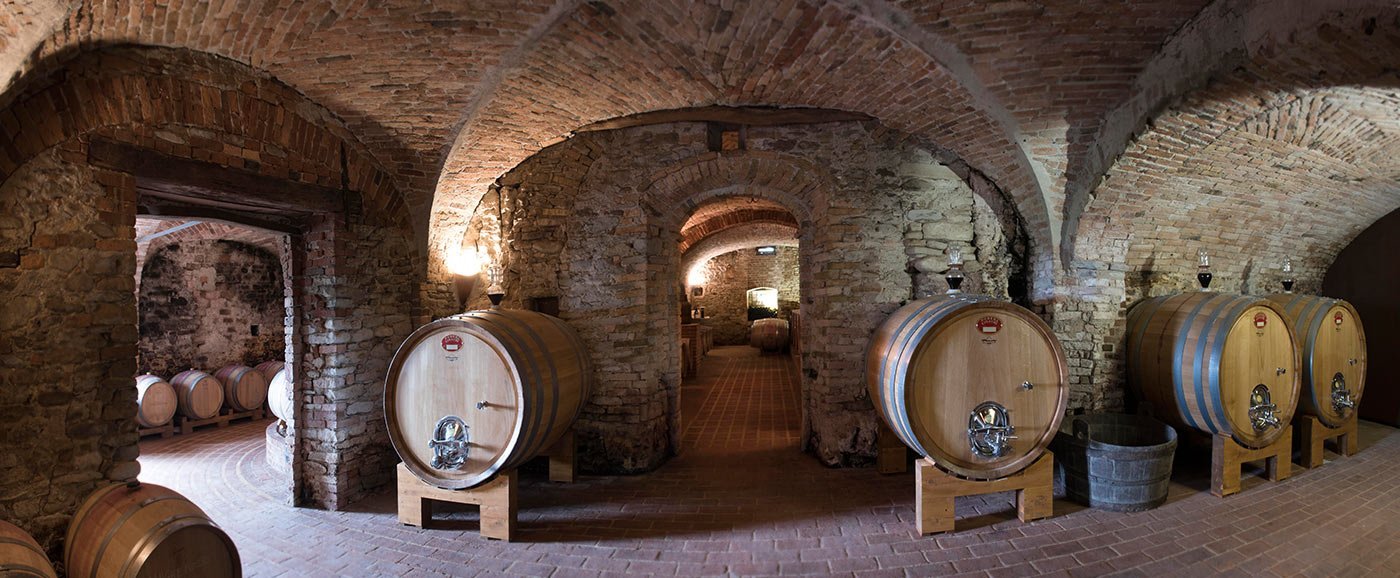
In 1998, Poderi Luigi Einaudi obtained “Organic Farm” certification for the production of wine, olives and hazelnuts.
Today, Poderi Luigi Einaudi is run by the fourth generation of the Einaudi family and produces a wide range of wines, including the famous Barolo, but also Barbera, Langhe Nebbiolo and other white wines such as Roero Arneis.
For those who live history with an eye to the future.
During the visit you will be able to:
Curiously evocative in name, the winery was established in 2007 by Sandra Vezza, “the repentant teetotaler” herself.
The winery’s architecture is characterized externally by two large stacked blocks reproducing two wine crates and surrounded by the rows of vines of its production.
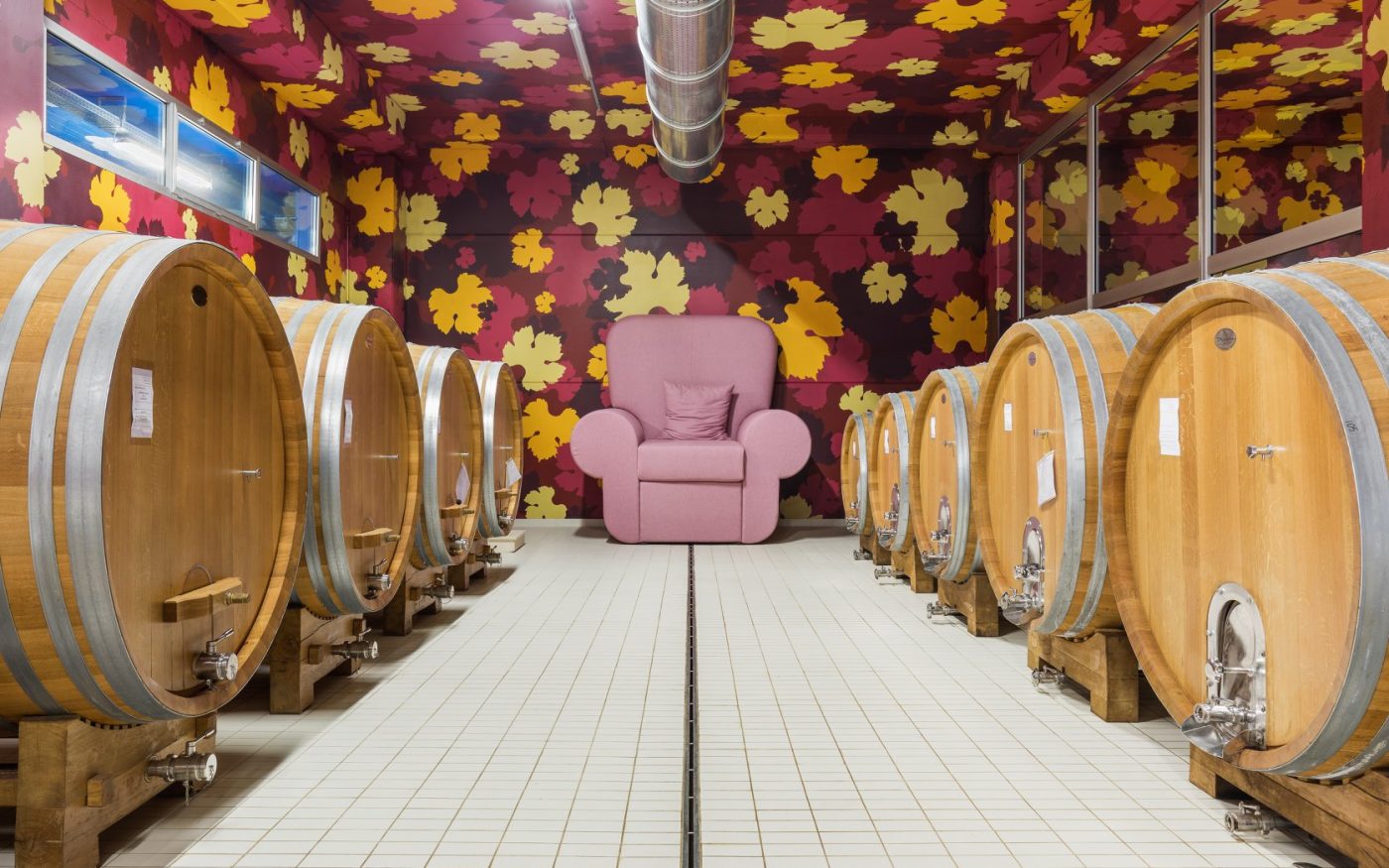
Not only externally but also internally it is capable of amazement: large multicolored murals, Gufram design pieces like an unconventional and dreamlike pop dream combined with the quality of wines from original labels for whites and reds such as Barbera, Nebbiolo, Nascetta and Dolcetto.
The winery is committed to environmental sustainability and uses organic and biodynamic farming techniques to cultivate its vineyards. It is also dedicated to the preservation and recovery of native grape varieties in the area.
For those who love contemporary art.
Highlights:
However, there are not only well-known companies such as those listed: it is beyond enriching to visit small local producers who will give you a welcome that is perhaps less “prestigious,” but certainly more familiar and genuine. Below are some suggestions!
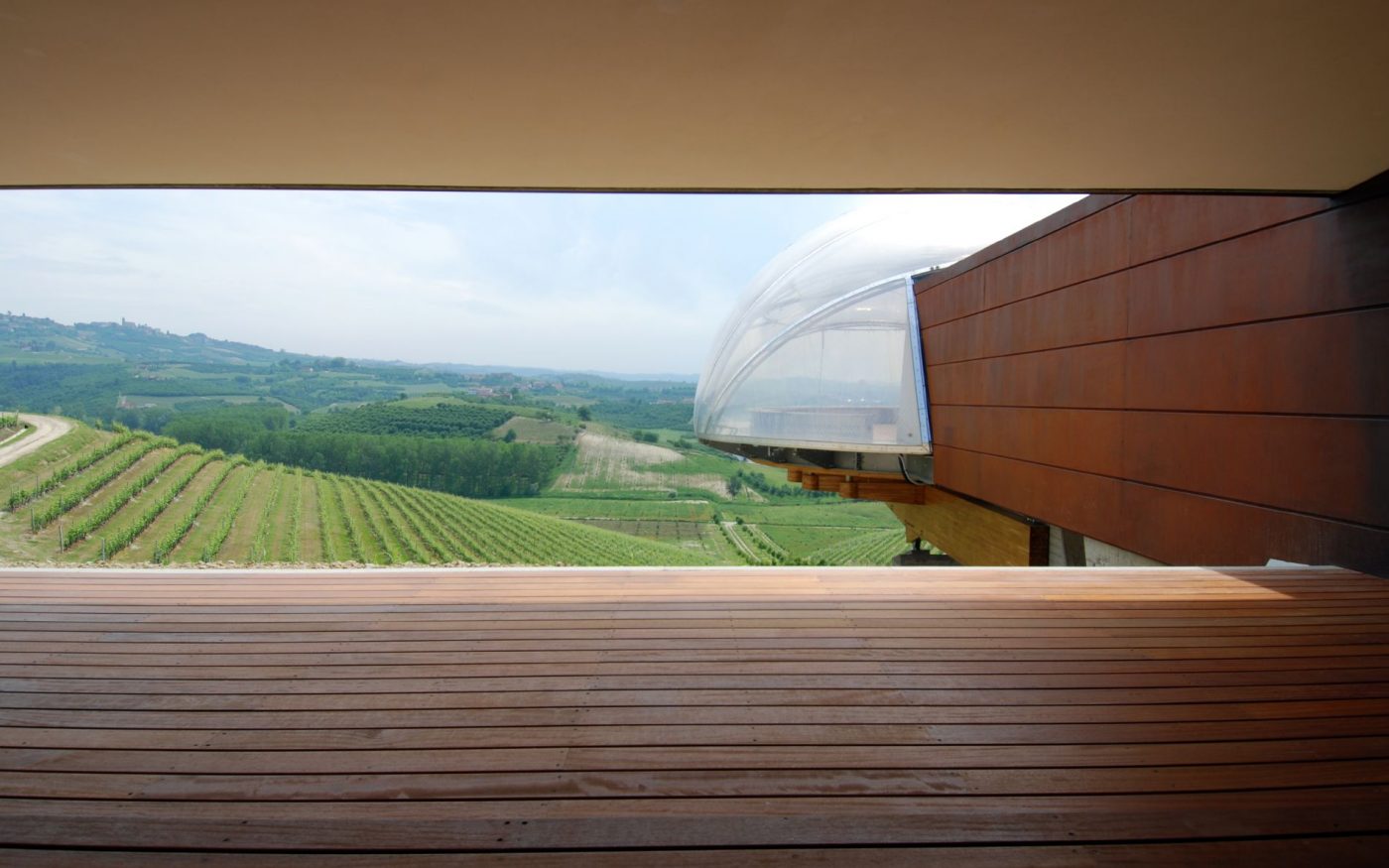
The Broccardo winery is a family-owned winery located in Monforte d’Alba and run today by Filippo, Laura and Federica Broccardo.
The Broccardo winery is a family-owned winery located in Monforte d’Alba and run today by Filippo, Laura and Federica Broccardo.
Since 2010, the three brothers have been carrying on the production philosophy handed down to them by their parents and great-grandparents: a great sense of appreciation for the land and the use of vineyard techniques that always respect the land.
The parents had been marketing the grapes since the 1970s, but it was not until the three siblings joined the company that full production began, with a great tendency to export mainly to Asia, Europe and the United States.
The property consists of 13 hectares planted with vines that extend between the communes of Monforte d’Alba with the San Giovanni and Bricco San Pietro cru, Barolo with the Paiagallo cru and Novello, with the Ravera cru.
Winemaking is focused on the purity of each wine with a special effort to preserve the fruity scents, without altering their peculiarities, so that the characteristics of the Langa land can be perceived.
The winery also follows EU directives (Integrated Production Technical Laws No. 214), which require the practice of grassing and the containment of treatments; since 2016, the wine has been made using viticultural and oenological techniques with low environmental impact.
You can read more about Broccardo here.
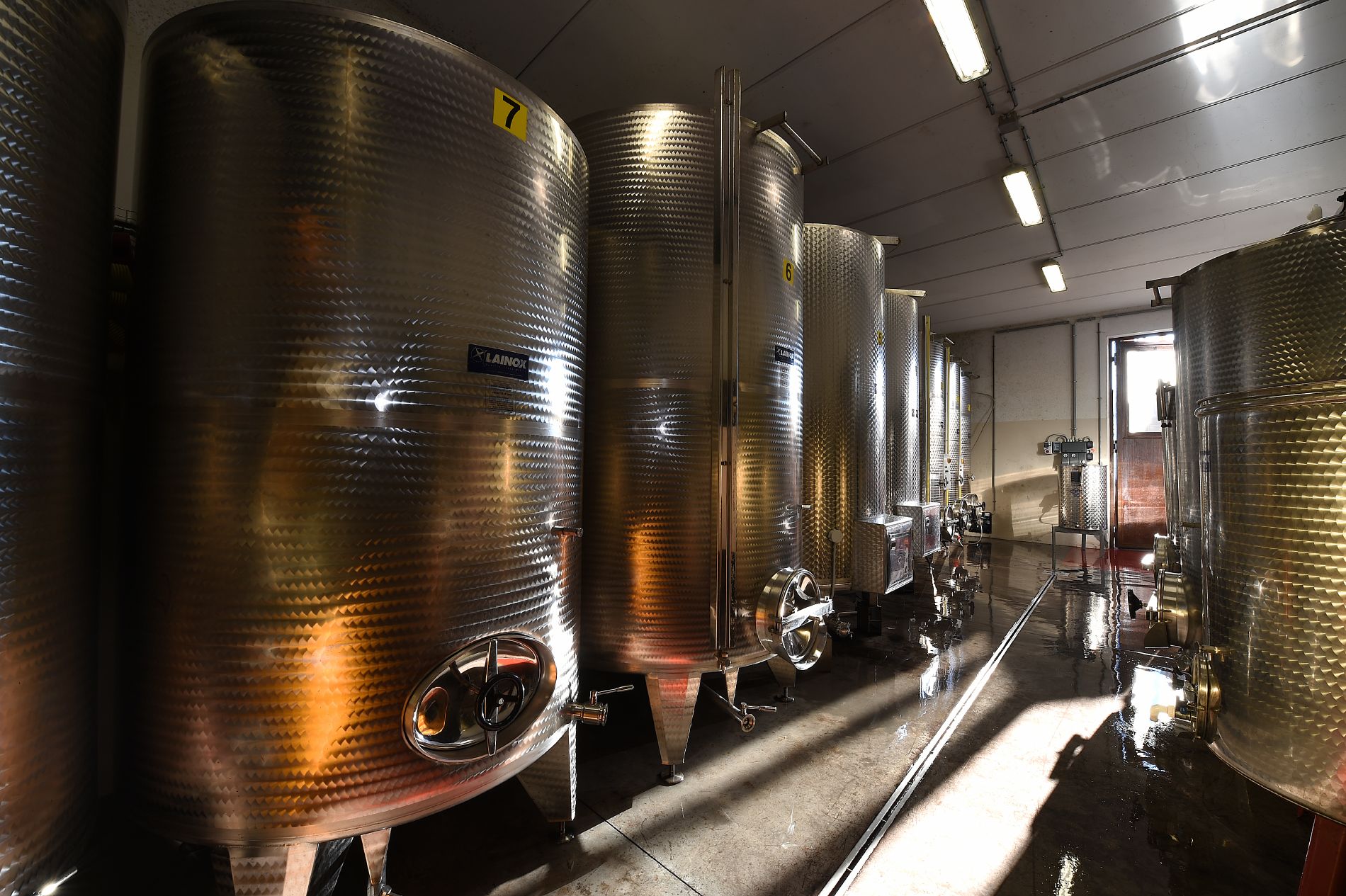
For the production of fruity and fresh wines such as Dolcetto, Arneis and Rosato, the use of steel is preferred.
All production wines can be purchased in the cellar in different formats and packages.
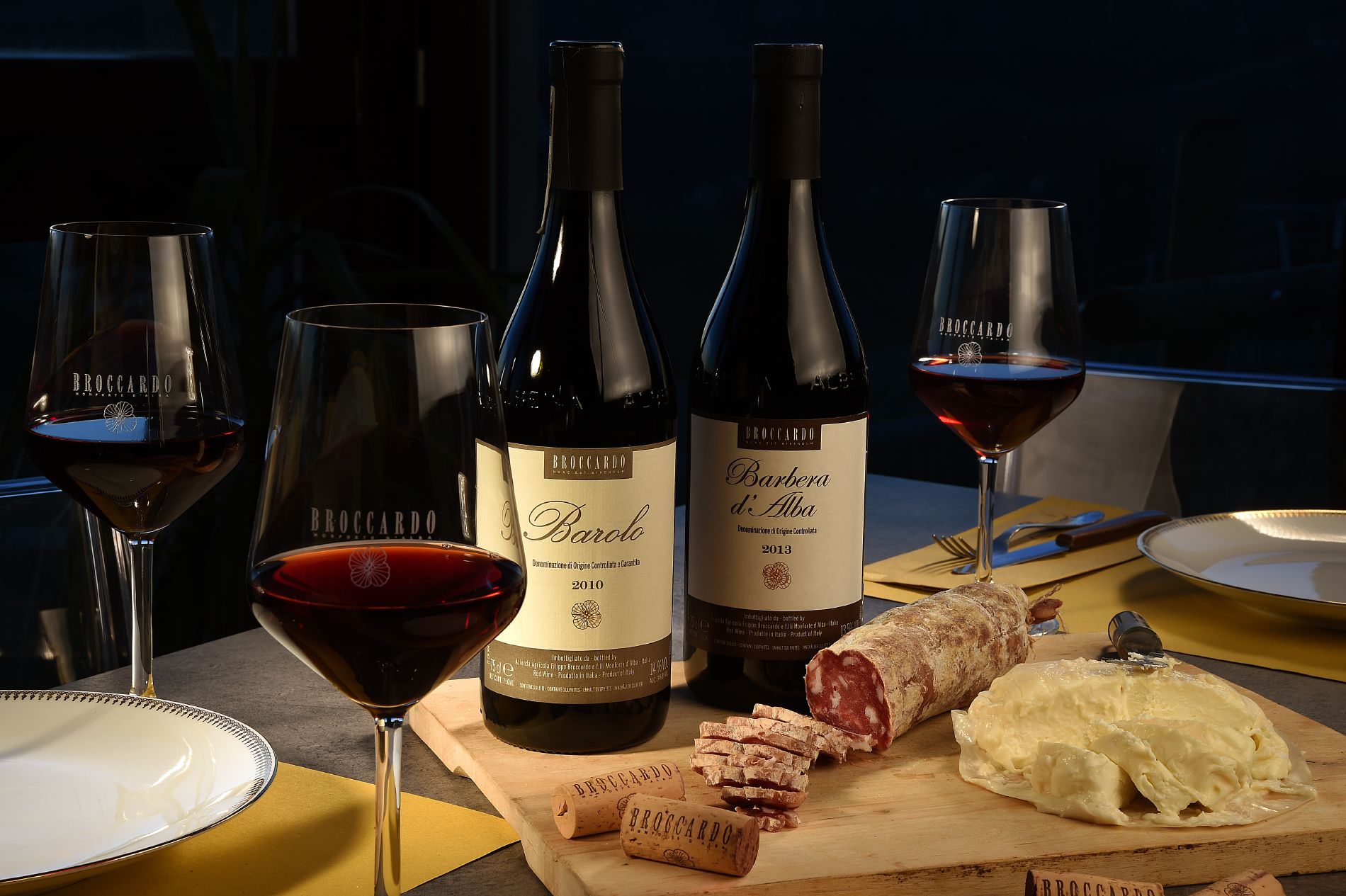
The tastings are always paired with a platter of cold cuts and cheeses
An elegant family-run company in Barolo that produces several local wines including Barolo, Nebbiolo, Barbera, Dolcetto and Moscato. During the tasting, you will have the opportunity to have lunch directly in the cellar or in the adjacent restaurant Bricco delle Viole.
Along the road that leads from Barolo to La Morra, since 2000 the Sylla Sebaste cellar has been producing classic Piedmont wines of refined quality.
Erected right on the summit of the hill San Pietro delle Viole, over the years the cellar has taken as its symbol the effigy of the 14th-century chapel that stands in front of it: San Pietro delle Viole’s chapel.
From here, the view overlooks a wonderful panorama of vineyards that dominates the entire Alba Langa.
The cellar is owned by the Merlo family and is led with great passion by the owner Fabrizio with the valuable collaboration of Dr. Luca Caramellino.
With 230 hectares of vineyards and 10 proprietary farmsteads scattered throughout the countryside of the Langhe and Roero, the Bersano company has been cultivating the vineyards of Piedmont since 1907. Since then, the wines produced have been a symbol of elegance and loyalty to tradition.
If you want to drink well, buy yourself a vineyard.
Arturo Bersano
Bersano is first and foremost a desire to protect and maintain agricultural culture, telling the world about the winemaking identity of the Piedmontese territory.
The company produces a wide range of typical local wines, produced in the Langhe and Monferrato where each soil gives the grapes unique characteristics.
Barolo, Barbera d’Asti, Barbaresco, Nebbiolo, Roero Arneis and Gavi and the sweet Brachetto and Moscato are some of the labels to discover during the company tour and guided tasting.
The Massimelli family, owners since 1985, is committed daily to spreading the ideals already pursued since the early 1900s by the founder Arturo Bersano, aware of the need to guard the essence of the territory as a precious asset, honoring the values passed down from previous generations.
The Bersano brand today holds the largest vineyard heritage in Piedmont: from the 230 hectares of property, the best bunches are selected, ensuring the best quality and controlling the entire production process.
An identity that is not only identified in the wines, but also in the presence of 10 farmsteads scattered throughout the countryside, symbol of a rural world capable of changing while maintaining a firm relationship with the past.
In this winery, the history of Piedmontese oenology continues to be written, shared with the visiting guest through stories, tastings and museum experiences of international importance.
Bersano is Piedmontese pride and represents its territory of origin in the world, with its presence in over 40 countries.
You can read more about Bersano here.
La Cremosina is the first vineyard purchased by the Bersano family in 1912
53 hectares under vine in the commune of Agliano an area with a great vocation for the production of Barbera d’Asti and Nizza DOCG
The company tour also includes a visit to the wine ageing and maturation rooms
A small family-run winery in Calosso that produces exclusively organic wines from its own vineyards and offers the possibility of different tasting routes, on the farm and between the rows.
The small, family-run farm is located in the hills of the municipality of Calosso, in a valley that the family already inhabited in the 1800s, an area declared a UNESCO World Heritage Site in 2014.
All Ca ‘d Tantin wines have been certified organic for over 20 years: both in the vineyard and in the cellar, the use of chemicals that would inevitably end up in the wine is strictly excluded.
Wine is consumed first and foremost by those who produce it, which is why it must be good and healthy, preferring quality over quantity.
This was already the thinking of grandfather Gioele, born in 1905, a man with an open and modern mentality, a forerunner of the ideals developed by his son Costantino and grandsons Andrea and Marco Venturino, his successors and today the owners of Ca ‘d Tantin.
The wineries of the Langhe are true temples of wine, where you can discover the secrets of producing some of Italy’s finest wines. In addition to tastings, these wineries offer the chance to immerse yourself in the history and culture of the area, with guided tours that take you on a discovery of winemaking methods, the barriques in which the wines are aged, and the vineyards where it all began.
A visit to wineries in the Langhe is not only an opportunity to taste wines of the highest quality, but also to connect with the wine culture of Piedmont. Each winery has a unique story to tell and offers customized tours that will allow you to explore the secrets of local winemaking. Some of the most famous wineries also offer gastronomic experiences, where you can pair wines with traditional Piedmontese dishes.
Visiting the wineries of the Langhe is an experience that goes beyond just wine tasting. It is a journey through tradition, culture and unique landscapes that will leave you with unforgettable memories. If you want to discover where Italy’s most celebrated wines are born, this is the place to start. Plan your visit now and get ready to experience an enological adventure among the hills of the Langhe.

by Nicolas Roncea
Special