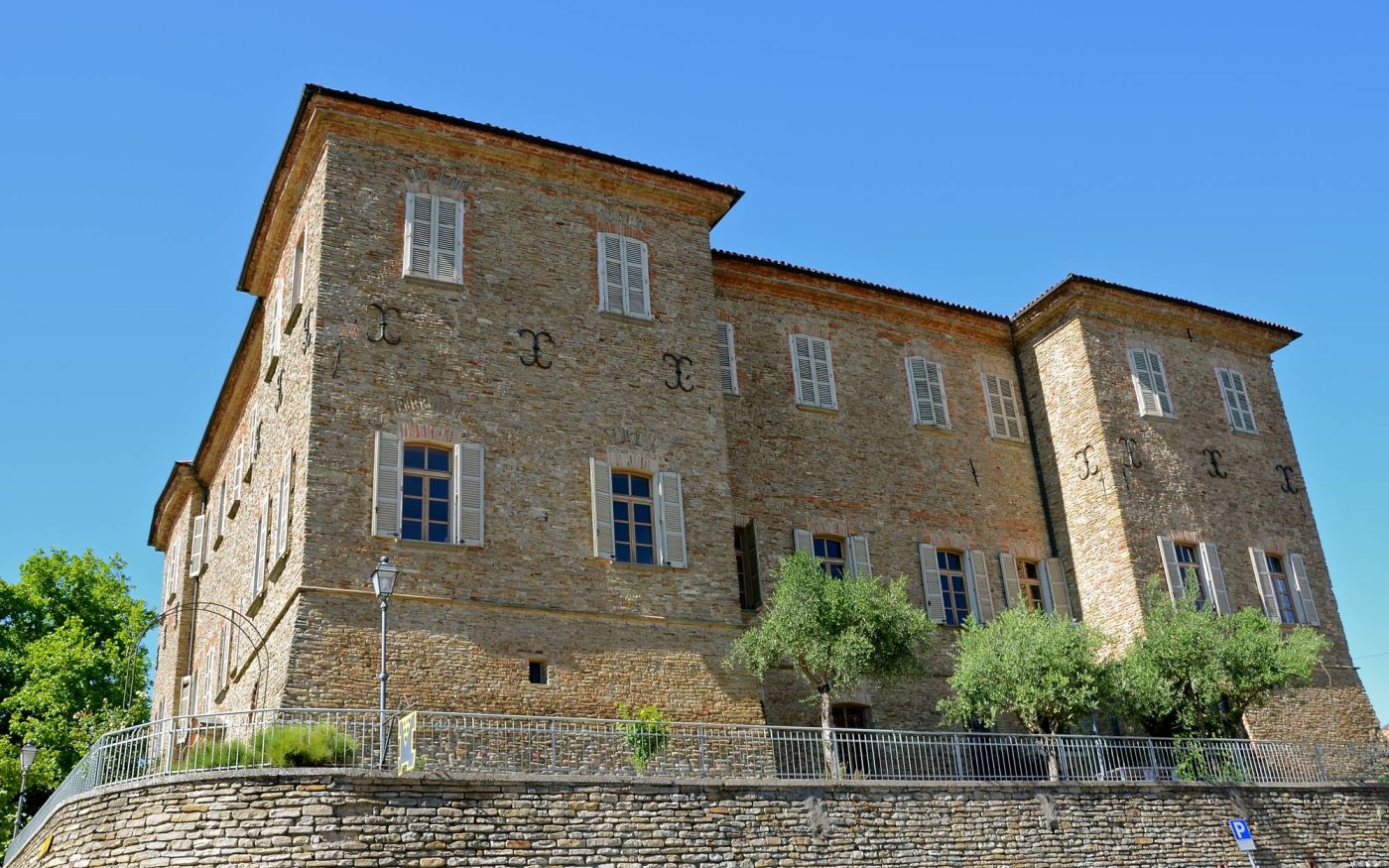
The Castle of the Marquises of Busca
Business Hours
From April to December: Friday, Saturday, Sunday, Monday - from 11:00 AM to 7:00 PM
Floors
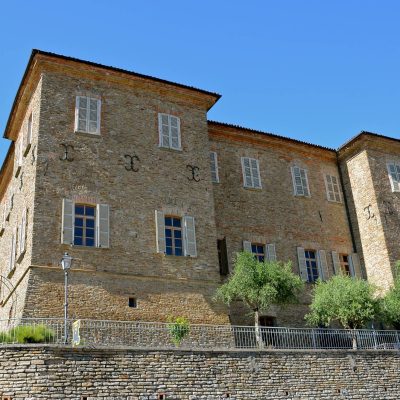
The Castle of the Marquises of Busca dominates Mango with its stern and silent mass. You encounter it as you climb towards the highest part of the village, when the houses begin to thin out and the view opens onto the vineyards of the Moscato hills.
It is not the classic fairytale castle, full of battlements and decorations. Its beauty is more discreet: mighty walls, regular shapes, and large windows that tell the story of the transition from military fortress to noble residence.
It is worth reaching even just to observe Mango from above and breathe in the atmosphere of this small Langa village. But by entering, you discover something more: a place where architecture, partisan memory, and wine culture continue to meet.
The visit can thus become a pleasant break during an itinerary between Mango, Neviglie, and the nearby hills. An opportunity to learn about the history of the town and, naturally, taste what is born in its vineyards.
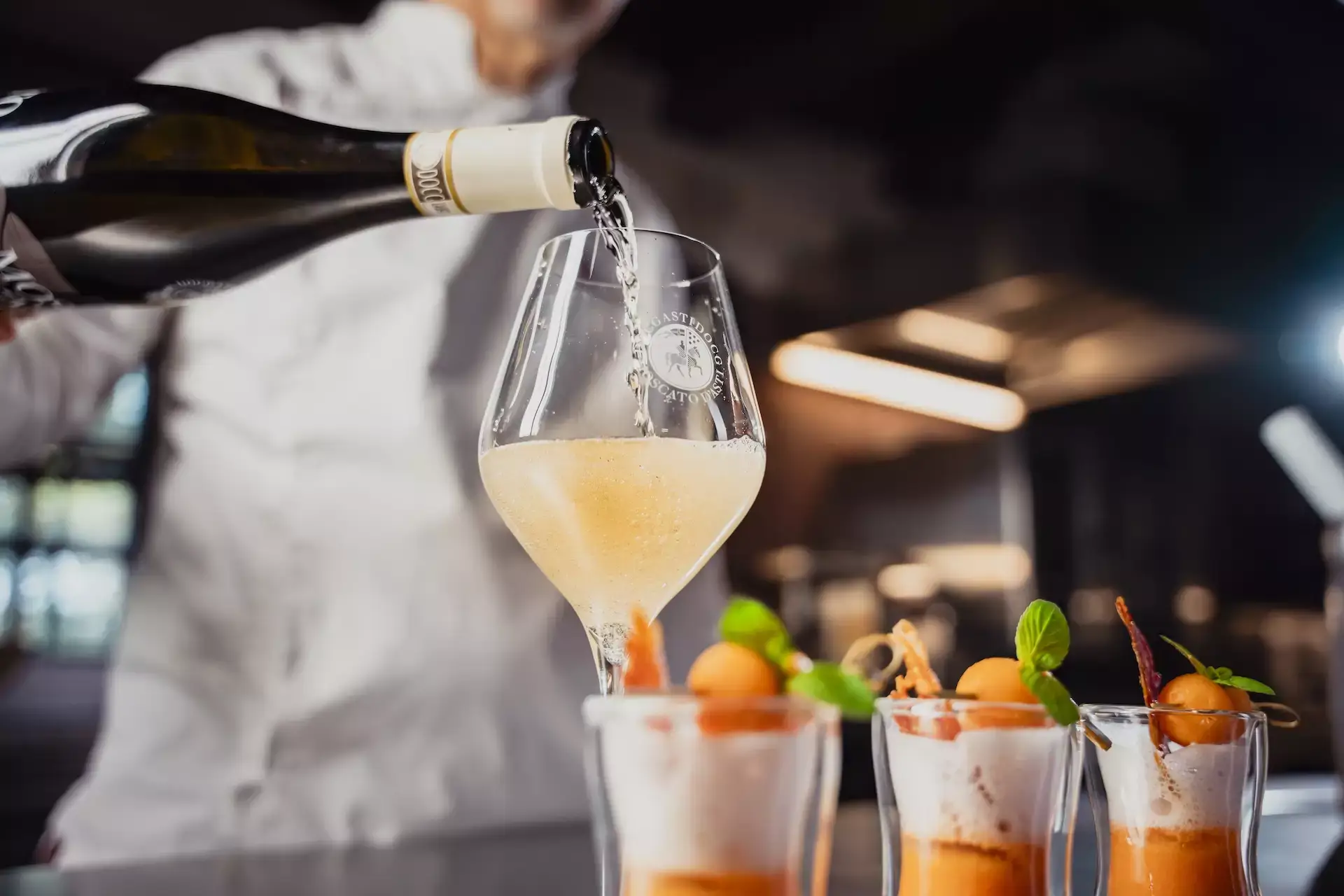
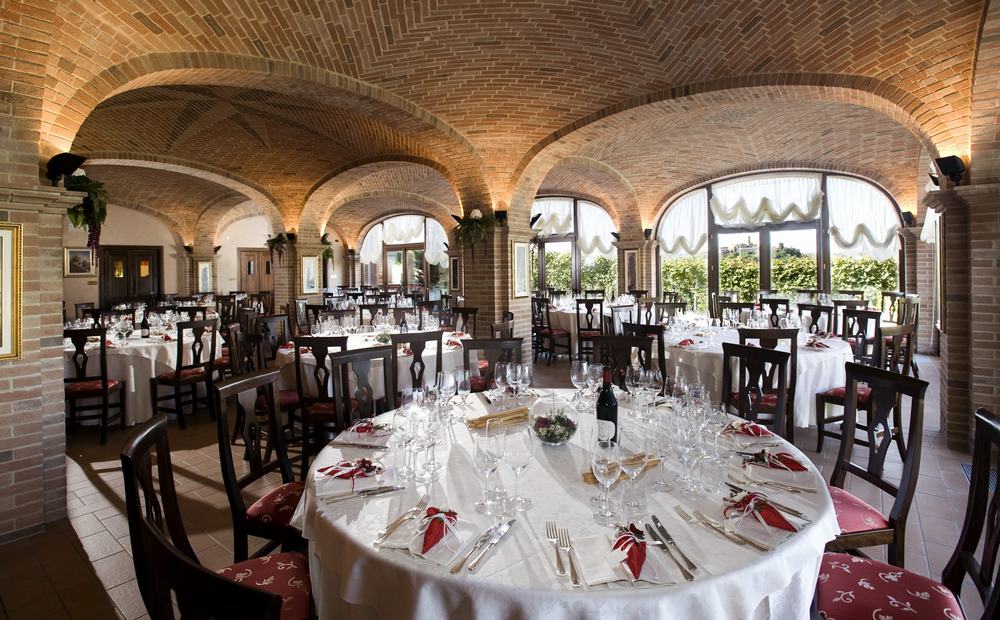
Qui puoi assaggiare il moscato e abbinarlo con i prodotti tipici locali

TheHistory
The Castle of the Marquises of Busca
From fortress to noble residence
The history of the castle has its roots in the Middle Ages, when the hills between Alba and Asti were crossed by armies and marked by continuous disputes. Mango's elevated position allowed for the control of passage routes and the surrounding countryside, offering a particularly strategic observation and defense point.
Before the current building, several small castles and fortified settlements stood in the area. During the clashes of the second half of the 13th century, they were destroyed and the inhabitants progressively gathered around a new garrison. Between the end of the 13th and the beginning of the 14th century, the fortress that would give rise to the current castle was born.
It was a construction designed to withstand sieges and protect the village. Sources mention prisons, underground rooms, and secret passages that would have allowed the countryside to be reached without crossing the inhabited center. Of the ancient military structure, what remains above all is the dominant position and the imposing nature of the walls.
The Renaissance
Between the 17th and 18th centuries, the Marquises of Busca transformed the building into a Baroque residence. The military structures gave way to large halls, reception rooms, and apartments intended for the family's summer stays. The palace was elegantly furnished and surrounded by an ornamental garden, which has now disappeared.
In 1714, the castle entered the Savoy sphere. After the extinction of the Busca branch in the 19th century, it finally passed to the Municipality of Mango. It was restored in 1965 and 1983, progressively returning to being one of the town's main cultural sites.
The castle and the Resistance
During the Second World War, the castle was also a reference point for the partisan formations active in the Langhe. Mango appears in the narrative world of Beppe Fenoglio and in the itinerary dedicated to "Johnny the Partisan," where history and literature often end up overlapping.
The Interior
Between ancient vaults and large halls, the castle still preserves the strength of its double soul: fortress and noble residence.
The building has an almost square plan, with turrets at the corners, and is spread over three levels, in addition to the attic and a basement area. Stone and brick coexist in the walls, creating that massive and sober appearance that also characterizes the external facades.
On the ground floor, the central core is marked by four stone columns with simple capitals. Above them open nine cross vaults. Around them are more intimate rooms, covered by barrel vaults, some left in exposed brick.
Going up, the space changes completely. The heart of the upper floor is a large double-height central hall, about nine and a half meters high, surrounded by smaller rooms. The renovated environments maintain imposing proportions, but without losing the essential character of the castle.
Today, the Regional Enoteca occupies the spaces on the second floor, which can also be reached by elevator. The historic rooms have thus come back to life, welcoming visitors, bottles, and stories coming from the different souls of the Moscato Hills.
Not to miss
Visit Duration
Audioguides
Guided Visit
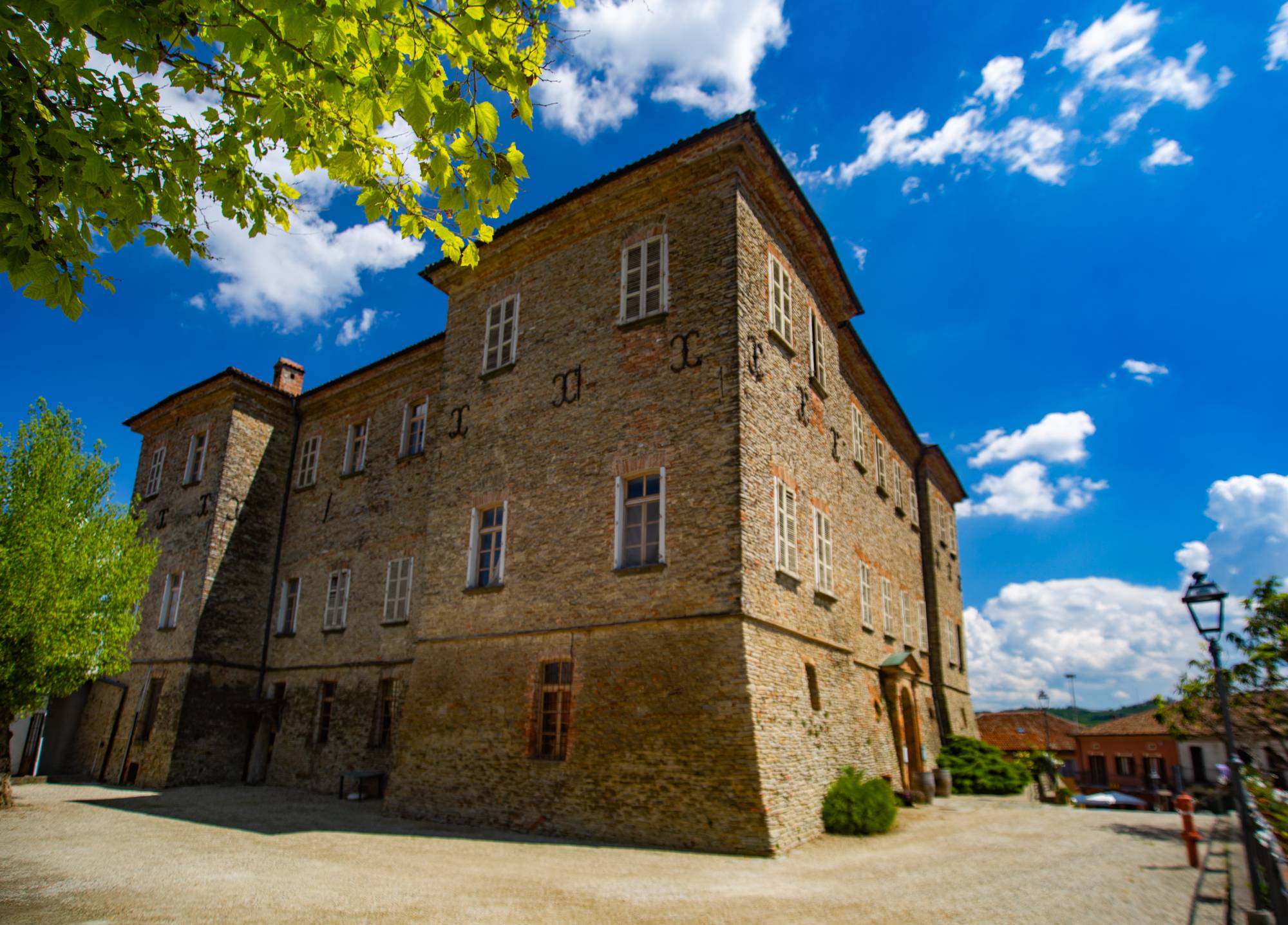
Il castello di Mango non è il classico
Here, Moscato is not just told: it is tasted, encountered, and experienced.
Here, Moscato is not just told: it is tasted, encountered, and experienced.
Founded in 1985, the Regional Enoteca of the Moscato Hills was created to promote Moscato d’Asti and the wine culture of the hills spanning the provinces of Cuneo, Asti, and Alessandria. After renovation work, it reopened in the new spaces of the castle in November 2025.
Here you can discover the different expressions of Moscato: from Moscato d’Asti to Asti Spumante, up to Canelli DOCG and Strevi DOC. The selection also includes other white, rosé, and red wines from Langhe, Monferrato, and Roero.
Tastings can include multiple glasses, wines offered on rotation, and small accompaniments with local cured meats, cheeses, hazelnuts, and desserts. For those who do not drink alcohol, and for children, Moscato grape juice is also available. During the warm season, it is possible to purchase a picnic basket to be picked up at the castle and taken with you among the vineyards and panoramic viewpoints.
The Enoteca is also a cultural space. Throughout the year, it hosts thematic tastings, dedicated meetings with producers, food and wine events, exhibitions, concerts, and musical evenings. The calendar changes with the seasons, offering a different reason to return to Mango every time.
The tastings
4 glasses — €10
Accompaniments
Selection of hazelnut-based desserts — €5
Water or grape juice (non-alcoholic Moscato) for non-drinkers or children.
Qui puoi assaggiare il moscato e abbinarlo con i prodotti tipici locali

Eat & Drink in Lower Langa
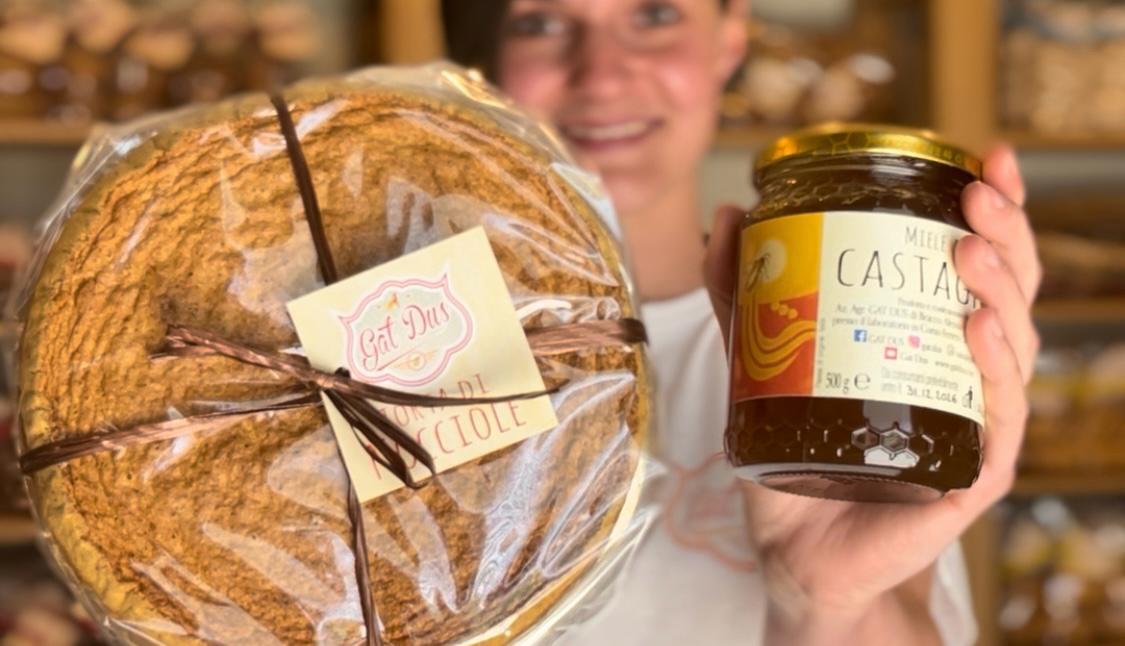



Are you planning a trip in the Langhe region?
Let us help you design the perfect vacation, and live your stay like a true insider
Free
Service
Ask us
For advice
Free Service
Ask us
For advice
Free Service

Fill in the form
reporting your interests and preferences
Receive our suggestions
directly into your inbox
And if it's not enough
we'll design a personalized trip!