
The Castle of Monteu Roero
Business Hours
Contacts
Languages
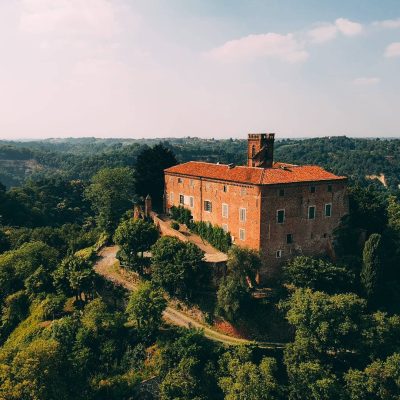
Monteu Roero Castle overlooks one of the most evocative spots in the Rocche, from a position that immediately reveals its defensive origins.
Once known as Monte Acuto, it stands on top of a steep hill and still retains that stern and dramatic appearance typical of ancient medieval fortresses.
Its origins date back to the 12th century, when the Biandrate family had it built under an imperial grant from Frederick Barbarossa. Tradition says the Emperor himself was a guest within these walls. In 1299, the castle then passed to the Roero Counts, reaching its period of greatest splendor between the 16th and 17th centuries.
Today, the property belongs to the historic Berta family of the eponymous distilleries, who purchased it in 2012 and manage its development as a museum.
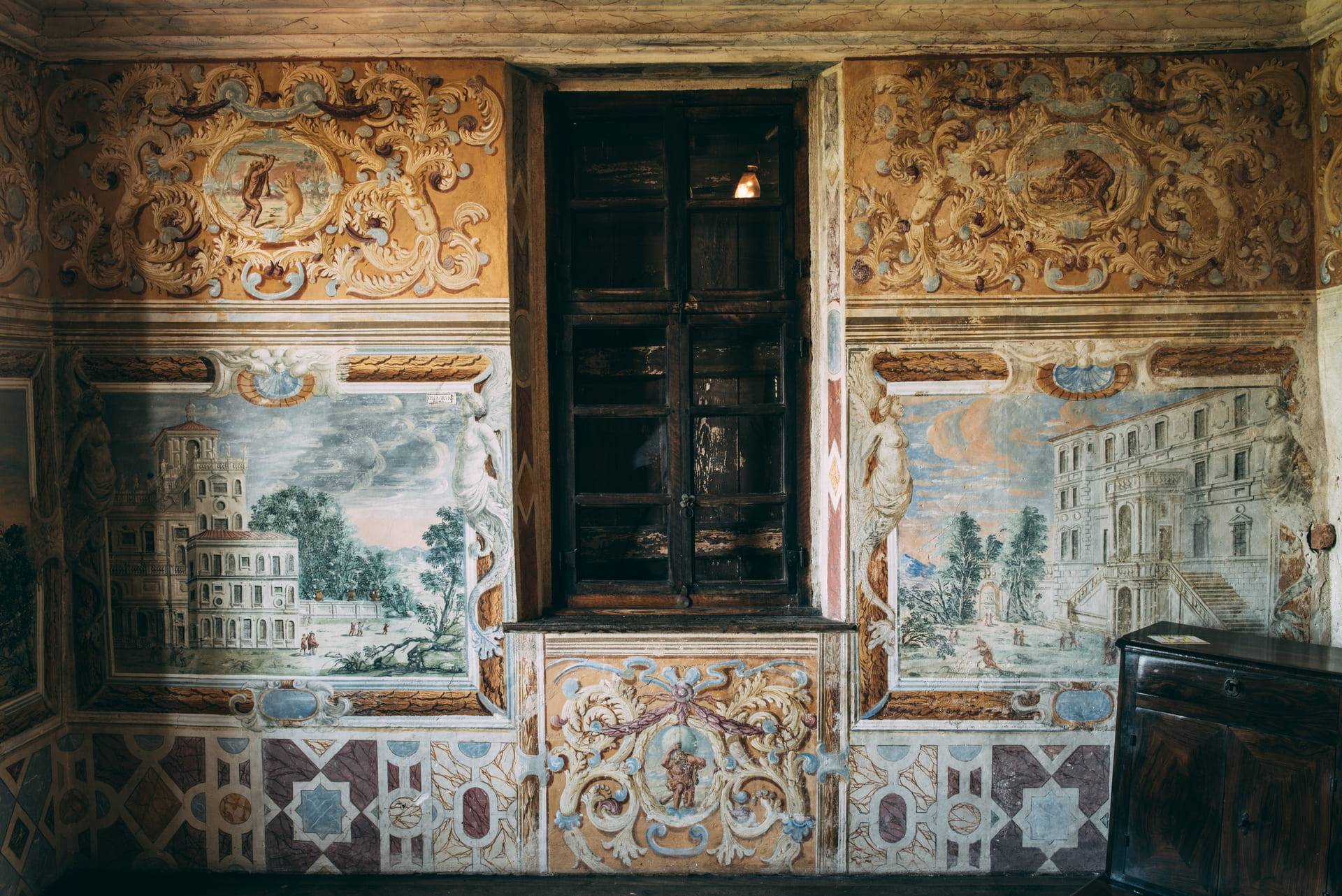
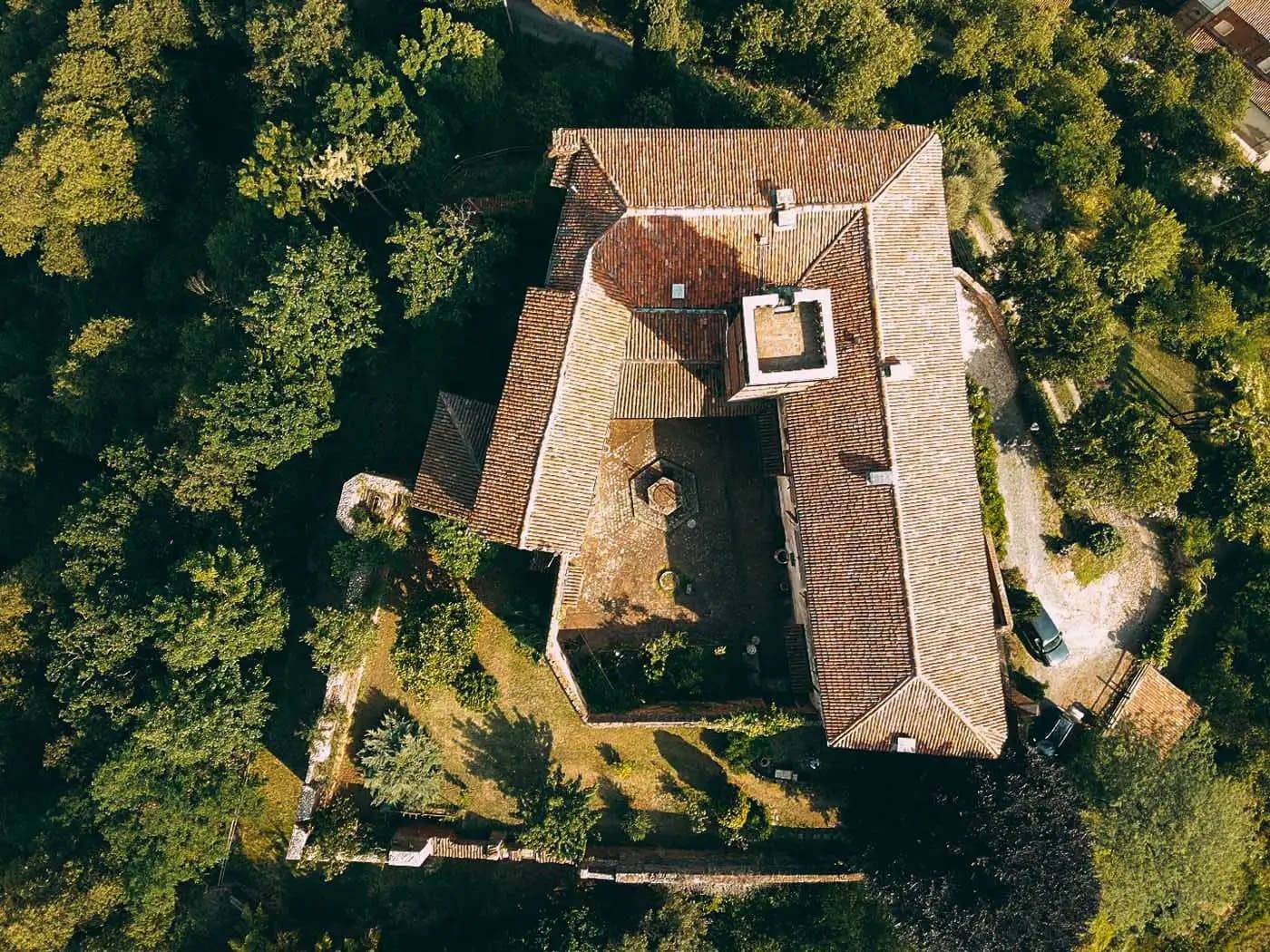
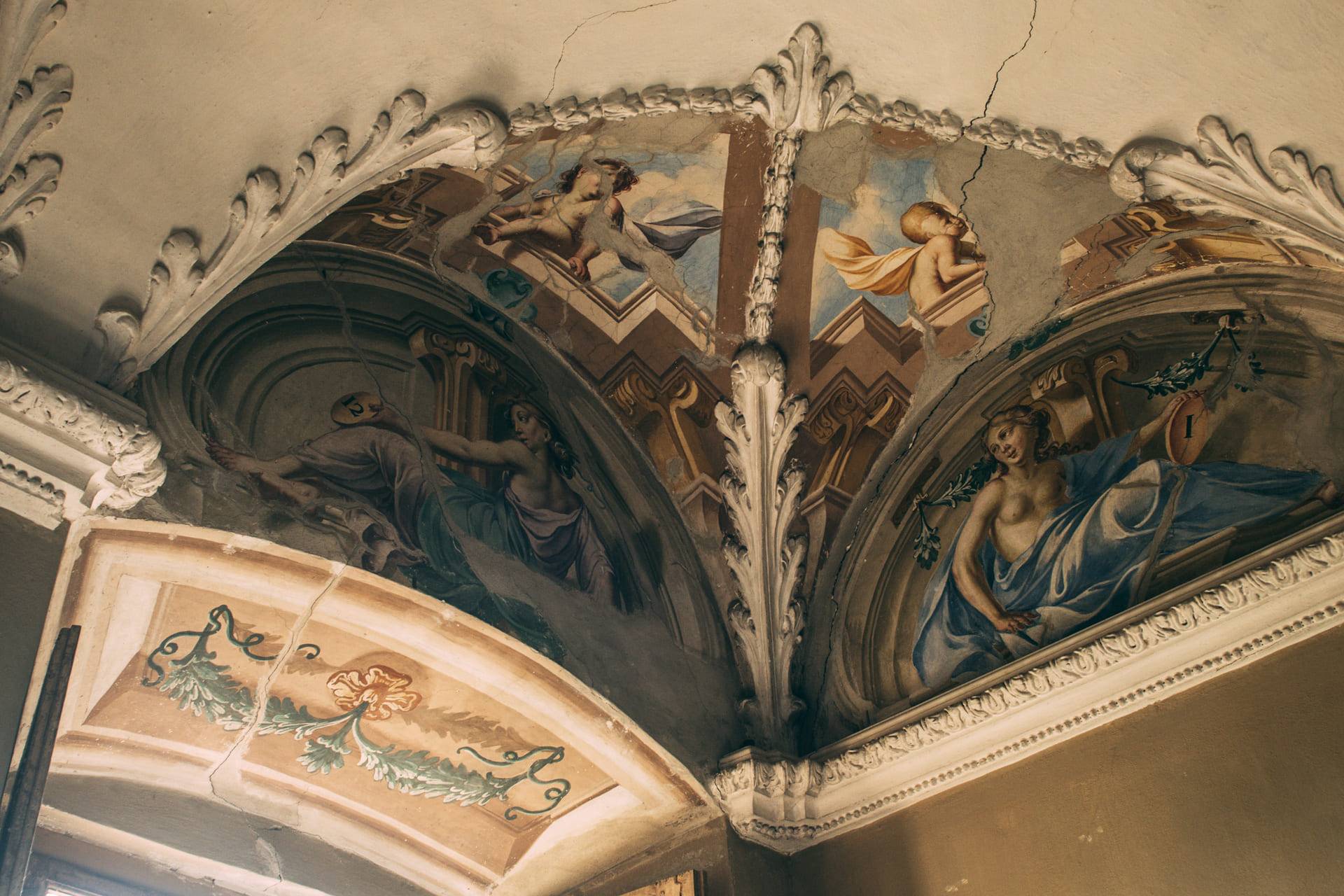
Among the most precious features of the Castle of Monteu Roero are the frescoes decorating its interiors—a testament to the refined and theatrical taste of noble residences between the late 16th and 17th centuries.
Seen from above, the Castle reveals the full strength of its position: a compact structure, gathered around an inner courtyard and immersed in greenery, built to dominate the village and oversee the surrounding landscape. Its hilltop location still speaks to the complex’s defensive origins, born as a strategic outpost nestled between the hills and the Rocche of Roero.
Frescoes, cracks, decorations, and time: every single detail tells a piece of the castle’s long history.

TheHistory
The Castle of Monteu Roero
From medieval origins to contemporary restoration, the history of Monteu Roero Castle spans centuries of power, transformation, and memory, telling the story of the village's deepest identity and its territory.
The history of Monteu Roero Castle is rooted in the Middle Ages, when the village was known as Monte Acuto: a reference to the town's high and steep position, naturally suited for defense. As early as the 11th century, the territory was linked to the Bishop of Asti; in 1041, Emperor Henry III granted Monte Acuto to the Church of Asti, while in the following centuries, control passed to the powerful Biandrate family.
According to tradition, it was Guido Biandrate who built the castle. In 1152, Emperor Frederick Barbarossa officially recognized the Biandrate family—his allies—as the owners of the fortress, and some chronicles link the Emperor's name to the castle, where he is said to have stayed during his time in Piedmont. The manor's position, overlooking the village and the Rocche, made it a strategic outpost: from here, passages, hills, and a landscape already marked by borders, power, and rivalry were controlled.
At the end of the 13th century, a new decisive phase began. In 1299, after the crisis of the Biandrate power, the castle passed to the Roero family, an Asti family destined to give their name to the entire territory. From that moment, Monte Acuto became Monteu Roero and the castle took on an increasingly important role in local history: not just a defensive fortress, but also a noble residence and a symbol of the family's power.
Between the 16th and 17th centuries, the castle experienced its period of greatest splendor. In particular, between 1570 and 1575, it was expanded and transformed according to the taste of the time: the ancient medieval structure was enriched with more residential rooms, decorated halls, and ceremonial spaces. Some of the most precious elements still visible today belong to this phase, including frescoes dedicated to mythological subjects such as Daedalus and Icarus, Phaethon, and the Myth of the Hours.
Time, however, has left deep marks on the building. As early as the 16th century, part of the castle suffered a major collapse, while the 1887 earthquake seriously damaged the complex, leading to the demolition of the high keep and some structures to the west, which were never rebuilt. This is also why the castle retains a special charm today: less intact than its original form, but full of memory, layers, and traces of its long past.
After the Roero era, the castle passed to the Gromis di Trana and, in the following centuries, went through various owners and functions until it became a private residence. In 2012, it was purchased by the Berta family, owners of the eponymous distilleries, with the aim of restoring and enhancing it. Today, Monteu Roero Castle has returned to being a living place: open for tours, exhibitions, events, and cultural initiatives, it continues to tell the story of the village, the Rocche, and one of the most important families in the Roero.
The Interior
Rooms full of charm and artistic evidence of great interest
Among the most precious elements, the 16th-century frescoes stand out, dedicated to mythological subjects such as the Myth of Daedalus and Icarus, the Myth of Phaethon, and the Myth of the Hours: scenes that reflect the sophisticated taste and refinement of the noble residences of the time.
The tour also allows you to discover the main floor and some spaces linked to the castle’s more recent history, including those dedicated to the figure of Michela Pachner Pron, a visionary artist and former owner of the residence.
Completing the experience are the internal garden, the enclosed courtyard, the walls, and the foundations, which continue to be the subject of study and research.
Visit Duration
Audioguides
Guided Visit
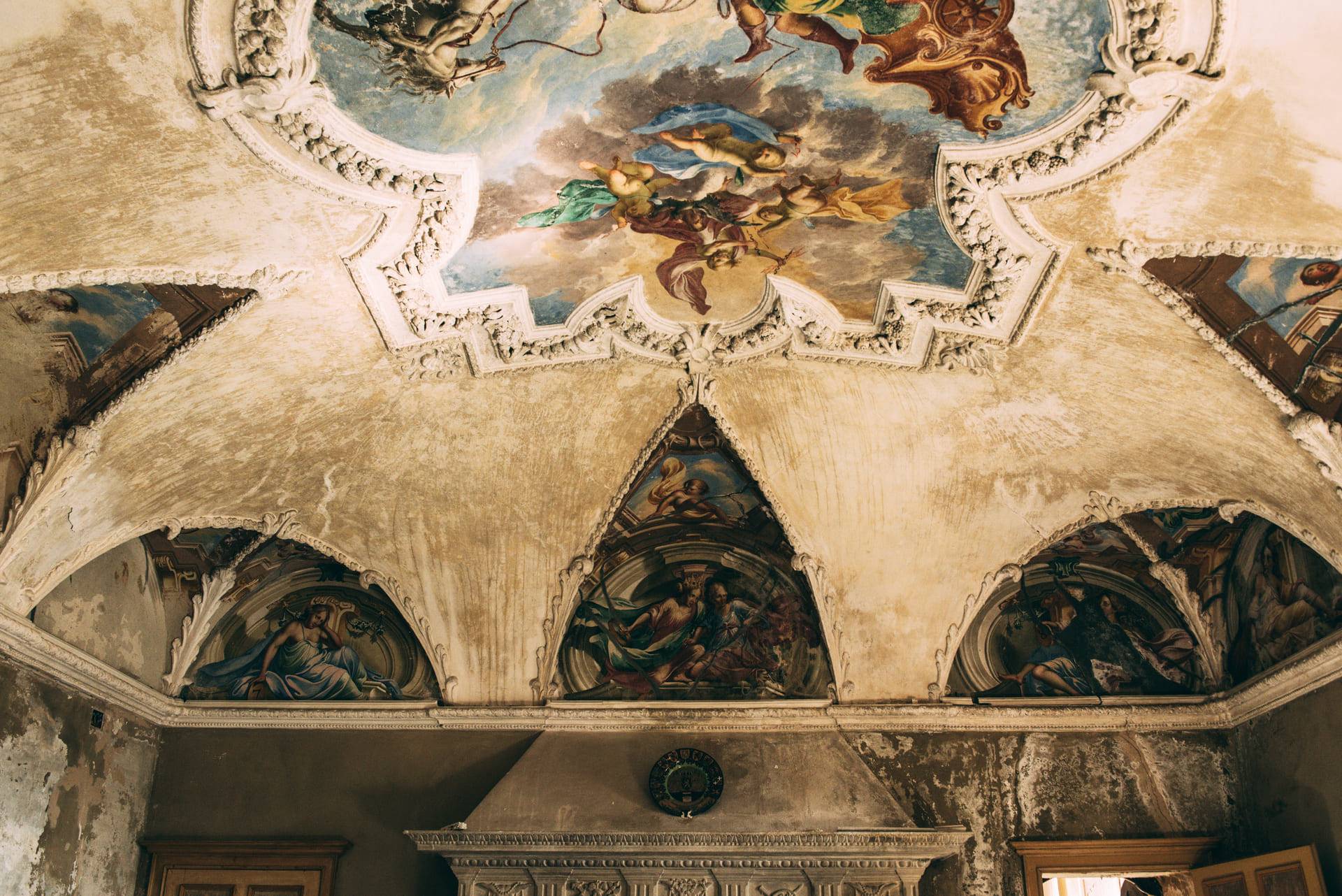
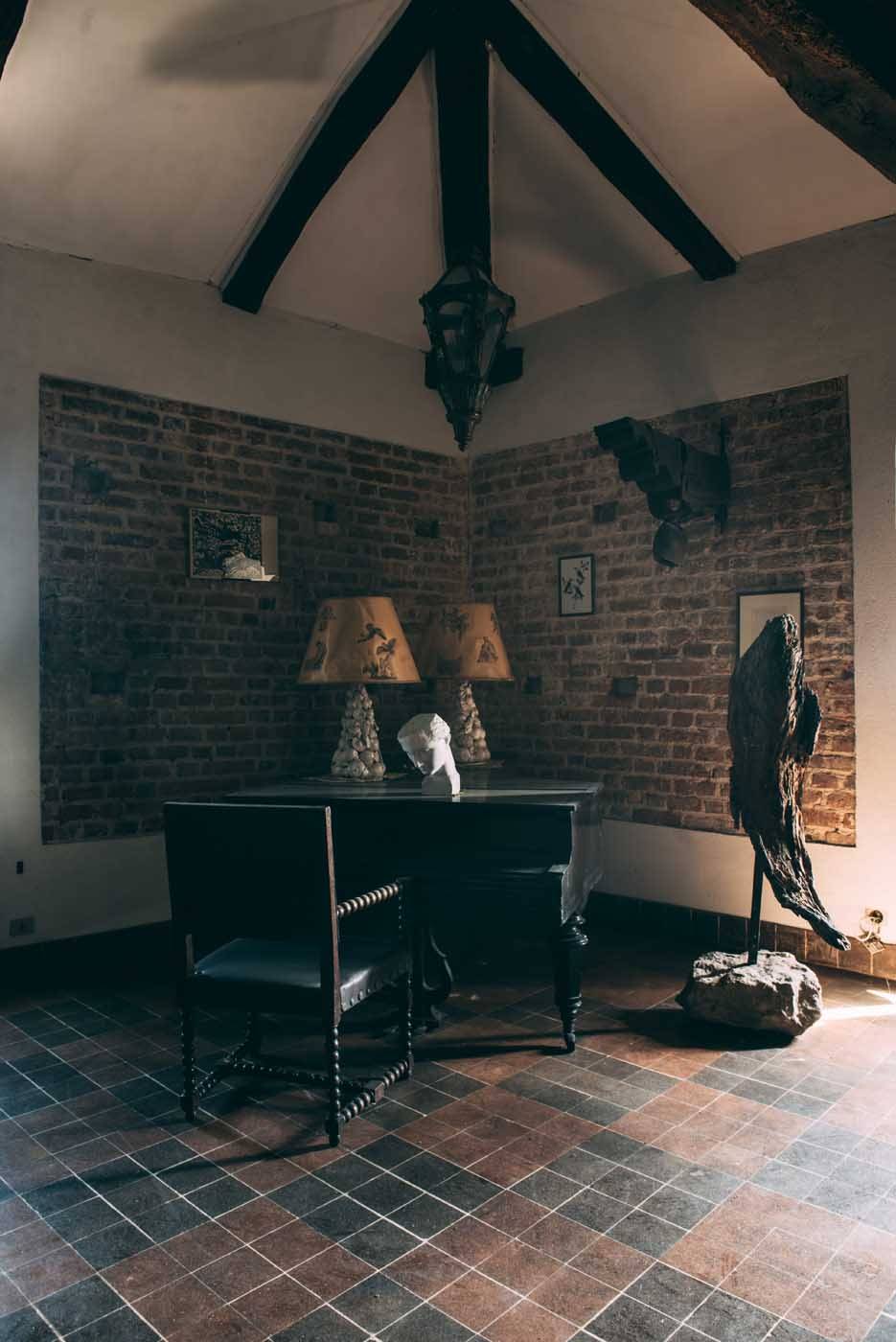
Ornamental motifs, painted architecture, allegorical figures, and scenes inspired by classical mythology transform the rooms into a visual narrative. This is not simple decoration, but a powerful expression of prestige, culture, and family identity.
The tour route focuses particularly on the piano nobile (the main noble floor) of the castle, home to the two halls frescoed between the late 16th and 17th centuries, alongside other historic rooms connected to the daily life of the estate.

Eat & Drink in Roero


The Castle
of Monteu Roero
in Monteu Roero
The Castle
of Monteu Roero
in Monteu Roero
The Castle of Monteu Roero
Business Hours
Contacts
Languages
Are you planning a trip in the Langhe region?
Let us help you design the perfect vacation, and live your stay like a true insider
Free
Service
Ask us
For advice
Free Service
Ask us
For advice
Free Service

Fill in the form
reporting your interests and preferences
Receive our suggestions
directly into your inbox
And if it's not enough
we'll design a personalized trip!