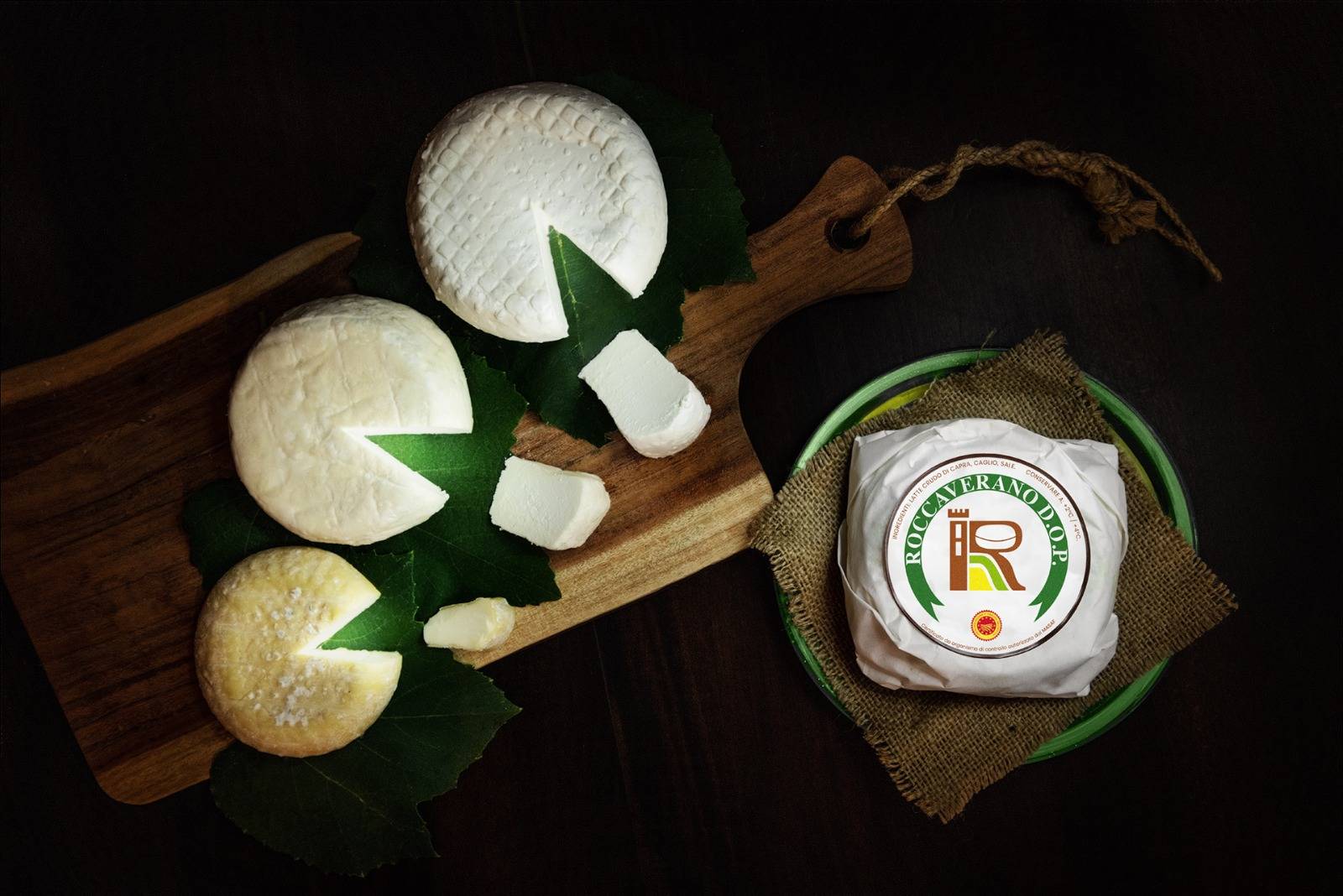
Roccaverano DOP
Product Type
Production Area
First mention
Quality mark
Obtained on
Roccaverano DOP is one of the most ancient and distinctive goat cheeses of Piedmont.
It is born in a rugged territory, made of high hills, woods, and pastures, dotted with small stone villages. Here, for centuries, goats have been part of daily life: hardy animals, capable of adapting to steep terrain and harsh climates.
Like many products tied to a specific territory, Roccaverano long remained a local treasure, known mainly to farmers and cheese makers in the area. Its fame has grown over time, along with attention to milk quality and a cheese-making tradition passed down from generation to generation.
Over the years the production specification has been updated, without altering the cheese’s identity. The most significant change came in 2023, with the shift from the name Robiola di Roccaverano to Roccaverano DOP. The specification still allows both names, but the supply chain has chosen to focus on a single name, clearer and more faithful to the nature of the cheese.
Annual production is around 500,000–550,000 pieces: significant numbers, but still far from those of a mass-market cheese. Roccaverano thus maintains a very short supply chain, closely tied to its territory of origin.
Name origin
The product takes its name from the village of Roccaverano, one of the highest towns in the Alta Langa area of Asti, perched at over 700 meters altitude. In this isolated territory, cheese production has been part of the culture and daily life for centuries.
Originally, Roccaverano was a subsistence product, consumed at home or traded for other essential goods.

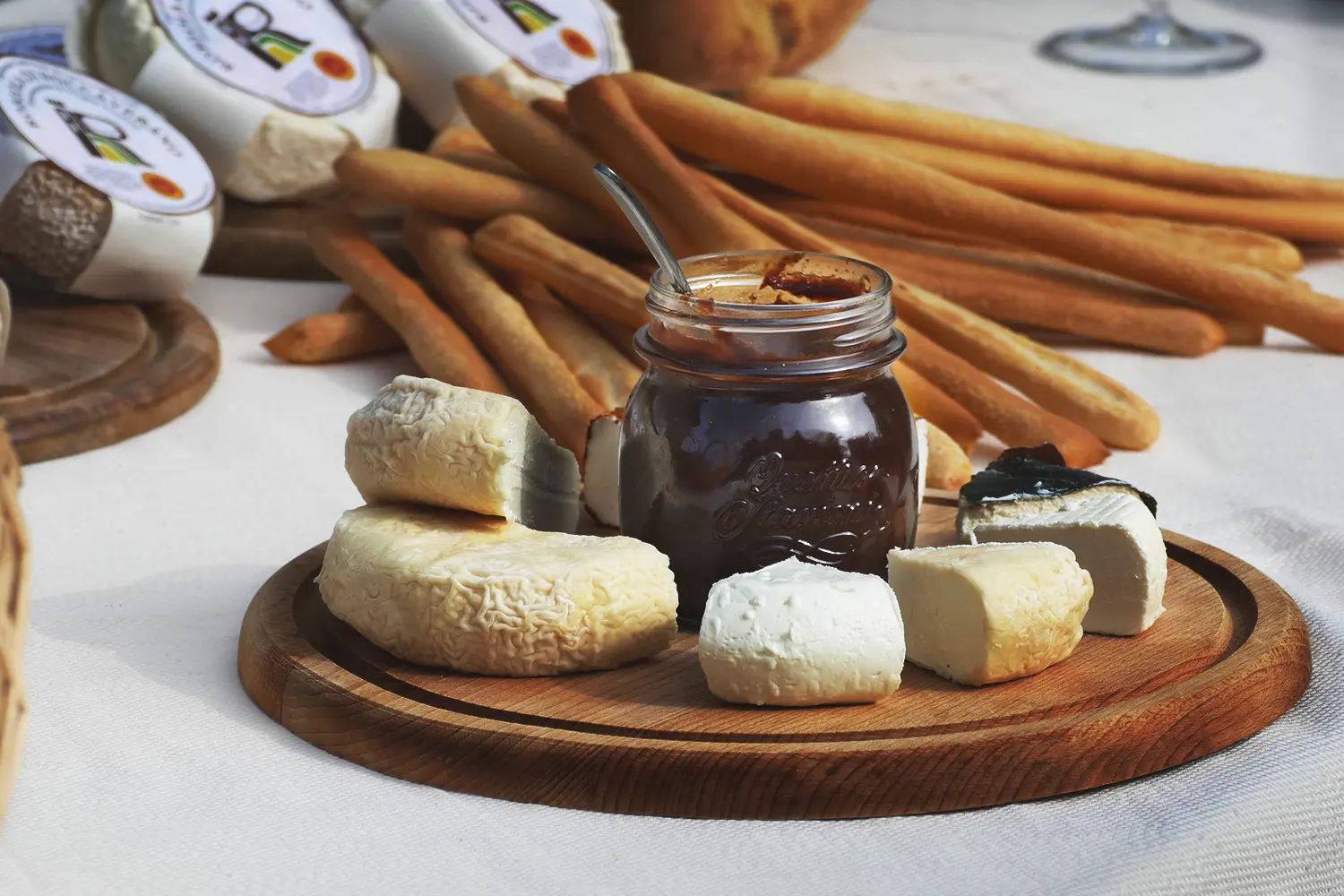
Roccaverano DOP In the kitchen
Fresh or aged, a cheese to discover in the kitchen through recipes and pairings
Roccaverano DOP is a very versatile cheese in the kitchen.
Fresh and soft, it lends itself to appetizers, salads, and light dishes. With aging it gains more character and also finds a place in traditional Alta Langa recipes.
Its creaminess allows it to be used in various ways:
- savory and sweet tarts
- creamy risottos
- cheese spreads
- fillings for fresh pasta
- pairings with honey, hazelnuts, and preserves
More aged Roccaverano can also be enjoyed on its own, to appreciate its more intense aromatic profile.
Roccaverano DOP: nutrition facts
Roccaverano DOP falls into the category of full-fat cheeses. The production specification establishes a minimum fat content of 40% on dry matter and a minimum protein content of 34% on dry matter.
The composition changes with aging. In fresh Roccaverano, the higher water content makes fats and other nutrients less concentrated. With aging, the progressive loss of water increases their concentration.
The lactose content also changes: higher in the fresh product, it decreases during aging due to fermentation processes.
Goat's milk also has a different fat composition than cow's milk. This is one of the reasons why goat cheeses may have different digestive characteristics, but this does not mean that Roccaverano is automatically suitable for those with milk intolerances or allergies.
Energy for 100 g
Proteins for 100 g
Carbs for 100 g
Sugar for 100 g
Fats
Fiber
Average weight
Related recipes

Organoleptic characteristics
Roccaverano DOP is a small cheese, cylindrical in shape, with a diameter of about 10 cm.
In the fresh version, the paste is white, soft, and slightly moist, while in the first few days the rind is absent. Over time and with aging, a light natural bloom forms.
The aroma is milky and fresh, with vegetal notes and a hint of yogurt. The flavor is delicate but distinctive: tangy and clean, with a slight sweetness that balances the freshness of the goat's milk.
With aging, the aromatic profile becomes more complex and hints reminiscent of hazelnut, wild herbs, and wet stone appear.
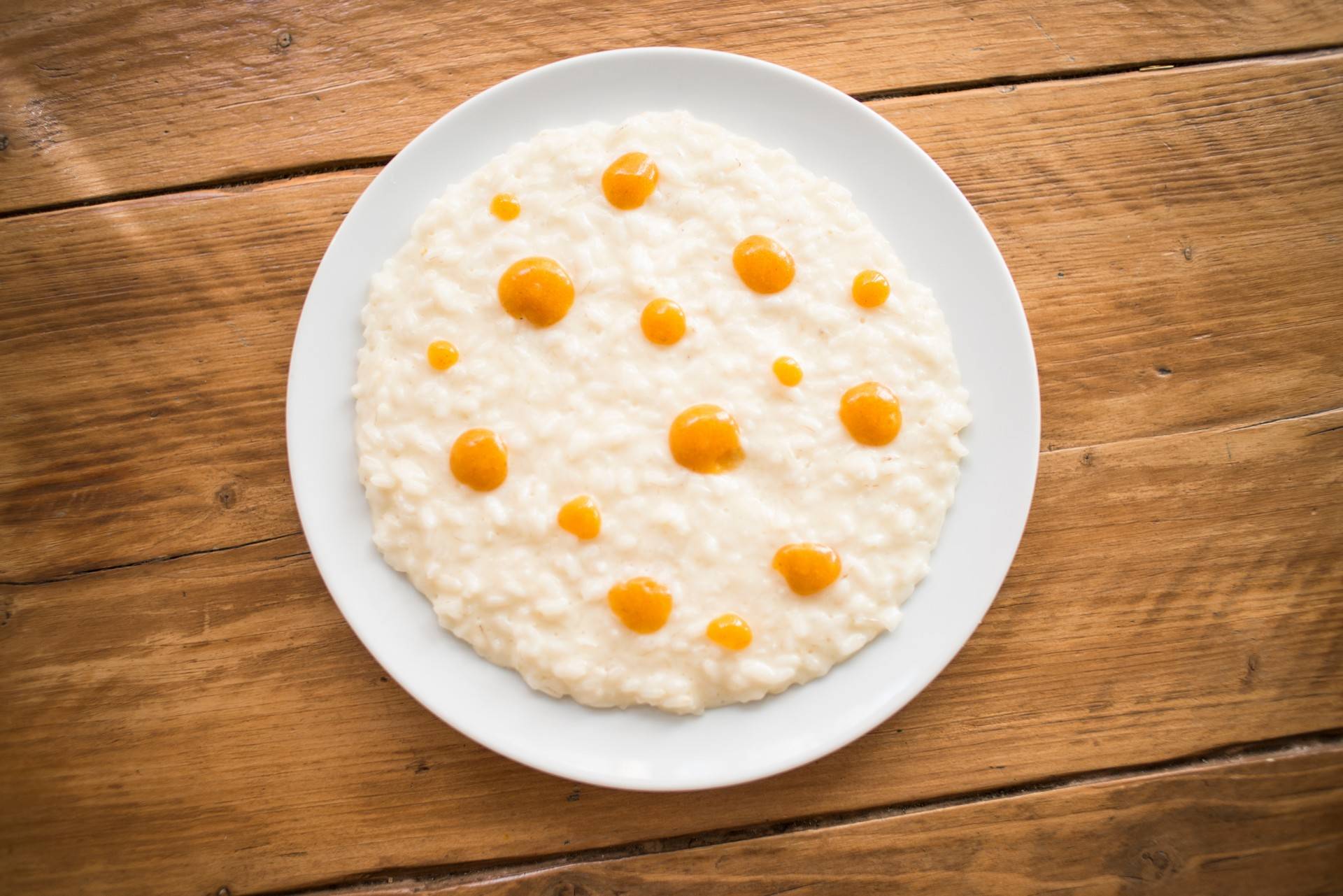
Its creamy texture envelops the risotto, bringing the distinctive character of Alta Langa goat cheese to the plate.

Roccaverano DOP
A story that
begins in 1000
The history of Roccaverano DOP has ancient origins, predating the first written records by many centuries.
The origins of Roccaverano DOP are traced back to the ancient Ligurian populations who inhabited these lands and who already knew the art of transforming goat's milk into small fresh forms.
With the arrival of the Romans, the term rubeola appears, from the Latin ruber, "red," linked to the reddish color of the rind during aging. A reference that shows how far back in time the origins of this cheese-making tradition go.
Pliny the Elder also mentions a cheese produced in these areas. His testimony represents one of the oldest references related to cheese production in the territory.
Medieval chronicles then mention robiola around the year 1000: the cheese thus continues to appear in historical records many centuries after the Roman era.
In the following centuries, production remained tied to farming families of the Alta Langa: a few goats and milk transformed daily. A domestic activity traditionally entrusted mainly to women, who helped pass down techniques and knowledge from generation to generation.
A first official recognition came in 1979. In 1996, Robiola di Roccaverano obtained Protected Designation of Origin status at the European level, with DOP registration.
Production
From raw goat's milk to the form: how Roccaverano DOP is made
Roccaverano DOP is made using an ancient production method based on acid coagulation of whole raw goat’s milk. The milk comes from Roccaverano, Camosciata Alpina goats, and their crosses.
The animals’ diet is closely tied to the territory. The production specification requires grazing from March 1 to November 30 and establishes that over 80% of the feed must come from the production area. The use of feed containing GMOs is also not permitted.
The milk comes from consecutive milkings, carried out within 24–48 hours. Many producers use the evening milk together with the morning milk, so they can work the curd in the morning.
Natural and native lactic cultures from the production area may be used, such as milk starters or whey starters, prepared directly by the producers.
Processing
Coagulation occurs slowly, through acidification of the milk. Only when this process has begun is a small amount of animal rennet added. The curd is left to rest at a temperature between 18 and 24°C for a period that can vary from 8 to 36 hours, depending on climatic conditions and the processing environment.
Once ready, the curd is gently transferred into perforated molds, which allow the whey to drain. Before molding, the whey can also be drained using fine-weave cloths.
The time in the molds can last up to 48 hours. During this period the forms are turned several times to facilitate whey drainage.
Salting is done dry on both faces, during turning or at the end of molding.
From the fourth day after molding, Roccaverano can be sold or continue aging. Starting from the tenth day it is considered aged.