
The market in Canelli
Business Hours
Tue, Fri 08:00:00 → 13:00:00
Contacts
The Tuesday and Friday market in Canelli is not simply a weekly event. For centuries it has been one of the moments when the city meets the hills that surround it, bringing together producers, merchants, residents of nearby villages, and visitors.
It takes place every Tuesday and Friday, from 8 a.m. to 1 p.m., in the town center, between Piazza Carlo Gancia, Piazza Alessandro Zoppa, and Piazza Camillo Benso di Cavour.
If you’re in Canelli, it’s worth stopping by not only to shop. It’s a simple way to observe the city as it lives out one of its most enduring rituals.
Among food, producers, and stands
The market unfolds across three adjacent spaces in the town center, each with a slightly different character.
In Piazza Carlo Gancia you’ll find mainly clothing, footwear, leather goods, jewelry, and household items stands.
The nearby Piazza Alessandro Zoppa is instead the reference point for food and producers: Piedmontese cheeses, Robiola di Roccaverano, fruits and vegetables, honey and beehive products, as well as flowers and seeds.
Among the stands you can also find fish products, fresh or preserved.
It’s this variety that makes the market something more than a simple shopping opportunity: a small cross-section of daily life in Canelli, where shopping, commerce, and social interaction coexist.
A different way to discover Canelli
Canelli is part of the Vineyard Landscapes of Langhe-Roero and Monferrato, recognized as a UNESCO World Heritage Site in 2014.
Historic wineries, sparkling wine, and the Cattedrali Sotterranee are naturally among the main reasons to visit. The market, however, allows you to discover another side of it.
Not the one built specifically for outsiders, but the city as lived every week by those who inhabit it.
If you happen to be in Canelli on a Tuesday or Friday, take some time to walk through the stands, especially the food ones in Piazza Zoppa.
Among the cheese, honey, fruit, and vegetables of the area, you’re taking part in a custom that has accompanied Canelli for centuries.
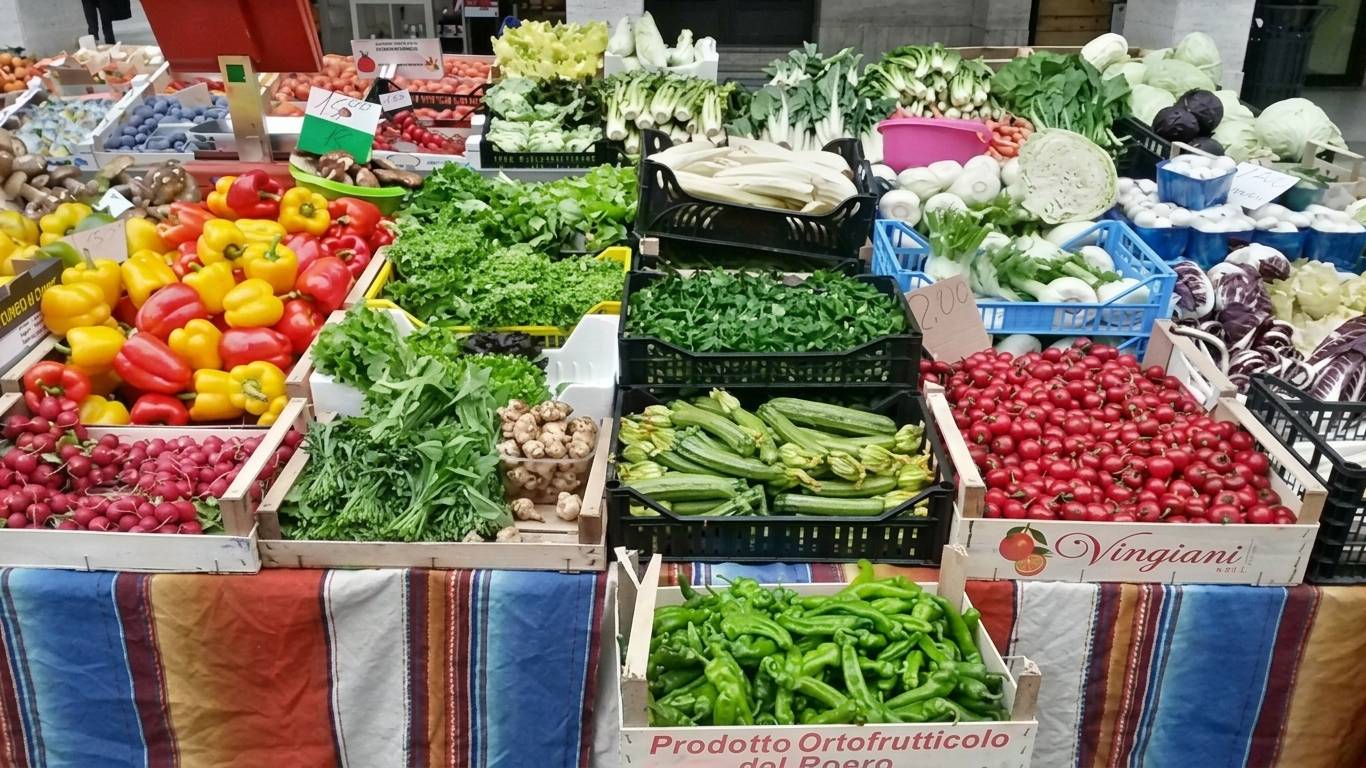
Seasonal fruit and vegetables fill the stalls of Piazza Zoppa, revealing the more everyday side of the market.
Seasonal fruit and vegetables fill the stalls of Piazza Zoppa, revealing the more everyday side of the market.
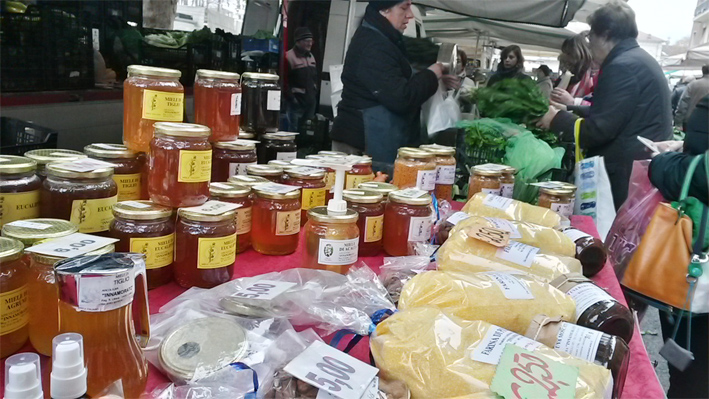
Honey and hive products bring flavors to the market that are tied to the hills and the work of local producers.
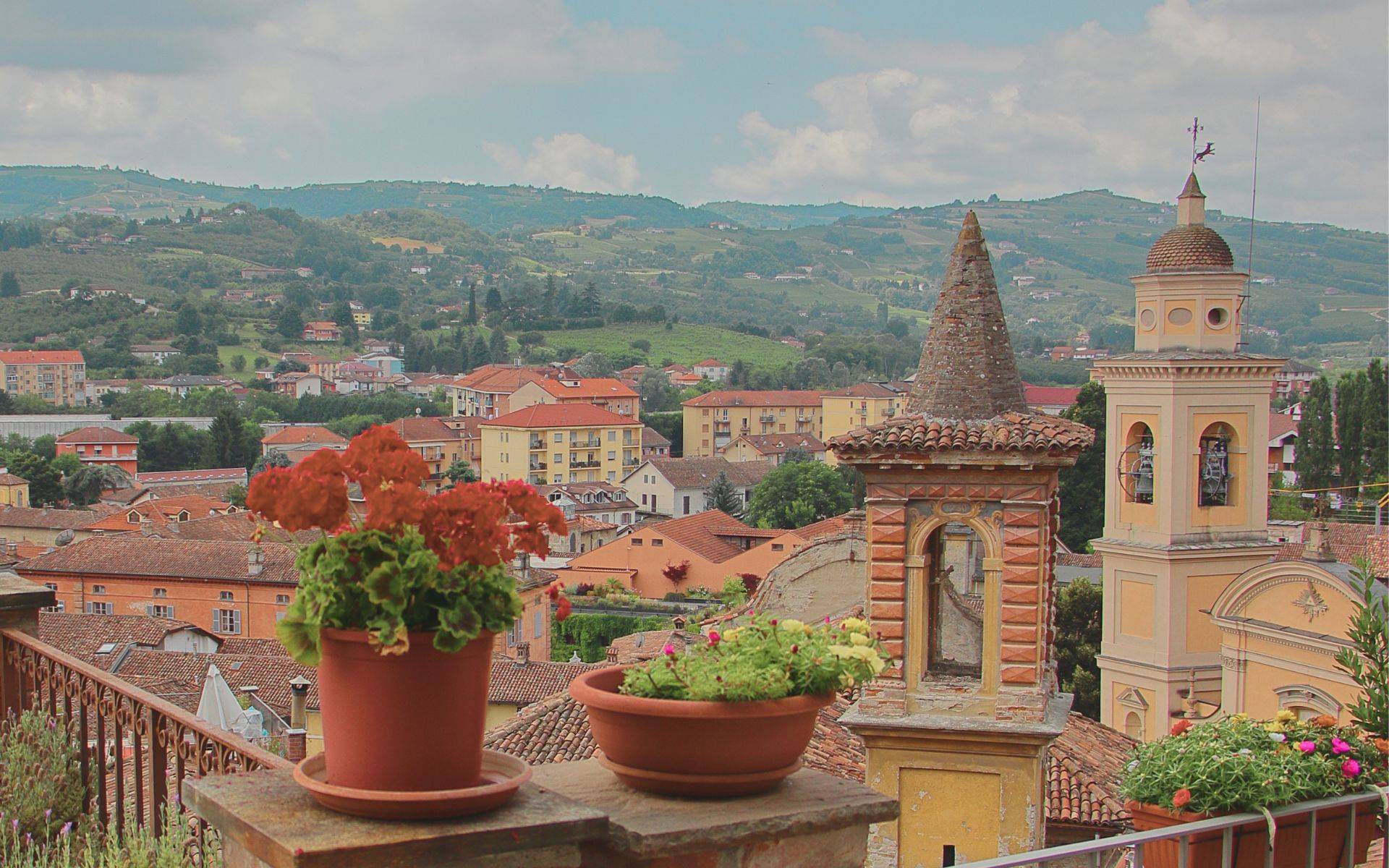
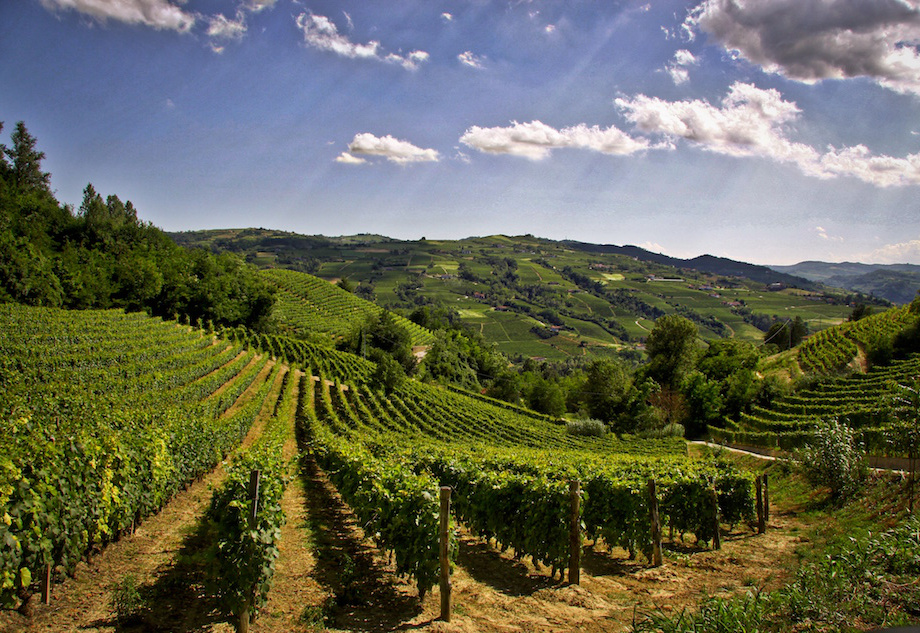
Canelli opens up toward the surrounding hills, spanning its historic center, vineyards, and wine-growing landscape.

TheHistory
The market in Canelli
A market that spans the centuries
The history of the Canelli market goes back much further than one might imagine.
The ancient Statutes of Canelli dedicated an entire section to it, with precise rules to ensure the safety of the square, protect merchants and buyers, and regulate what happened during the day.
The regulations established, for example, that the streets had to remain clear, that merchants' goods could not be seized during the market, and that anyone arriving with grain, provisions, money, or other products had to be able to do so safely.
Participation carried such weight in the life of the community that every head of household was required to go to the market and remain there for a good part of the day.
It was therefore not only a place to buy and sell: it was one of the focal points around which the economic and social life of the town revolved.
A tradition documented since 1829
In the General Calendar for the Royal States of 1829, Canelli appears with three annual fairs and two weekly markets, on Tuesdays and Fridays.
Even then the market was the most frequented. A guide published in 1870 by Luigi Rocca describes it as an event capable of drawing people from outside the city as well.
It's a continuity that helps us understand how deeply market day is rooted in Canelli's history.
A market that changed the city
The relationship between Canelli and its market can also be read in the shape of the town center.
In 1907, the Town Council discussed the need to create a larger square precisely to give more space to the weekly markets.
The choice fell on expanding Piazza Gioberti, which already hosted the vegetable market. The debate of the time shows how important the market was considered not only for commerce, but also for traffic flow and the vitality of the town center.
Even today the route of the stands passes through some of Canelli's most recognizable squares: Piazza Cavour, its tree-lined avenue, Piazza Gancia, and Piazza Zoppa.
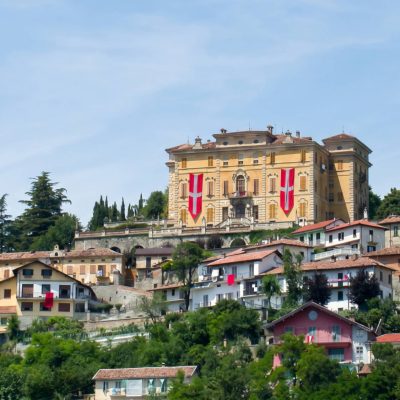
Above them remain the historic village and Castello Gancia, while below the city develops another fundamental element of Canelli's identity: the famous Cattedrali Sotterranee.
Literature
A market that also lives in the pages of writers
The role of the market in the daily life of Canelli and the surrounding hills has also left its mark in the literature of the area.
In the story Tuesday, the Day of Horns, Enzo Aliberti recalls how even in the early 1960s men from the countryside would leave their work on the farms to come down to the city on market day.
Marco Drago, recounting life in nearby Cassinasco, describes instead a village that on market days would ideally move to Canelli: along the avenue, among the stands and in Piazza Carlo Gancia, people would meet, buy, bargain, and above all chat.
Cesare Pavese also mentions the Canelli market in The Moon and the Bonfires, confirming how much the city was a natural reference point for those living in the surrounding hills.
Sources: Massimo Branda, Canelli native and president of the Memoria Viva Association
Photo credits: Federico Carpino, Alessandro
The hills come down to the city

Cesare Pavese – Santo Stefano Belbo

Eat & Drink in Asti Langa




Are you planning a trip in the Langhe region?
Let us help you design the perfect vacation, and live your stay like a true insider
Free
Service
Ask us
For advice
Free Service
Ask us
For advice
Free Service
Fill in the form
reporting your interests and preferences
Receive our suggestions
directly into your inbox
And if it's not enough
we'll design a personalized trip!