Tasty reads
Rare grape varieties of the Alba area and surroundings Gamba di Pernice, Liseriet, and Nascetta
June 30, 2026

The viticultural heritage of our country was enormous in the past. In Italy, in the mid-19th century, there were over 4,000 grape varieties in the vineyards; today about 450 remain.
Thanks to maritime trade, numerous vine varieties from different areas of the Mediterranean were introduced to our territory as early as the 8th century BC. Most of them have become extinct.
Here are some, all very rare, that deserve to be remembered.
It was a delicious grape, sweet, aromatic, and above all, had a thick skin. Among my childhood memories, the figure of my father emerges who, returning home from the Moscato harvest in Santo Stefano Belbo, would immediately show a small basket of grapes.
He called it gamba di pernice (partridge leg).
Years ago, some winegrowers from Calosso decided to bring this interesting variety back into cultivation, saving it from extinction.
Unfortunately, this grape was disappearing between Langhe and Monferrato. Only a few vines survived in old vineyards. Years ago, some winegrowers from Calosso decided to bring this interesting variety back into cultivation, effectively saving it from extinction.
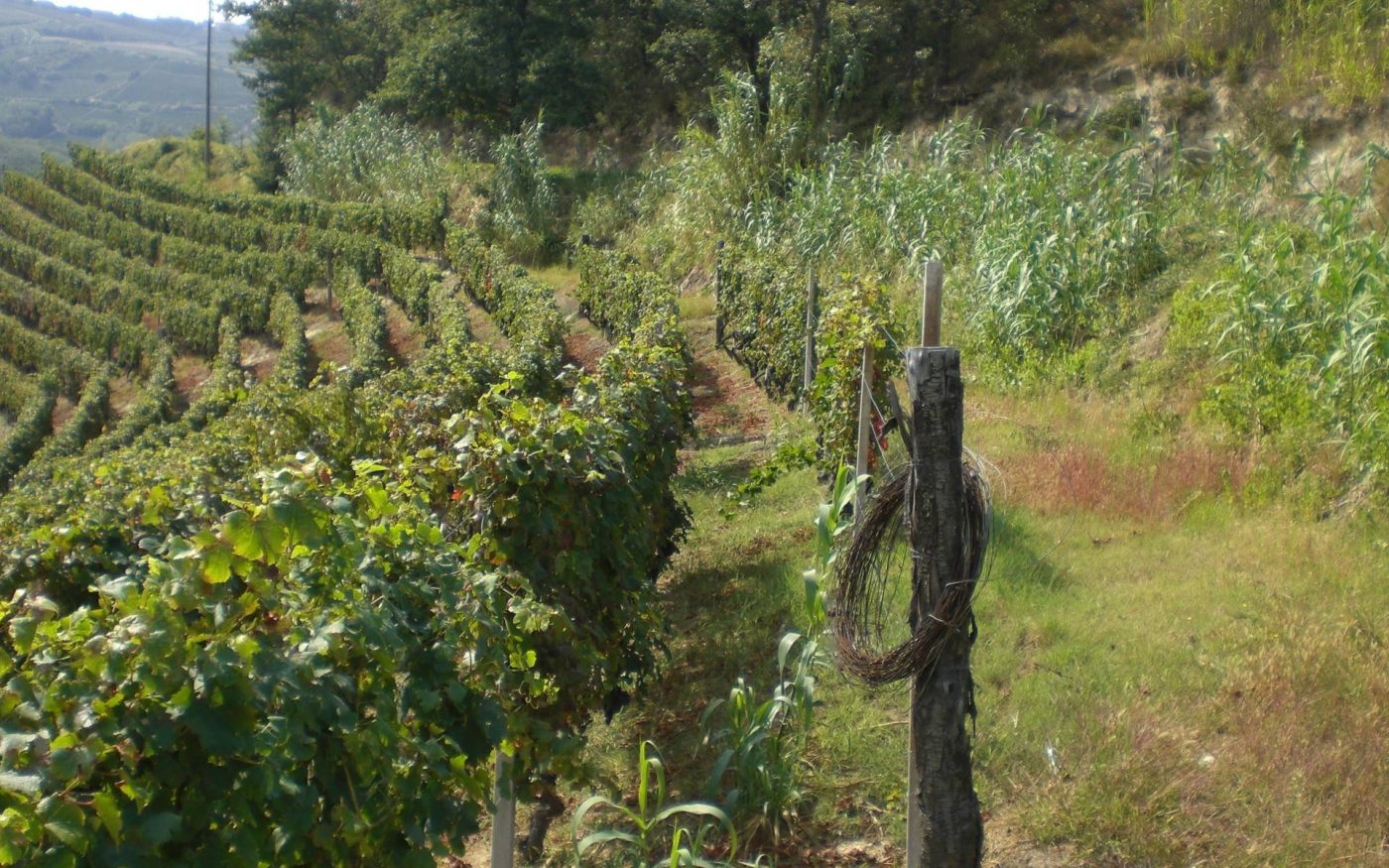
The name comes from the fact that the stalk tends to turn red during the summer, taking on a color similar to a partridge’s legs.
Mentioned by the historian Nuvolone, it was widespread in past centuries in various areas of the Saluzzo and Pinerolo regions, but also between Alessandria and Casale. Thanks to its particular flavor, it was mainly used as a table grape.
Gamba di Pernice has a medium-sized cluster, pyramid-shaped and rather compact, with a purplish-red peduncle and spherical blue-black berries characterized by a thick skin.
The wine obtained has a light ruby color and very intense and persistent aromas, in which sweet and spicy notes are found.
The wine obtained has a light ruby color and very intense and persistent aromas, in which sweet and spicy notes are found. On the palate, it is soft, medium-bodied, and with moderate tannins. It also lends itself to moderate aging in wood.
With a decree dated September 27, 2011, the wine obtained from this grape acquired DOC status under the names Calosso and Calosso Passarà. The denomination covers the municipalities of Calosso, Castagnole delle Lanze, and Costigliole d’Asti. Currently, the vineyard area is about 5 hectares.
Gamba di Pernice should be served in ISO glasses or tulip glasses and pairs excellently with cured meats, meats, and medium-aged cheeses.
The first person to tell me about it was Professor Roberto Macaluso, my viticulture teacher at the Enological School of Alba.
Later, when I began to take an interest in the story linked to the pollution of the Acna and Re Sole, I remember well that some elderly winegrowers often mentioned white liseriet in their sad tales.
Viticulture in the Val Bormida was of an excellent level, but it was brought to its knees by the waste discharged into the Bormida by the Cengio factory.
As is well known, viticulture in the Val Bormida was of an excellent level, but it was brought to its knees by the waste discharged into the Bormida by the Cengio factory. In fact, all, or almost all, the vineyards disappeared; only a few liseriet vines remained here and there.
These are the characteristics of the vine and the grape: medium leaves, medium and cylindrical cluster, spherical berry that is not very large. It flowers and ripens early, around the first days of September, and was often used as a table grape as well.
The wine obtained has excellent tartaric acidity and medium-intense aromas with fruity notes. Precisely this ability to always maintain good fixed acidity was considered by some enologists in the 1980s to improve Moscato d’Asti, which showed a lack of acidity, especially in certain vintages and areas.
The idea, however, was not pursued: technical issues aside, it would have been necessary to modify the production regulations. Today, liseriet returns in some discussions or on the sidelines of technical conferences.
If in the rebirth programs of the Val Bormida, now finally clean, a new viticulture finds the space it deserves, who knows if between Castino and Gorzegno liseriet might return to occupy those wonderful terraces it inhabited for over two millennia.
Continuing our journey through rare and little-known grape varieties, we encounter nascetta. Almost disappeared twenty years ago, today it has found a precise place among the Piedmontese DOCs.
Thanks to the passionate research of Professor Carlo Arnulfo, enology teacher at the Enological School of Alba, Professor Anna Schneider, and collaborators from the Center for Genetic Improvement of the Vine at the University of Turin, Nascetta was registered a few years ago in the National Catalog of Vine Varieties.
Nascetta is an ancient grape variety, cultivated for a very long time, especially in the Novello area and neighboring municipalities.
Nascetta is an ancient grape variety, cultivated for a very long time, especially in the Novello area and neighboring municipalities. Rovasenda, in the important Ampelografia universale of 1877, considers it a “very delicate grape and exquisite wine,” while in 1895 the illustrious Fantini describes Nascetta wine as having “a finesse equal to Moscato.”
Genetic and biological studies of the vine indicate Nascetta as an indigenous variety of the Novello hills, in the Piedmontese Langhe.
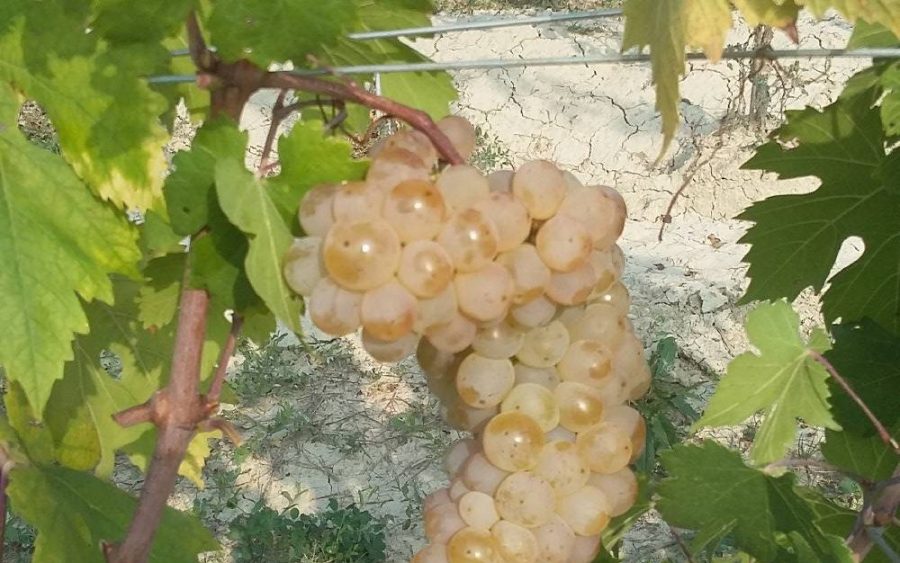
The grape has a fairly large and compact cluster, with white berries. The berry, of medium size, is spherical. The wine obtained is straw yellow with greenish reflections and is very fragrant, also thanks to the presence of linalool.
But let’s hear from a producer in the area who believed in this variety:
About six years ago, we planted Nascetta rootlings in the Loirano area. We vinify Nascetta with cold cryomaceration for about 12 hours and bottle the wine the following summer. We market it mainly on foreign markets.
Azienda Agricola RivettoSinio
Among the wineries in Novello that have believed in this wine, we also mention the Azienda Agricola Le Strette of the brothers Daniele, Mauro and Savio.
In Piedmont, there are two DOCs referring to the Nascetta variety: Langhe Nascetta and Langhe Nascetta del Comune di Novello. The total area is 7.92 hectares, for a production of about 54,000 bottles.
We end this series of articles on rare or extinct grape varieties with the Baco grape.
The name means little to young winegrowers, but if you talk to elders from Langa or Monferrato, they will certainly remember a rather modest quality of grape.
With a peculiarity: it was part of the so-called Direct Producer Hybrids, grape varieties obtained from the cross between European vines and American vines and widespread in Europe after the phylloxera crisis.
The phylloxera was fought mainly by grafting European varieties onto resistant American rootstocks, but in those years these hybrids also spread, appreciated because they could produce grapes without the need for grafting.
Grafting onto resistant roots of American vines allowed the parasite to be eradicated, but it required grafting European rootlings. Therefore, grape varieties obtained by hybridization between European and American vines were spread.
The advantages were significant: no treatments based on sulfur or copper sulfate and no use of rootstocks.
The best known of these varieties was certainly Isabella, commonly called strawberry grape. We also remember Clinton. Even today, there are pergolas or rare rows; of Baco, however, almost all trace has been lost.
The quality of the grape was certainly not fabulous, despite what the commercial catalogs promised.
The quality of the grape was certainly not fabulous, despite what the commercial catalogs promised: medium cluster, fairly compact, medium-small berry, not very thick skin, and a not very intense black-violet color.
It was used for direct consumption, but also to produce wine for family use.
Between 1930 and 1935 it was very widespread, thanks also to a strange character who took the name of the grape. They nicknamed him Baco.
Was he a smart guy? Was he a con artist? Or just a nurseryman?
In the 1930s, regarding the purchase of so-called American vines, two problems arose: where to find them and how to graft them.
In both cases, there were problems. Alongside very serious nurserymen, who guaranteed the rootlings for origin and rooting, there were also some tricksters who carried out genuine scams. The best of them all called himself Baco.
He went around in a black three-speed Balilla, complete with a driver and a trunk always full of American vines. He sold many of them, but it was a scam: in 1937 the Enological School of Alba intervened to make him stop.
The principal, Professor Tommaso Ferraris, said he would report him, because the grapes obtained were worth nothing at all and were useless for wine.
Baco died in Bra after the war. Even today, there is still some fondness for this undoubtedly original figure.
Baco died in Bra after the war. Even today, there is still some fondness for this undoubtedly original figure, about whom, as a winegrower from Perno said years ago, “one could easily write a book.”
The sale of American vines — or rather the direct producer hybrid Riparia Vinifera catalog number 24, obtained in France — did not bring much luck to Baco. He was only left with the nickname of the French nurseryman.
His grape has also disappeared: a few pergolas could still be found in the villa gardens on the Alba hill until the 1950s.
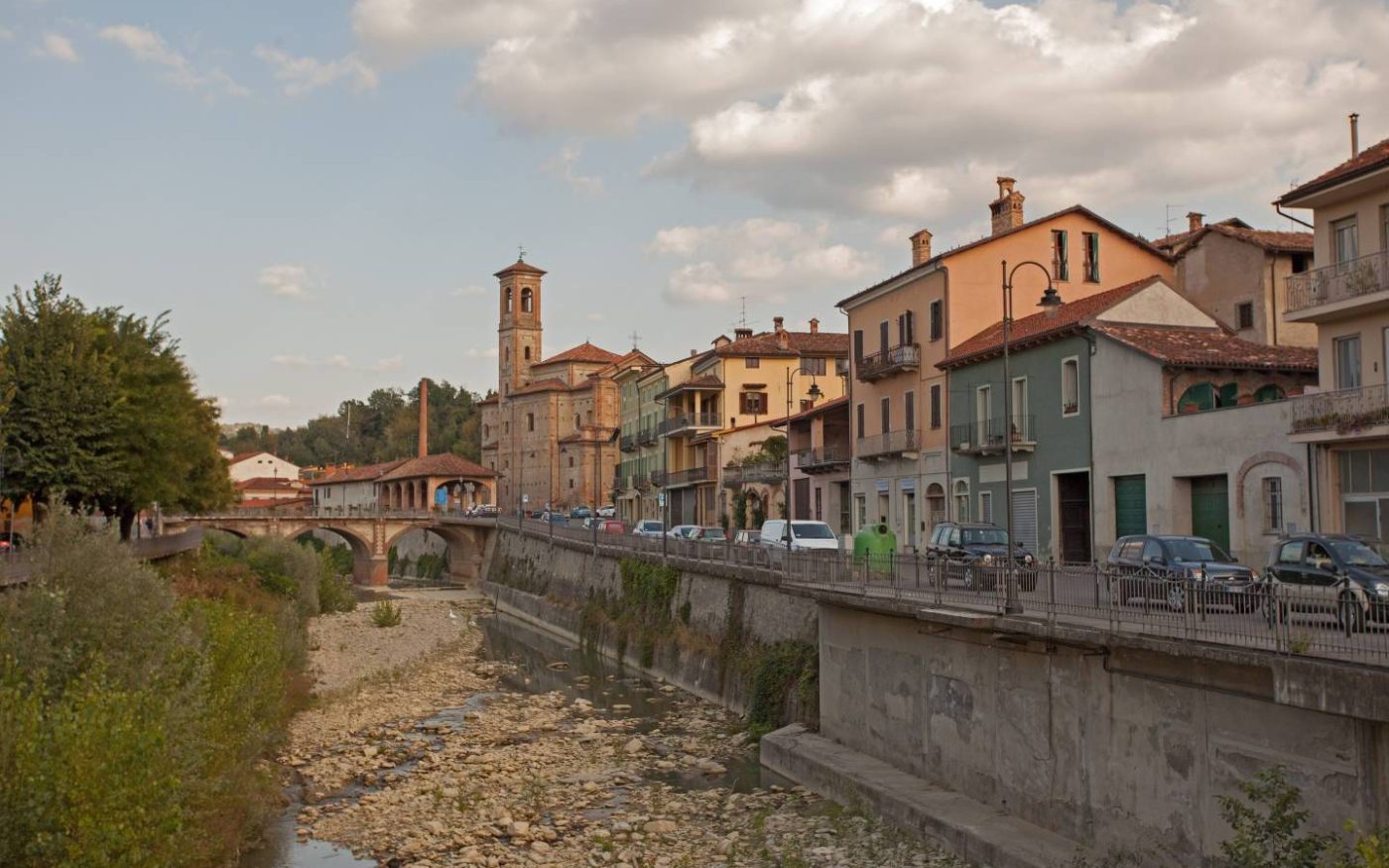
But hunters who still frequent the banks of the Rea stream, in Dogliani, find a house with the still clearly legible writing: “American vines.”
In the surroundings, everything is uncultivated land; here and there a few vines remain, choked by weeds. Hidden there are also small clusters with black berries, as small as pellets for hares. It is Baco’s grape.

by Nicolas Roncea
Special


