Tasty reads
A Sip to Start #1 Dolcetto in all its forms
April 7, 2026

This column was created to help you take your first steps into the world of Langhe wines. Not too technical, a bit playful, and hopefully informative.
As our first wine, we chose Dolcetto: because it was the wine my grandfather drank from his pitcher at the table every day, because I really like it, and also because, in my opinion, it’s one of the most “misunderstood” wines of Langhe.
Don’t be fooled by the name—there’s no sweetness in this glass: here we’re talking about a dry wine, full fruit, and a (sometimes) slightly almond-like finish.
Thanks to Walter Abrigo who helped us put together this article.
Already mentioned in 1303, Dolcetto is a “hillside” grape variety because it loves sun and wind, and a “kitchen” wine because it’s quite easy to pair.
It was created to go well with everyday dishes and you can enjoy it without having to wait years.
In Langhe you’ll find it in different versions depending on the area and the winery’s style: some focus entirely on fruit and drinkability, others seek more structure and depth.
As I was saying, Dolcetto is, in my opinion, one of the misunderstood wines of Langhe.
Not only because its name creates confusion, but also because over the years it’s carried the reputation of being a somewhat negligible wine without much personality. So what does it really taste like?
Ripe red fruit (cherry), vinous sensations, sometimes a simple floral hint. More than being ‘complicated,’ Dolcetto is recognizable and clean.
It’s dry, with perceptible tannin but not aggressive, and a rhythm that invites food. The finish can have that typical bitter/almond note that makes it interesting for pairings.
Expecting sweetness because it’s called Dolcetto. The name refers to the grape (low acidity and therefore excellent for eating), not the type of wine, which is always dry.
In Langhe, Dolcetto takes on three main forms, linked to production areas: Alba, the municipality of Diano d’Alba, and Dogliani.
Special mention goes to Ovada DOCG, outside the Langhe area but certainly interesting for its characteristics: wines that lend themselves to aging and present very different traits from each other, a reflection of the diverse terroir of the area where it’s produced.
In the denominations we mentioned, you’ll almost always find it in two styles: the classic version and the Superiore.
If you’re pairing it with lighter cuisine, for example spring dishes with vegetables and cheeses, the classic version is usually the best choice.
When the dish becomes more intense—braised meats, stews, pot roasts, and generally more autumnal flavors—it’s worth stepping up and going for the Superiore, which tends to have more structure and “shoulders” to handle the food.
If you want drinkability and fruit, choose versions designed for young drinking.
If you want a more ‘important’ Dolcetto, explore Dogliani and some more ambitious interpretations.
If you want something to pair with more intense dishes: go for a Superiore.
If it’s your first time, play it safe and go for recent vintages.
When you find references to vineyards/mentions, the idea is often to tell the story of a specific plot and a more defined profile, especially when talking about Sorì from Diano d’Alba DOCG.
Dolcetto, in general, doesn’t require special rituals: it’s served like a “table” red. The basics are simple: 64–68°F and a classic Balon glass.
Then, as always, you can adjust a bit based on the season and the style of the bottle.
If you have a lighter classic Dolcetto (around 12.5%), you can be bold and serve it a bit cooler, even at 57°F. It becomes more drinkable and refreshing without losing its character.
Use standard red wine temperatures: both classic Dolcetto and Superiore perform best between 64–68°F.
No need to decant the day before (or even two hours before)—usually just opening and pouring is enough.
Medium-sized Balon glass. When Dolcetto has aged at least 5 years, it’s worth serving it in a larger glass (gran ballon) to give it air and better release the aromas.
Keep it well sealed: often the next day it’s even smoother.
Dolcetto is a wine that doesn’t need convincing: it works well practically always. If we really have to make a ranking (serious but not too much), here are the three situations where we think it shines brightest.
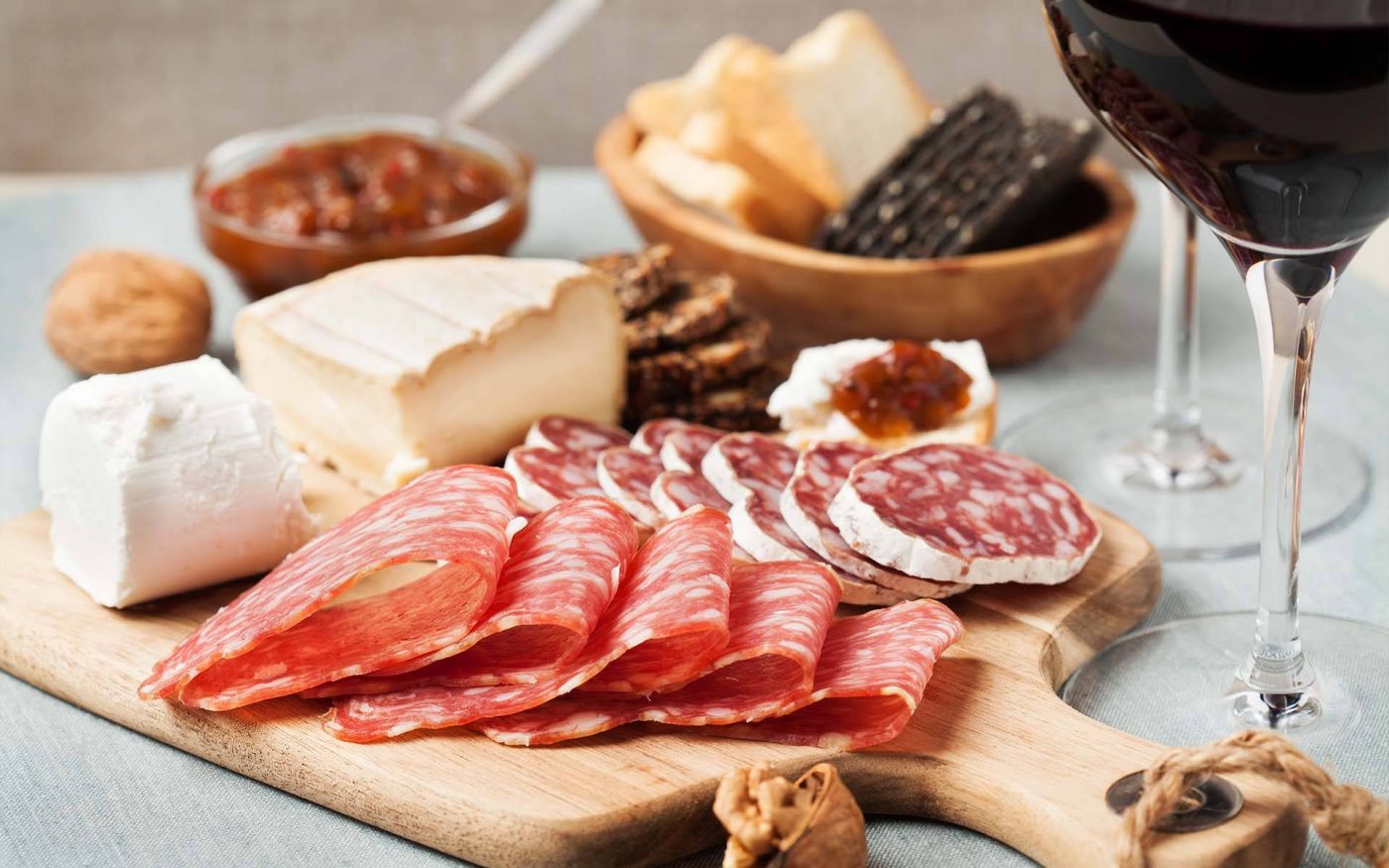
(bread, salami, and cheese)… A simple platter, conversation, and if you add a frittata it’s instantly merenda sinoira (the snack + dinner from the days before aperitivo-dinner existed).
Served slightly chilled, a ready-to-drink Dolcetto is a surprising alternative to sparkling wines: convivial, easy to pair, and perfect when serious appetizers start arriving at the table.
Bring out a 10-year-old Dolcetto (one of the more structured ones, mind you), serve it at dinner “blind” and let your guests venture guesses like Pinot or Nebbiolo. Then reveal the wine and enjoy their amazement.
And when an important dish arrives—like a braised meat—you’ll discover that a Superiore Dolcetto with a few years on it doesn’t just hold up: it does quite well.
It’s usually meant to be enjoyed young. Some more structured versions or the “Superiore” variants can hold up for a few years (some even 10), but its strength is its readiness.
With sweet dishes or preparations that require a lot of acidity: there it can seem ‘softer’ than expected.
For the first time: young. Then, if it grabs you, compare it with a more structured version and you’ll see the difference.
It’s one of the smartest entry points to Langhe reds: it often offers a very favorable quality-to-pleasure ratio.
If you want to truly understand Dolcetto, do something simple: go to a winery where the producer truly believes in it, viscerally. You’ll be amazed at how many anecdotes, details, and things to learn there are behind a wine that’s often discussed “in a hurry”. And above all, you’ll realize that many hasty (and often dismissive) rumors are simply false.
Dolcetto, when made with conviction, is a wonderful companion. And ultimately it’s also a matter of identity: as Renato Ratti used to say,
Dolcetto flows through the veins of true Langhe producers

by Nicolas Roncea
Special


