Art and culture
Alba for art, art for Alba Pinot Gallizio and the Truffle Fair
October 9, 2025
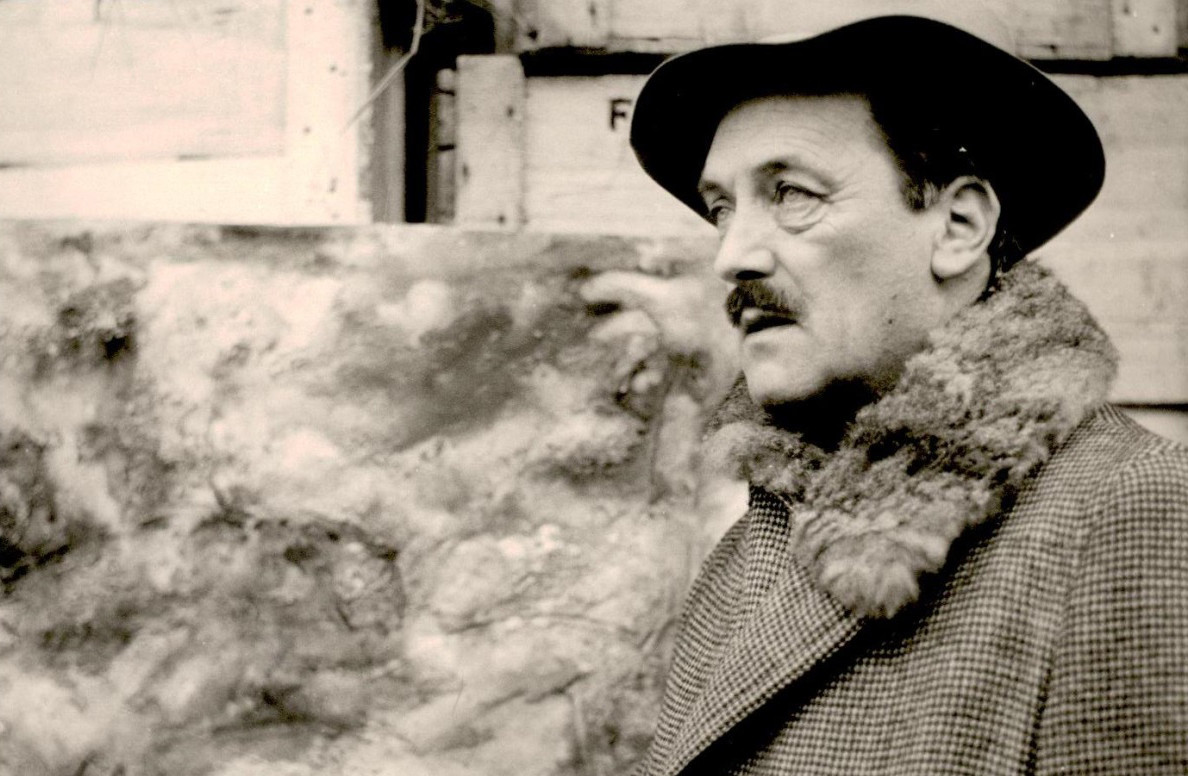
Giuseppe Gallizio, known as Pinot and also recognized as a painter, was born in Alba on February 12, 1902. He would die suddenly in 1964, still relatively young, and, ironically, just after his birthday on February 13.
Pinot, therefore, was Piedmontese by roots and born in Alba. His nickname, after all, leaves no doubt: what may seem like a French stage name to those unfamiliar with his land is immediately recognized as familiar by those born there.
The International Alba White Truffle Fair, on the other hand, was established in 1929, when Gallizio was not yet thirty, and quickly became independent and recognized. An event destined to bring Alba closer to a vast and unexpected audience and to become a unique opportunity to introduce the small town to the world.
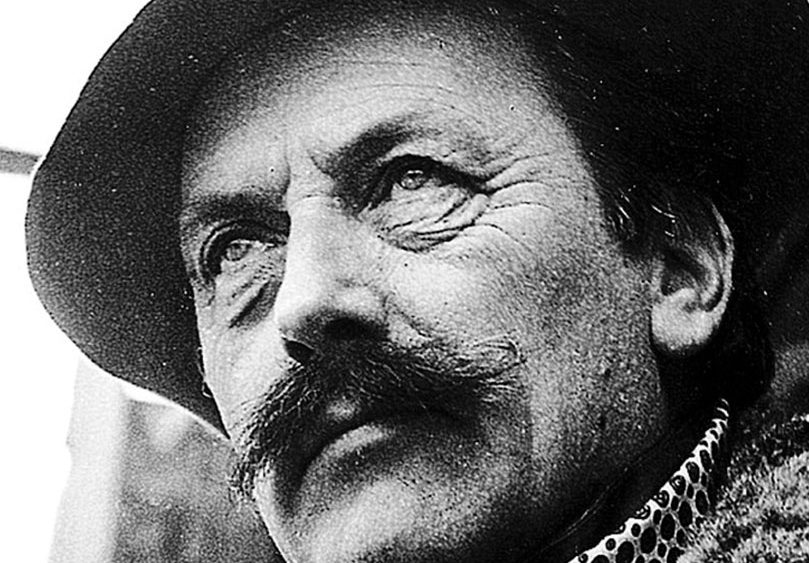
But the road is long and winding, and from 1929 until the day the Fair can be called an international event, decades pass, and a world war in between. Meanwhile, as it evolves and transforms, Pinot Gallizio lives his city, evolves and transforms himself, changing identity without ever losing himself. In these similar and shared transitional moments, the two subjects often meet and often mark a part of their respective histories.
For Pinot Gallizio, Alba is a nest, his land. A land to know deeply and from which to never stop learning. A place he believes can tell him the story of Man, and for this reason, in an archaeologist’s impulse, he will even try to trace its ancestral origins. Because Alba is where Gallizio transforms from a pharmacist, a profession in which he specialized with a university degree, to a fighter, to an oenologist, to a candy producer, to an archaeologist, and finally to a painter.
Pinot Gallizio travels throughout his life, distances himself from his Alba but never completely leaves it, never moves elsewhere. For a 20th-century artist, this could easily result in a vision not open to new things, in few contacts with the outside, in a certain provincialism. Communication with the frenetic art world itself could be complicated, and finding a common language might not be immediate.
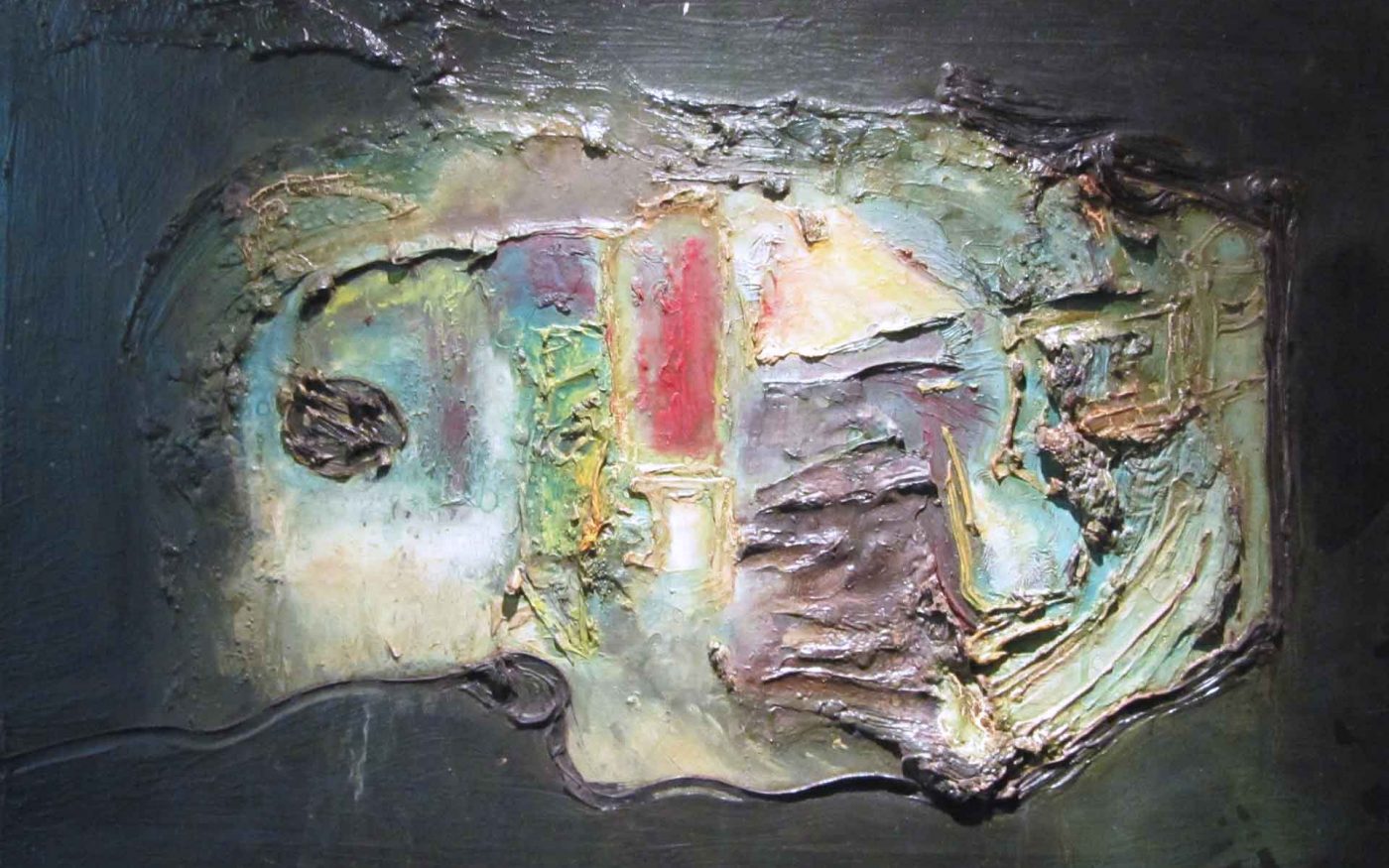
Yet, Gallizio never knows this problem. He, who expresses himself with a strong Piedmontese accent and
Gallizio will remain physically tied to his city, but his art will begin to move independently from the place where it was born, making its way into the world.
An unconventional native of Alba, then, an Albese who makes a name for himself in Alba, who flaunts an almost unknown flamboyance in a small-town context.
Pinot Gallizio was not born with a talent for painting and did not aspire to become a painter. Art found him late, very late for a traditional career, when he was already fifty.
So, when in the 1930s the Alba Truffle Fair was taking its first steps and building its identity, Gallizio was not a painter, he was a pharmacist without a vocation. A fiery soul, yes, but still a common Albese. Or maybe not, because he would never live Alba passively.
In 1932, a small skirmish with nearby Asti is an opportunity for Gallizio to dust off an ancient local story, igniting his innate passion for Man and his curious journey on this Earth.
In the Middle Ages, in fact, when rivalries between municipalities were daily bread, Asti was briefly the dominant force over the territory of Alba. And so Alba, to rebel and mock an enemy it deemed to have no authority, staged a parody of the renowned Asti Palio, enacting the Donkey Palio.
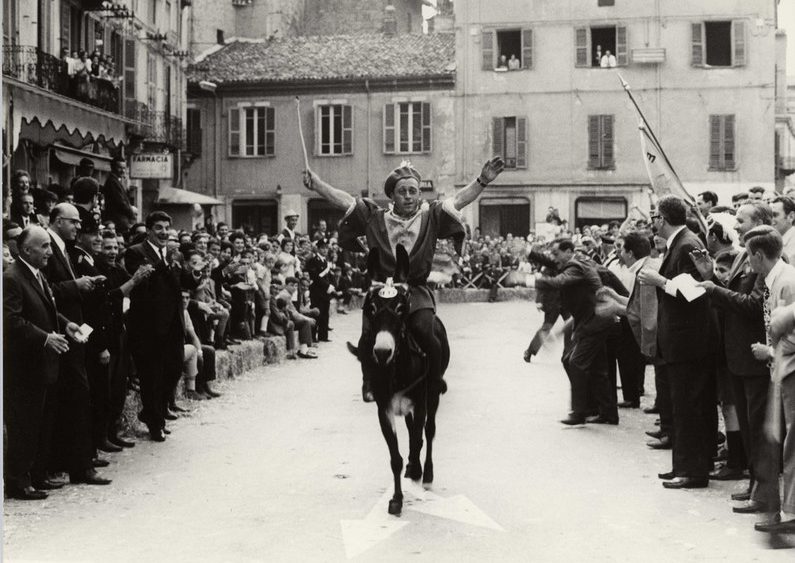
So today, if the Donkey Palio is one of the most well-known events of the Alba Truffle Fair and takes place regularly every October, it is thanks to Pinot Gallizio.
The event had not continued and was lost in legend, but its memory remained in the minds of the people of Alba, so that Pinot Gallizio could rediscover it and give the town its exclusive Donkey Palio. It is he, in fact, who pushes for the Palio to be revived during the first editions of the Fair, and it is he who understands the uniqueness of this bizarre alternative.
So today, if the Donkey Palio is one of the most well-known events of the Fair of the Alba Truffle and takes place regularly every October, it is thanks to Pinot Gallizio. If today Alba has its distinctive sporting event despite not having inherited any centuries-old tradition, it is thanks to a future painter with a passion for his land and its origins, and with the desire to dig deep into its roots.
The world conflict leads to an inevitable period of halt in the evolution of Pinot Gallizio and the Truffle Fair. Not that there was a lack of ideas or will, but certainly
In the 1950s, with its foundations now consolidated, the Fair intensifies its effort to make its international push a reality. Also in those years, Pinot Gallizio has some decisive encounters, including with the young artist Piero Simondo, and the doors to the world of painting open for him.
At fifty, therefore, Pinot Gallizio finds a new and definitive path for realizing his ideas and his inexhaustible curiosity. This path will keep him engaged for the entire last decade of his life and will bring results that, perhaps, would have exceeded even his expectations.
In this dazzling journey, Gallizio soon grasps the importance of the Fair and art for himself and his city. Already in
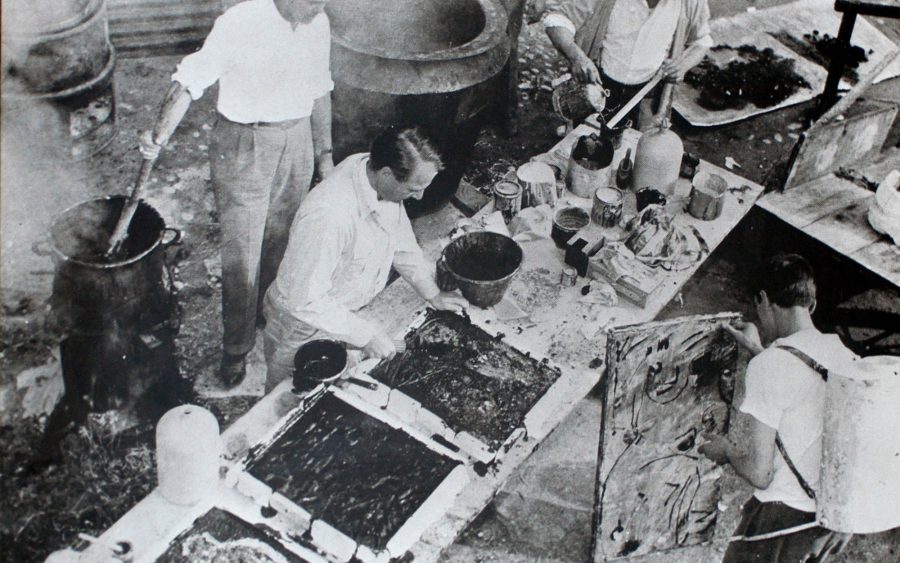
The posters will be made, but they will never be used. And despite this, the initiative will bear great fruit: it begins a period of meetings and discoveries for Gallizio and his circle of artist friends, of research and great dreams, cultivated together in a courtyard in the small Alba, identified as a suitable place by Gallizio himself.
There, in that country courtyard, the Experimental Laboratory of the International Movement for an Imaginist Bauhaus will be born, a long and grandiose name used to describe the visions, even naive, of a group of artists who loved to gather in Alba to test their ideas and then take them around the world.
This result, for an event initially born to facilitate the sale of a prized product, was a clear sign that the Fair had now pushed far beyond its starting point. The success of 1955 will not only prove useful for Gallizio and his art but will also demonstrate that the Fair was and could now be defined as a recognized event, capable with its reputation of arousing the interest of even already established artists.
From 1929 until his death in 1964, Gallizio’s relationship with the Fair shows how he believed in the value of the event from the beginning.
A unique character, Pinot Gallizio perhaps recognizes in the Alba event a certain similarity with himself and his experience, with a path that strengthens its roots to then surpass and even reimagine them. He recognizes an evolution that goes hand in hand with his own, that moves, stops, and then starts again, just as it happened to him.
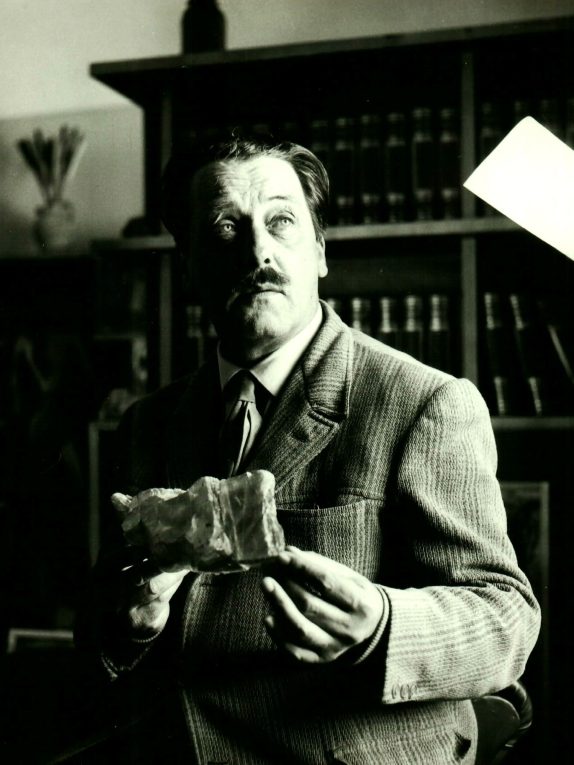
A unique character, Pinot Gallizio perhaps recognizes in the Truffle Fair a certain similarity with himself and his experience, with a path that strengthens its roots to then surpass and even reimagine them.
And so in the 1930s, well aware that without a solid starting base one cannot look far, he suggests for the Fair a reinterpretation of the medieval Donkey Palio.
In the 1950s, when it is now clear to him that to grow it is necessary to look beyond one’s borders, he opens the way for the Fair (and Alba) to contemporary art.
An affinity, that with the Fair and its significance for Alba, that perhaps Gallizio would have continued to demonstrate for a long time, and who knows in what form, if only he had not suddenly left one February night.