Art and culture
Rotaria The collective shaping the wine landscapes
December 11, 2025

The Roero tells its story with a new voice: it’s called Rotaria and it’s the oenocultural project bringing together local producers with the aim of offering a shared and contemporary vision of the landscape, culture, and its emblematic grape, Nebbiolo.
Born as an open forum, Rotaria aims to offer a new perspective on Roero, focusing on the richness of the soils and the sensitivity of those who interpret them daily.
As Nicola Pasquero-Hilberg, spokesperson for the collective and producer in Priocca, explains, the ambition is to highlight the complexity of the territory through a collective view that fully reflects its deep identity.
The heart of Rotaria is its community: eighteen entities representing the diversity of Roero, from historic names to younger energies, from companies rooted for generations to new experiments.
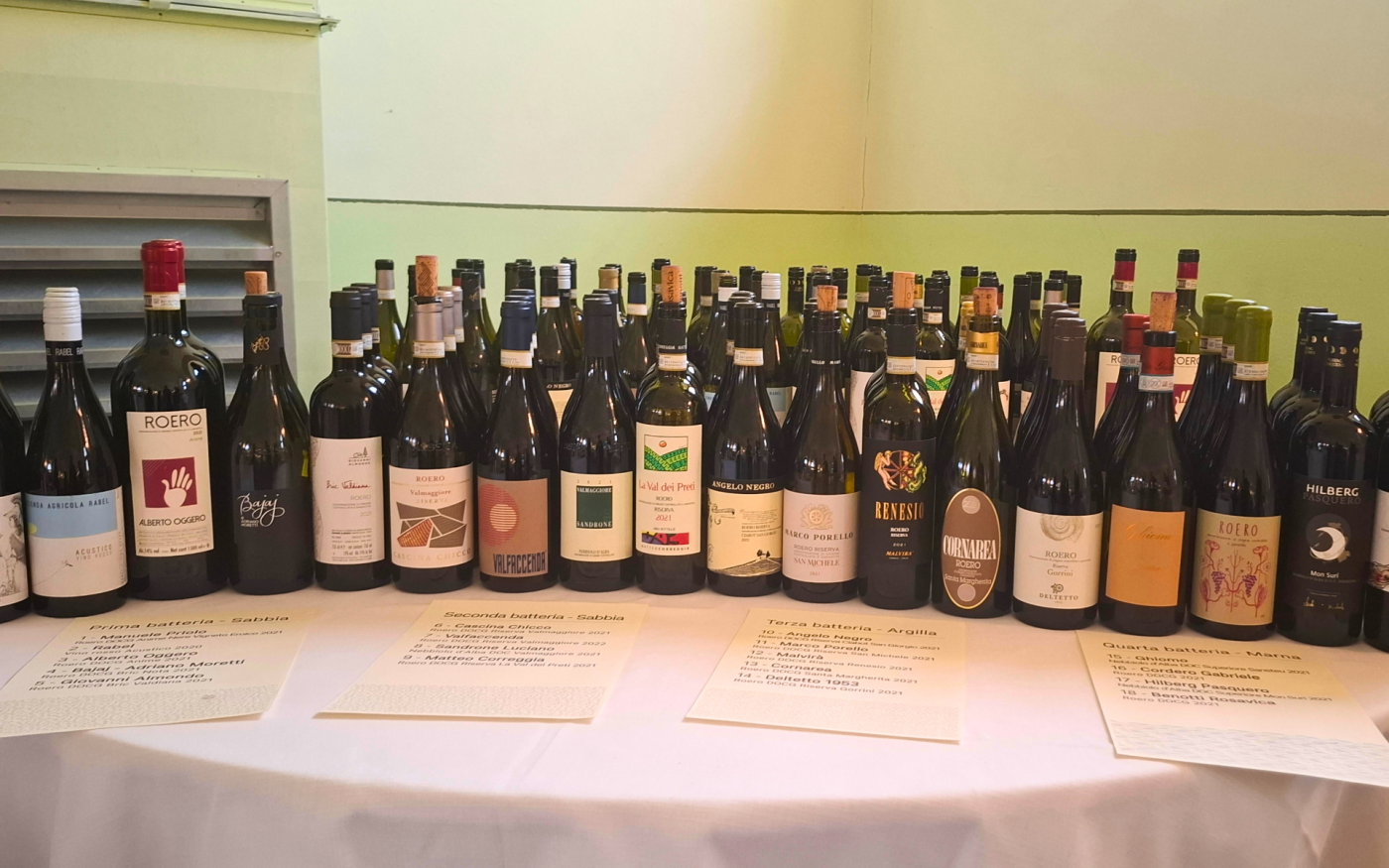
A diverse collective that makes collaboration its strength and diversity its added value.
A human and sensory map that tells the story of a territory in transformation, proud of its complexity and eager to share it.
The name Rotaria has its roots in a medieval legend according to which the Lords of Roero are descended from the Lombard king Ròtari: a story spanning almost 1400 years that the project chooses as a symbol of identity, belonging, and continuity.
Rotaria chooses to start from what most defines Roero, far beyond administrative boundaries: the land.
The variety is reflected in the wines, in the interpretations of the producers, in the stories of the individual vineyards.
The hills of Roero are not all the same: they change color, shape, texture, they even change smell after the rain.
And this variety is reflected in the wines, in the interpretations of the producers, in the stories of the individual vineyards.
Roero is marked by sudden cliffs and woods that open onto suspended vineyards. A fascinating complexity, but difficult to categorize, that today requires a new language to be told.
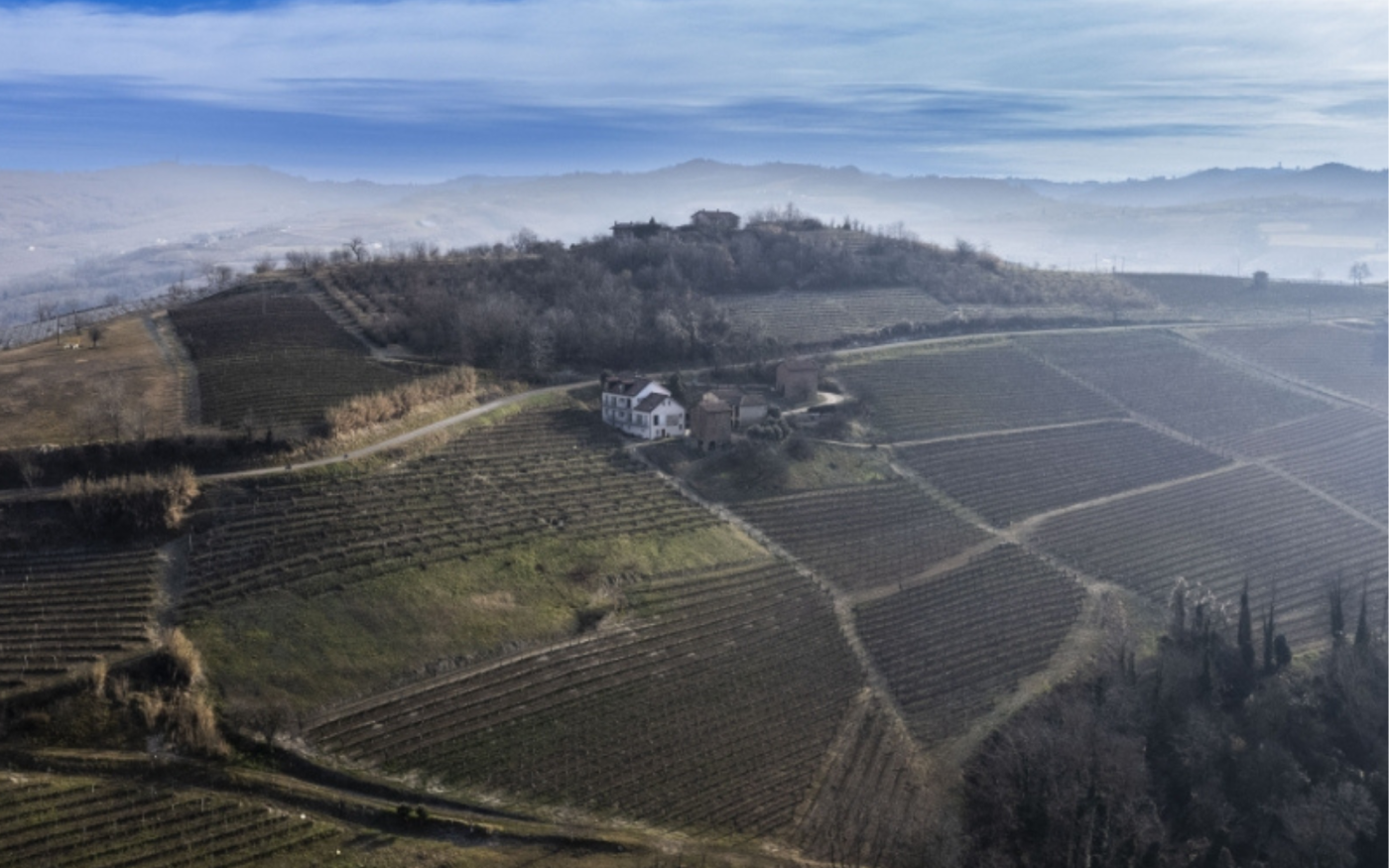
Rotaria chooses Nebbiolo as the common thread to compare and interpret the differences in soils, as it is the grape that most amplifies geological nuances.
The simplified geological map, developed in 2023 by Nicola Pasquero together with Edmondo Bonelli and Gian Piero Romana based on part of the “Geoviticola Langa e Roero” map by Alessandro Masnaghetti, divides the territory into three major soil families, which become not only technical parameters but sensory keys to understand the different faces of Nebbiolo:
This interpretation of the soils also opens up a fascinating perspective for those experiencing Roero as travelers.
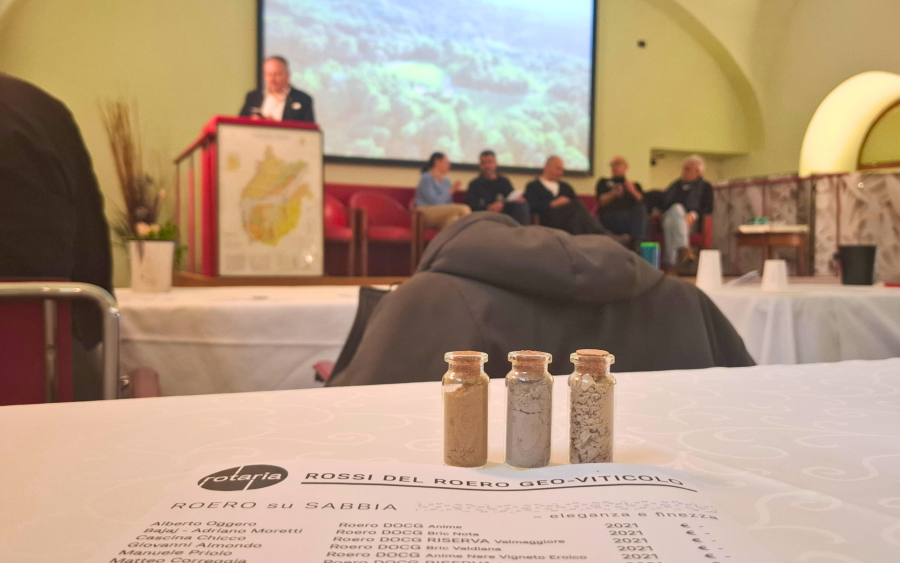
Geology thus becomes an experiential compass:
A discreet yet evocative invitation to discover Roero not only through its wines but by following the thread of its lands: a journey that unites landscape, taste, and culture in a single narrative that deserves to be known and explored.
Rotaria does not replace what exists: it complements it. It aims to be a permanent laboratory of ideas, research, and dialogue, built with an independent and shared approach.
The strength of Rotaria lies in the choice of a common language based on geology, culture, and interpretation of Nebbiolo.
Its strength lies in the choice of a common language based on geology, culture, and interpretation of Nebbiolo, using a method that is both simple and rigorous, designed to make Roero more readable, understandable, and recognizable.
Participation is voluntary and open: Rotaria is a container destined to grow, expand, and enrich itself with new collaborations, tools, and moments of encounter, with a final goal: to create a contemporary narrative of Roero, faithful to its identity but capable of speaking to the future.