Tasty reads
Vermouth & the Aperitif A Story of Emancipation
March 18, 2026

At the beginning of the twentieth century, Turin was a rapidly transforming city.
The Savoy capital, already elegant and orderly, was becoming a modern industrial center: the first factories arrived, electricity spread, trams crossed the city, and cafés became meeting places for clerks, artists, students, and the bourgeoisie.
It was a city that looked to Paris more than the rest of Italy, and a European atmosphere filled the cafés: music, conversation, newspapers, and a freer social life compared to many other Italian cities.
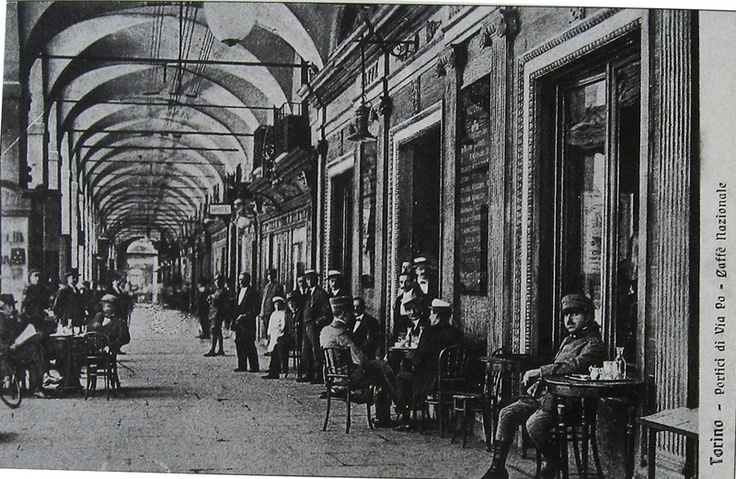
This is where a new habit took hold: women began entering cafés alone, a gesture previously considered licentious but which soon became a common sight.
In this scenario, the aperitif became an urban ritual: no longer just a moment of consumption, but a new way of being in the city, of showing oneself and participating in public life.
And it was in this very context that Vermouth—born as a medicinal remedy—found its new social identity.
The history of Vermouth, whose name derives from the German Wermut, is rooted in the wormwood-flavored wines of antiquity, which began as medicinal remedies and were transformed over the centuries by the arrival of oriental spices and the growing skill of European liqueur makers.
For centuries, these wines were used as remedies for intestinal disorders, as tonics, and even as a treatment for malaria thanks to the presence of cinchona.
Piedmont, with its pharmaceutical and liqueur-making tradition, became a center of excellence.
It was in this context that the turning point occurred: in 1786, Antonio Benedetto Carpano, a young liqueur maker from Turin, took a common medicinal recipe and transformed it into something new.
No longer a remedy, but an aromatized wine designed to be drunk for pleasure.
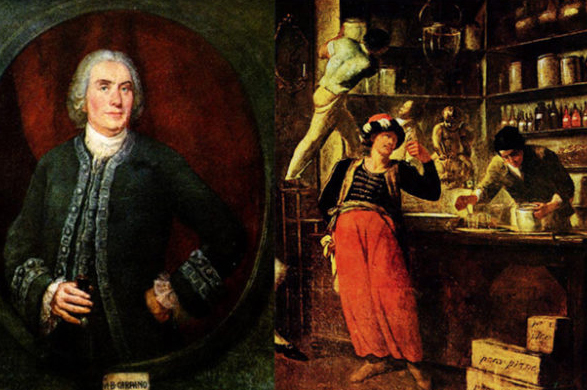
Carpano introduced a smoother balance, a more complex aromatic profile, and a calibrated sweetness that made the product immediately recognizable.
He was the one who sensed that this wine could become a city habit, an evening ritual, a way of being together.
His shop, under the porticoes of Piazza Castello, stayed open until late at night to meet the growing demand, and from that moment on, Vermouth was no longer just a product: it was an urban phenomenon.
Vermouth is no longer just a product: it is an urban phenomenon.
During this era, the city codified the recipes, organized producers’ guilds, and began bottling a stable, sweet, and balsamic product destined to become famous far beyond the Savoy borders; in the nineteenth century, Vermouth di Torino conquered Europe and the Americas, establishing itself as a fundamental ingredient in mixology.
It diversified into new types, including White Vermouth – lighter and more floral – and Red Vermouth, more bitter and intense with a vermilion color.
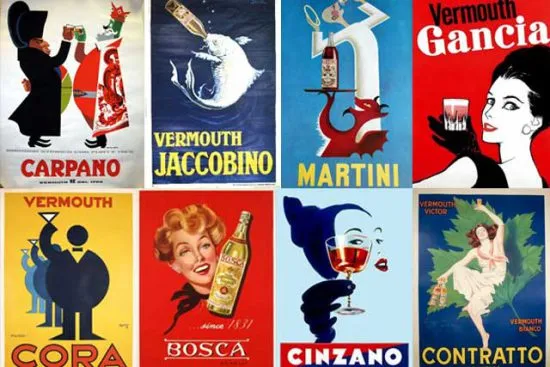
The twentieth century then brought regulations, official recognition, and growing protection for its Turin identity, while the recipe continued to revolve around its three essential elements: wine, botanicals, and sugar.
In this climate of transformation, a new variant emerged: White Vermouth.
Brighter, smoother, more inclined toward floral and citrus notes, it was able to interpret a different, more contemporary taste, closer to the female sensibility of the time.
Not a product “for women” in the reductive sense of the term, but a new way of thinking about the aperitif: lighter, more social, more urban.
And the ladies of Turin immediately embraced it naturally.
Advertisements of the time tell the story well: elegant ladies, groups of friends dancing, female figures as the protagonists of the scene.
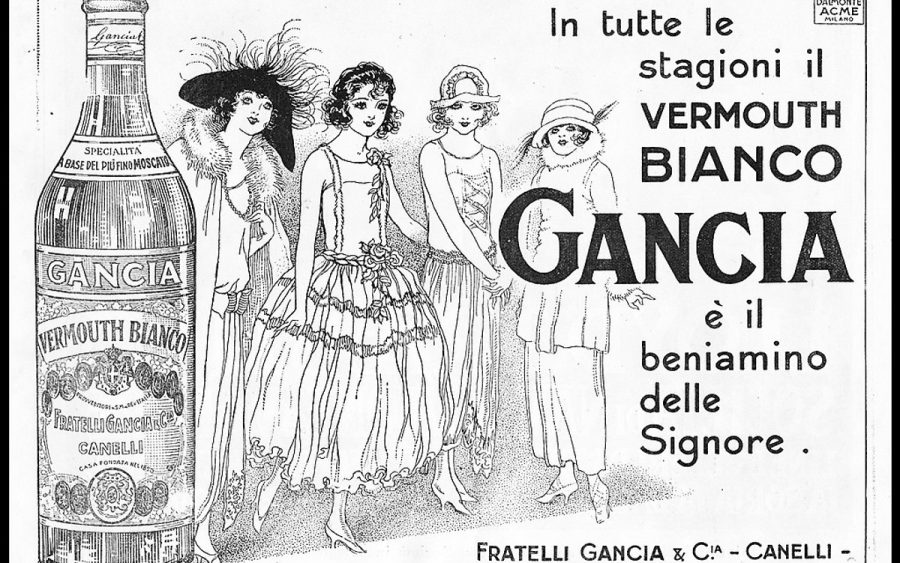
White Vermouth became “the ladies’ favorite,” not through rhetorical construction, but through a real affinity with a taste that was changing along with society.
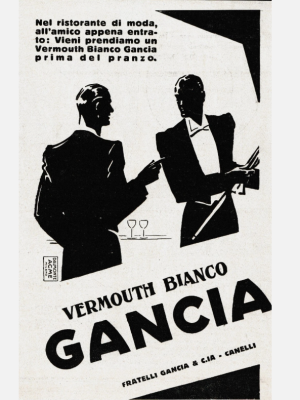
In the 1930s, the narrative changed again.
White was presented as an “elegant” drink for men too: advertisements featured male figures in tailcoats, light-colored glass in hand.
Color thus became status, transcending gender roles and calling them into question.
It was no longer “for ladies” or “for men”: it was a cross-cutting product that adapted to contexts and eras.
Today, Red Vermouth, once more bitter and linked to cinchona, is often presented as sweeter, smoother, and more floral, and the sharp distinction between “ladies'” White and “men’s” Red has dissolved.
Today, Vermouth is experiencing a new season.
It is not a return to the past, but a different way of looking at a product that has managed to cross eras, tastes, and habits without losing its identity.
And its strength lies precisely in this ability to adapt: being classic and contemporary, everyday and refined, simple and complex at the same time.
Perhaps this is also why it continues to speak to different generations: because behind every glass is a long story, made of botanicals, artisanal knowledge, cities that change, and people who change with them.

Vermouth is not just an aperitif but a cultural heritage that continues to renew itself, a gentle invitation to stop, observe, and recognize the entire journey that brought it here.
To tell this fundamental historical step, we thank Fulvio Piccinini, one of the leading experts in the field, a teacher of service and bar management, and author of numerous books on the subject, who provided us with much useful information and authoritative opinions.